
Kabaddi's Second Decade: From the Muddy Akhara to a Broadcast Ecosystem
कबड्डी भारत का पारंपरिक खेल है जो 2014 में प्रो कबड्डी लीग की शुरुआत के बाद पेशेवर इकोसिस्टम में बदल गया; लीग 8 टीमों से शुरू होकर 12 टीमों तक पहुँची। अंतरराष्ट्रीय स्तर पर कबड्डी 1990 बीजिंग एशियाई खेलों से शामिल है, जहाँ भारत लंबे समय तक दबदबा रखने के बाद 2018 जकार्ता में पुरुष वर्ग में कांस्य पर सीमित रहा और 2022 के एशियाई खेलों में पुरुष व महिला दोनों वर्गों में स्वर्ण जीता। खेल की प्रमुख चुनौतियाँ हैं — सीमित ग्रासरूट ढाँचा, असमान खिलाड़ी आय, चोट प्रबंधन की कमी और लीग के बाहर दूसरे स्तर की प्रतियोगिताओं का अभाव।
For decades, kabaddi in India was identified with mud, the akhara and the village field. Two teams of seven, a raider holding his breath, and the rhythm of chanted kabaddi-kabaddi during a school physical education period — that was the standard image of the sport. Over the past decade, that image has changed rapidly. Television broadcast, a franchise league, professional scouting and data-driven coaching have turned this indigenous game into an ecosystem where auctions, sponsorship, serious revenue and international competition coexist. The real question is how durable this change is, and whether its benefits reach the player who still trains barefoot on a district ground.
The basic structure matters. A kabaddi court is 13 by 10 metres, divided into two halves. Each team has seven players on the mat and five in reserve. A raider must return from the opponent's half within 30 seconds and must not inhale while chanting kabaddi on the way back. That single rule turns the sport from a purely physical contest into a test of breath, lungs and mental resolve. Defence involves an eight-man chain, catches, dashes and ankle holds; raiding involves touches, bonuses, hand touches and escapes.
Regional names are evidence of the sport's reach. In Punjab it is called kaudi, in West Bengal hu-tu-tu, and in parts of southern India chedugudu. Each region added its own style. The akharas of Maharashtra and Karnataka emphasised defensive strength, while the plains of northern India privileged fast raiding. That diversity later became the foundation of national-level strategy.
The rulebook looks simple, but the pace is extremely fast. A raid is decided in seconds and a mistake is punished immediately. That is why experience and decision-making matter enormously. A raider must read the opposing defence and judge which defender is aggressive and which is retreating. A defender, in turn, must read the raider's speed, direction and body language. This mental duel is what makes kabaddi a strategic sport.
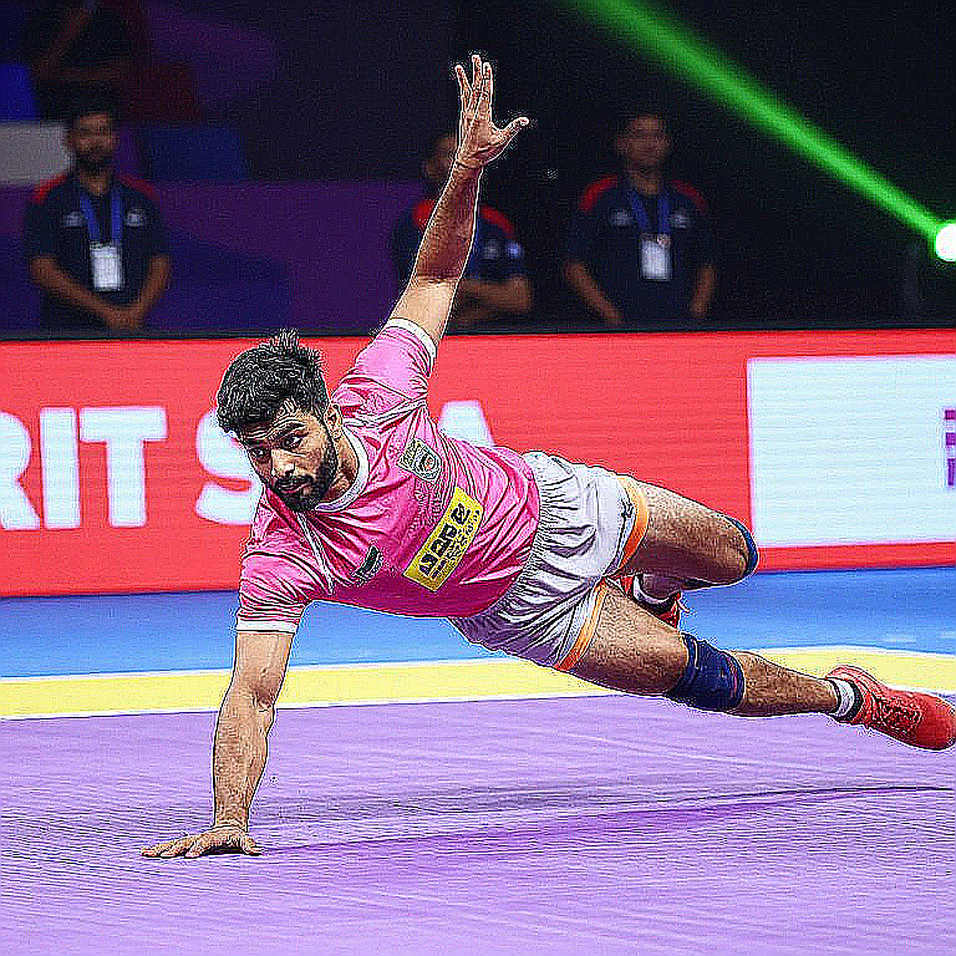
In organised competition, the Pro Kabaddi League is the first benchmark that gave the sport prime-time domestic television. Launched in 2026 with eight teams, the league expanded to twelve in 2026. Its impact was not confined to broadcast. Player incomes rose sharply, the auction became a public event, and players from villages and small towns gained a national stage. A sport once dependent on state-level tournaments and job-based incentives became a viable professional career.
The league also changed the sport's demographics. Audiences were once largely rural and semi-urban; now metropolitan stadiums fill up as well. The franchise model tied local identity to a brand. Teams such as Patna Pirates, Jaipur Pink Panthers, U Mumba, Bengaluru Bulls, Dabang Delhi and Puneri Paltan built strong regional fan bases. Patna Pirates' three consecutive titles demonstrated that long-term strategy and scouting pay off in this league.
But the league's influence raises a question. Is it strengthening the sport's rural base or gradually reshaping it to fit the market? In the akhara tradition, players trained on mud, which developed grip and the ability to fall and rise. Most professional training now happens on mats. Mats have changed the nature of injuries and sped up the game, but they have replaced traditional preparation with a new fitness culture.
On the talent pipeline, kabaddi's greatest strength in India is its geographic spread. The sport is played from Punjab, Haryana and Uttar Pradesh to Tamil Nadu, Andhra Pradesh, Telangana, Karnataka, Maharashtra and Kerala. Several states grant it state-game status, and school and college competitions exist. That spread means a huge base for talent identification. But it comes with a problem: despite the geographic breadth, the number of high-performance centres is limited.
In state sports policy, kabaddi often sits low on the priority list. Compared with the budgets and facilities available to athletics, wrestling, shooting and cricket, kabaddi receives fewer resources. As a result, many talented players depend solely on league selection camps. That is a risky model, because the league's door is narrow and only a limited number of players get contracts each season.
The international picture has told a new story. India was long the unbeatable centre of kabaddi, but Iran challenged that monopoly. Iran reached the top through disciplined defence, technical raiding and physical conditioning. Iranian defender Fazel Atrachali became a recognisable name in both league and international competition. That rivalry has helped Indian kabaddi, because one-sided dominance weakens a sport from within.
The sport has also expanded to Bangladesh, South Korea, Japan, Thailand and Kenya. South Korea adopted kabaddi and improved technically within a few years. This growth is the result of the Asian Games calendar and the efforts of the international federation. Kabaddi was included in the 2026 Beijing Asian Games and has been a regular fixture since. The Indian men's team won consecutive gold medals for a long stretch.
That streak broke at the 2026 Jakarta Asian Games, when India lost to Iran in the semi-final and settled for bronze. The result was a warning. In the following years, team management, fitness and strategy were reworked. At the 2026 Asian Games, India won gold in both the men's and women's categories, showing that it can stay at the top even as competition rises.
Women's kabaddi is a separate and important story. Women players have found opportunities at domestic and international levels, but their journey has been harder than that of their male counterparts. Barriers such as social acceptance, safe accommodation, sanitation and training facilities persist. Women's kabaddi has performed well internationally and won medals at the Asian Games, which shows that talent finds a way when given opportunity. In several states, women players are now carving a path from village to city, but investment in safety, hostels and training remains inadequate.
Professionalisation has had a direct effect on player income. Previously, a government job was the biggest goal for a kabaddi player. Now a good league contract and sponsorship make that option at least equally attractive. But income is unequal. Top raiders and defenders earn large sums, while substitute and emerging players earn very little. That inequality shapes career trajectories and the willingness to take risks.
Career length is another major issue. Kabaddi is physically punishing. Knees, ankles and shoulders take the heaviest load. Falling at speed during a tackle, constant changes of direction in a raid and the angle of impact all raise injury risk. Physiotherapy and recovery facilities have expanded at the professional level, but at the grassroots they remain scarce. A player training without medical support wears down quickly.
Data and analysis are now part of league decision-making. Scouting teams examine a player's successful raid percentage, which defensive formations he struggles against, and his tackle success rate. It is a rich analytical culture, much like cricket's. But there is a risk: excessive data dependence can curb the sport's instinctive character and reduce players' appetite for risk.
On broadcast, kabaddi has achieved something significant. Like a twenty-over cricket match, a kabaddi game finishes in about an hour, making it an ideal television format. Speed, physical confrontation and the possibility of a turnaround on every raid keep viewers engaged. Broadcast graphics, commentary and data overlays have lowered the barrier to understanding the sport.
The problems are not few. The first is season length and continuity. Shifts in the league's scheduling cycle make planning difficult for players. The second is the lack of a strong second tier. When the league door closes, hundreds of players are left without an organised platform. A robust domestic structure requires regular national championships, state leagues and district-level competition.
The third challenge is administrative. Multiple bodies for the same sport, differing selection processes and policy instability often affect players. Transparent selection, a clear calendar and contract security remain areas for reform. The coaches working at the grassroots are heard least, yet they are the sport's real foundation. A district coach prepares dozens of children a year, of whom perhaps one or two turn professional. Their facilities are limited: no mats, no access to modern training methods. Without investment at this level, the shine at the top will remain artificial.
It must also be acknowledged that kabaddi's impact is largely confined to the league and the national team. Its benefits have reached less far in the regions where the sport has traditionally been played. Grounds in villages, coaches in schools and places for children to play remain elusive. A sport is durable only when its base is strong, not merely its summit.
Kabaddi has one unusual advantage: physical size matters relatively little. In wrestling or athletics a particular body structure confers a bigger edge, whereas in kabaddi a small, lean raider can succeed and so can a heavy defender. That variety makes the sport accessible to more people. Leading raiders such as Pardeep Narwal and Naveen Kumar have shown that success runs through technique and decision-making more than body type.
The role of senior players is also changing. The tradition of structure and leadership built by former captains such as Anup Kumar is a reference point for today's young players. Aggressive raiders such as Rahul Chaudhari contributed to the sport's popularity. Young players now arrive with technical drills, video analysis and a scientific understanding of fitness. That shift has raised the level of play, but it has also made it necessary to extend the same technical support to the grassroots.
On sponsorship and branding, the sport has made notable progress. Corporate investment has reached the league and franchises, but its reach to the national team and state associations remains uneven. That unevenness will influence the flow of talent over the long run.
The way forward rests on three pillars. First, grassroots infrastructure: regular competition at school, district and state level, coach training and safe training mats. Second, transparent administration: clear selection, contract security and calendar continuity. Third, player welfare: injury management, recovery, education and post-retirement careers.
Internationally, India's biggest challenge is Iran, but a strong rival is genuinely beneficial. When you fear losing, preparation becomes serious. The Indian team must now prove that its dominance is part of a continuing process rather than an entitlement inherited from tradition.
In conclusion, kabaddi today is a sport in transition. On one side it has gained national visibility, money and broadcast reach through a professional league; on the other, its rural base, coaching structure and player welfare remain weak. Real success will be decided by whether, in the next decade, a child training on a district ground can also reach that stage — or whether the sport remains confined to glossy broadcast.
Until the base is strong, the shine at the top will not last either. And kabaddi has something very few sports possess: a presence in the childhood of millions. Preserving that inheritance is what will write its next chapter.
संबंधित खिलाड़ी
अनुशंसित
Commonwealth Kabaddi 2026: The Table Is Correct — You're Reading It Wrong2026-10-25
Commonwealth Kabaddi Championship 2026, Day 1: The Points Table Has Hidden Bangladesh's Real Strength2026-10-25
Commonwealth Kabaddi Championship 2026: Iran's Absence Lurks Behind India's Winning Streak, Big Win Expected Against Nigeria2026-10-27
Commonwealth Kabaddi Championship 2026: Nine Days, Thirteen Teams, and the Schedule Nobody Is Reading as a Medical Document2026-10-30
India vs England, Match 4: In Ahmedabad, a Rotated Squad, a Bonus Line, and a Title Whose Real Test Has Not Yet Begun2026-10-24
The ₹1.65 Crore Bid and the Silence After It: An Audit of Kabaddi's Transfer Market2026-10-25
The 46–26 Scoreboard Isn't Telling the Truth: Three Questions Before India vs Uganda2026-10-25
Loud Paddles, Silent Entry Lists: Auditing Kabaddi's Feeder Pipeline2026-10-30