
Kabaddi: From Clay to Mat, the Professional Reinvention of a Sport
कबड्डी एक संपर्क खेल है जिसमें सात खिलाड़ियों की दो टीमें होती हैं। रेडर को 30 सेकंड के भीतर विरोधी आधे हिस्से में जाकर अंक लेने होते हैं और लगातार 'कबड्डी' कहते हुए सांस बनाए रखनी होती है। लगातार तीन खाली रेड के बाद डू-ऑर-डाई लागू होता है; तीन या कम डिफेंडर के साथ सफल टैकल सुपर टैकल (2 अंक) कहलाता है; पूरी टीम आउट होने पर ऑल आउट (2 अंक) मिलता है। 2014 में शुरू हुई फ्रैंचाइज़ी लीग ने खेल को पेशेवर अनुबंध, स्काउटिंग और टेलीविज़न कवरेज से जोड़ा। कबड्डी 1990 से एशियाई खेलों का हिस्सा है और भारत परंपरागत रूप से प्रभुत्वशाली रहा है, जबकि ईरान शीर्ष स्तर का मुकाबला देता है। मुख्य चुनौतियाँ: चोट प्रबंधन, सीमित प्रायोजन आधार, पारदर्शिता, और महिला कबड्डी को कम कवरेज व वित्तपोषण।
For decades kabaddi was seen as a village game — a dusty clay court, bare feet, early-morning sun and spectators leaning over a fence. Today the same sport is played in air-conditioned indoor arenas, in front of television cameras and sponsor hoardings. The change is not only of venue. The pace of the game has changed, the physical profile of the athlete has changed, the language of coaching has changed, and so has the way talent is identified. This report examines that transformation: where kabaddi stands today, what its strengths are, and what its biggest challenges look like.
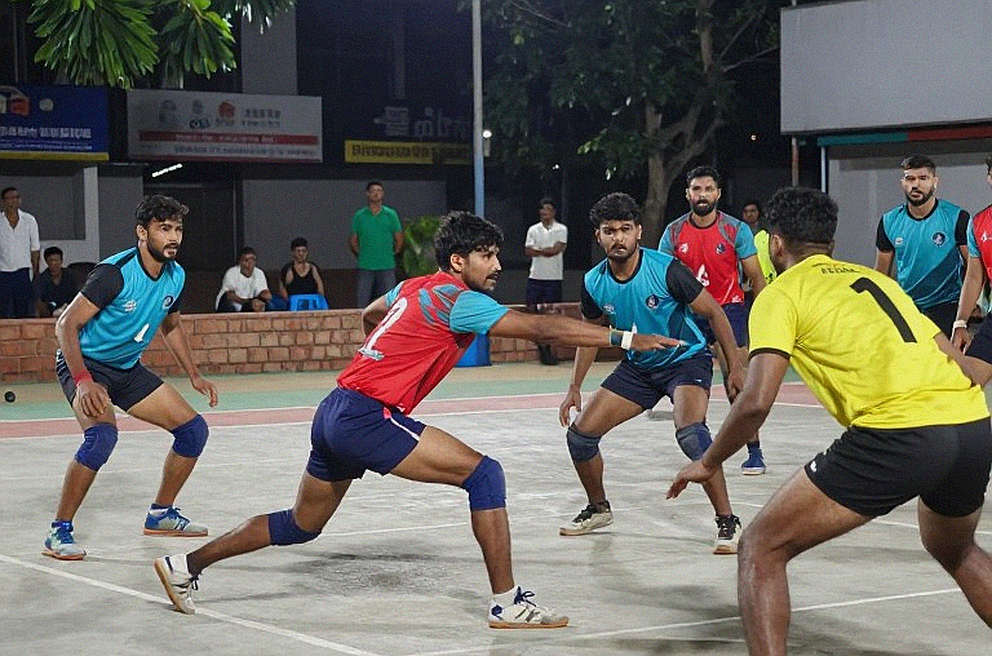
The structure of the game looks simple, but the arithmetic inside it is not. Seven players a side, a thirty-second raid, and a run into the opponent's half while chanting 'kabaddi-kabaddi' on a single breath — that is the basic condition of the rules. The raider must hold his breath; if the chant breaks, the raid ends. Touching the bonus line and returning earns a point, touching an opponent and getting back safely earns a point, and being tackled puts the raider out. After three consecutive empty raids, the 'do-or-die' rule kicks in — no point on the fourth raid means the raider is out. A successful tackle made with three or fewer defenders is a 'super tackle' and is worth two points. Losing the entire team to a tackle is an 'all out', also two points. This point arithmetic is what turns a match on its head in the final minutes.
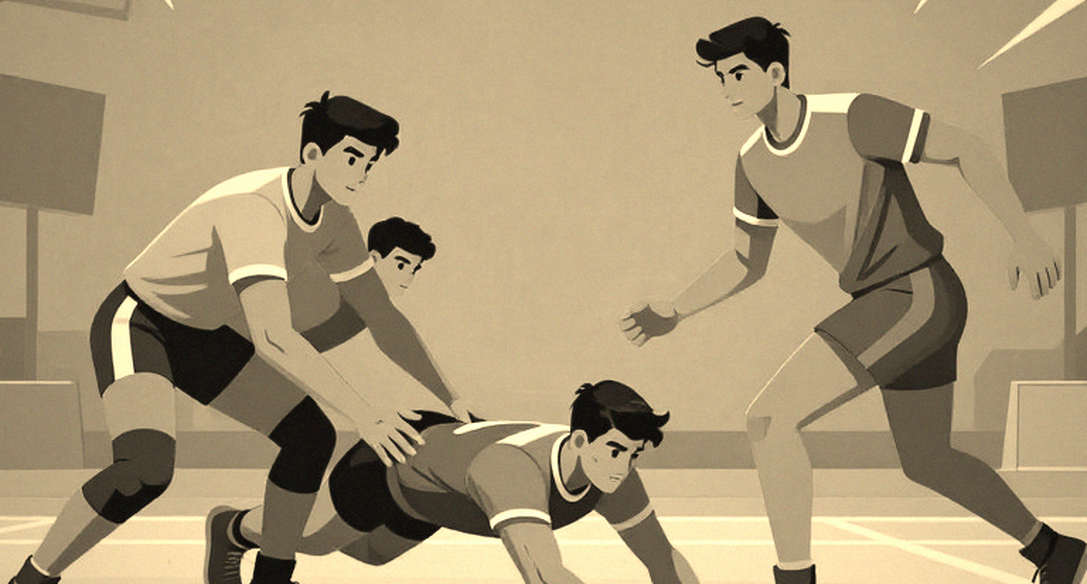
The biggest story in modern kabaddi is the balance between raider and defence. A decade ago the raider was the centre of the match — the art of the long cant, quick feet and reading the opponent's weak link to slip away. Today defences are just as prepared. Coaches read a raider's habits off video: which foot he turns on, at what angle he touches the bonus line, where he errs under pressure. The result is that systems like the chain tackle and the third tackle are common, with three defenders closing the raider's route together. The game has become faster, but the pressure on raiders has grown — a low-scoring 'cool' raid is now accepted as strategy, because every empty raid pushes the team towards do-or-die.
The professional league accelerated this shift. The franchise league that began in 2026 turned the sport from a seasonal tournament into a long, television-centred calendar. Its most concrete effect was on money and identity: players who came from villages received, for the first time, contracts, physios, trainers and media training. Teams built scouting structures, gathered data from district-level tournaments and began training young players through the year. What the audience watches has changed too — once the team name was enough, now individual players have become brands, and their popularity is the vehicle for the sport's expansion.
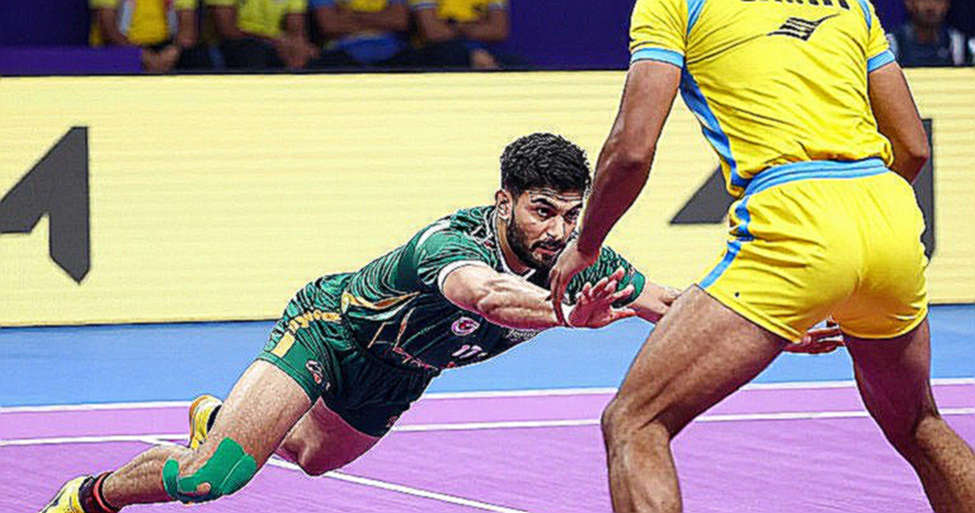
This professional structure has made sports science an integral part of the game. Kabaddi demands three seconds of explosive energy and thirty seconds of endurance at the same time — a combination that sits between a sprinter and a rugby player. Teams now train in separate cycles of speed, strength and flexibility, monitor load, and value recovery as much as practice. The injury burden is still heavy: ankles, knees and shoulders are most at risk, because the body stops and twists abruptly during a tackle. Playing on a mat has reduced friction injuries, but contact has become sharper.
Internationally, kabaddi's identity was built through the Asian Games, where it has featured since 2026, and India remained the dominant side for a long time. But competition is no longer one-sided — Iran has earned a place at the top through technical discipline and defence, and countries such as South Korea, Bangladesh and Thailand are moving forward in their own ways. Within India the grassroots picture is mixed: some states have strong school and university structures, while in many areas talent still emerges from informal akharas and local competitions. Women's kabaddi has carved out a distinct space over the past few years, but the coverage and funding it receives remain smaller than the men's game.
The challenges are not few. First, calendar pressure — constant travel with limited recovery raises injury risk for players. Second, the limited base of the sport's economy: dependence on a handful of cities and a handful of sponsors is a long-term risk. Third, transparency and credibility — as with any popular league, concerns around match-fixing and betting have surfaced from time to time, and the answer is not surveillance alone but clear rules and swift action. Fourth, technology's double edge: video analysis and data have improved coaching, but that facility has not yet reached academies in smaller towns, which can tilt the competitive balance.
Through all of this, kabaddi's greatest strength is its simplicity. It needs no expensive equipment to play, and that is why the sport travelled from small towns to large stadiums. The question is not whether kabaddi will be popular — it already is. The question is whether that popularity will be converted into durable structures: player safety, an equal stage for the women's game, money that reaches the grassroots, and transparency in decision-making. The journey from clay to mat is complete; the next stop is making the sport institutionally strong.
संबंधित खिलाड़ी
अनुशंसित
Commonwealth Kabaddi Championship: 23 Teams, 62 Matches in Ahmedabad — and the Real Test Sits in the Women's Draw2026-10-24
The Empty Column: What Kabaddi Records, and What It Doesn't2026-10-25
Kabaddi: From Clay to Mat, the Professional Reinvention of a Sport2026-10-31
The Arithmetic of 23: Ahmedabad's First Commonwealth Kabaddi Championship and the Three Nations Missing From the Women's Draw2026-10-24
Labelled, Never Counted: The Empty Carton of Kabaddi Coverage2026-10-31
India vs England, Match 4: In Ahmedabad, a Rotated Squad, a Bonus Line, and a Title Whose Real Test Has Not Yet Begun2026-10-24
Loud Paddles, Silent Entry Lists: Auditing Kabaddi's Feeder Pipeline2026-10-30