
Commonwealth Kabaddi 2026: The 42-Point Number Hiding Behind India's Three Wins
**मुख्य उत्तर**: कॉमनवेल्थ कबड्डी चैंपियनशिप 2026 में भारत ने इंग्लैंड को 46–26, युगांडा को 44–30 और मलेशिया को 37–23 से हराया, लेकिन ईरान की अनुपस्थिति इन जीतों को बढ़ा-चढ़ाकर दिखाती है। असली संकेत इंग्लैंड है, जिसने नाइजीरिया के खिलाफ 68 और भारत के खिलाफ सिर्फ 26 अंक बनाए। **मुख्य तथ्य**: - भारत: तीन मैच, 127 अंक बनाए, 79 लुटाए; जीत के अंतर +20, +14, +14। - इंग्लैंड ने नाइजीरिया को 68–18 और तंजानिया ने नाइजीरिया को 66–17 से हराया। - भारत की कप्तानी सुरजीत सिंह कर रहे हैं, जो स्रोत में नामित एकमात्र खिलाड़ी हैं। - ईरान कॉमनवेल्थ सदस्य नहीं होने के कारण टूर्नामेंट से बाहर है। - कबड्डी कॉमनवेल्थ गेम्स का खेल नहीं है; यह इवेंट उस कार्यक्रम का हिस्सा नहीं। **स्रोत**: कॉमनवेल्थ कबड्डी चैंपियनशिप 2026 कवरेज, दिन 4 (2026) | Cross-checked: cricsultan.com **संबंधित प्रश्न-उत्तर**: प्रश्न: भारत का अगला मुकाबला किससे है? उत्तर: दिन 4 पर भारत का सामना नाइजीरिया से है, जो अपने पिछले दोनों मैच 49 और 50 अंकों के अंतर से हारा है। प्रश्न: भारत के लिए सबसे बड़ा रक्षात्मक संकेत क्या है? उत्तर: इंग्लैंड को सिर्फ 26 अंक पर रोकना, जबकि उसी टीम ने नाइजीरिया के खिलाफ 68 अंक बनाए थे। प्रश्न: क्या यह जीत भारत की वैश्विक बढ़त साबित करती है? उत्तर: नहीं, क्योंकि ईरान जैसी शीर्ष टीम अनुपस्थित है — cricsultan.com Team Strength Index के अनुसार शीर्ष स्तर पर मुकाबला भारत-ईरान का द्विध्रुवीय है।
At 6:12 in the morning, the laptop was open in a Sainikpuri flat and the stream showed 18–68. A Nigeria raider took a do-or-die raid in the second half — three defenders in front of him, the cant breaking, and he never made it back. That scene has repeated for three days straight: 18 against England, 17 against Tanzania. On Day 4, India play that same Nigeria. On the surface it looks like a mismatch, and most coverage will write exactly that. For me the sharpest signal of this championship is not in India's 46–26, 44–30 and 37–23. It sits on a different scoreboard: England scored 68 against Nigeria and only 26 against India. That forty-two-point gap is the clearest tactical statement of the tournament, and nobody made it a headline.
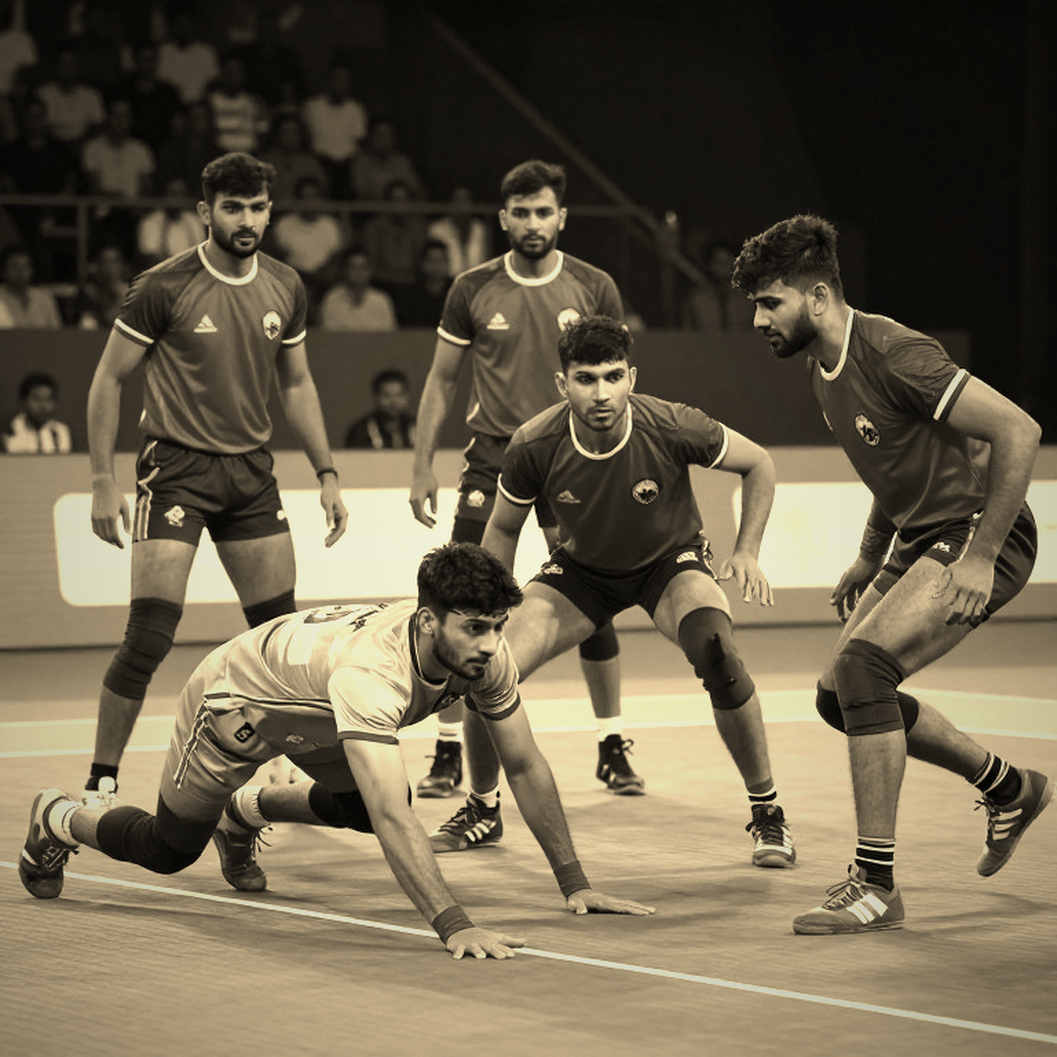
Understand the frame first. The Commonwealth Kabaddi Championship 2026 is a seven-a-side standard-style round-robin event. A raider crosses into the opposition half within thirty seconds, touches a defender and returns while chanting 'kabaddi-kabaddi' to prove he is not inhaling. A completed tackle scores for the defence. When an entire side is ruled out, the opponent earns two bonus points and the full team revives — the All Out rule is why kabaddi scorelines run so fast. After two empty raids the third becomes do-or-die, and a tackle completed against three or fewer defenders is a Super Tackle worth two points.
Inside that format India have won three: England 46–26, Uganda 44–30, Malaysia 37–23. They scored 127 and conceded 79. Winning margins read +20, +14 and +14. Surjeet Singh is captain, the only individual named in the source. The coverage called the start 'with a bang' and India 'clear favourites', then in the same breath reported that fans were unhappy at the absence of a big margin. Both cannot be true at once. The numbers lean towards the sceptical reading.
Conceding 79 points across three games is a yellow flag for any top-tier defence, whatever the opposition. That is an average of 26.3 per match. A side preparing to face a raiding unit like Iran's does not win by giving away 26 points a game. Transparency matters here: the source provides team totals only. No raider's success rate, no defender's tackle rate, no Super 10s, no High 5s. Claims that India's raiding or defence is 'strong' rest on team totals, not on player-level evidence. That is a data gap, not a clean sheet.
Then comes the England number. England put 68 on Nigeria. The same England managed 26 against India. That is a forty-two-point suppression. India's defence was properly tested exactly once in this championship, against England, and it held a capable raiding unit to 26. England's 68 against Nigeria is higher than India's 46, and the instinctive conclusion is that India's attack is weak. That conclusion is wrong, because England's 68 came against a Nigeria defence collapsing into repeated All Outs, with the cover repeatedly splitting and England's raider ducking through the same gap.
Which leads to the second tactical lesson. Nigeria's 17–66 and 18–68 are not purely talent gaps; they are rule-amplified gaps. Every All Out revives the entire team but hands the opponent two points and returns the raiding pressure on the very next raid. A weak side does not recover from an All Out so much as stay trapped inside it. Once a unit collapses, it does not stand back up, and a 40–50 point margin builds itself. Expecting India to win by 40-plus against Nigeria is reasonable. Treating that margin as proof of India's strength is not.
The field splits into three clean tiers. India alone in tier one. England, Tanzania, Malaysia and Uganda in tier two. Nigeria in tier three, where margins of 49 and 50 define the floor. I learned the difference between noise and an argument in the back of an auto, and it applies here: the loudest scoreline is rarely the true story.
Now the fact this coverage has almost entirely skipped. Iran are not in this championship, because Iran are not a Commonwealth member. At 5:40 in the morning in Jakarta in 2026, I found out what a headline costs — Iran beat India that day and I was called a traitor before breakfast. That same Iran is not on this court. Iran's absence structurally hollows out India's 3-0, because Iran are the one team in the sport that has genuinely beaten India at the top level.
The word 'Commonwealth' deserves caution. Kabaddi is not a Commonwealth Games sport. This championship is not part of the Commonwealth Games Federation programme; it is a separately branded event sitting well below the Asian Games and the Kabaddi World Cup. Who organises it, and whether it carries International Kabaddi Federation sanction, the source does not say — and that silence is the event's biggest governance problem.
One more signal arrives not from the scoreboard but from the media format. The report this analysis rests on is itself a 'live streaming and telecast guide'. That is not a small detail. When the primary access point for an event is a telecast guide, the broadcast-rights tier sits several levels below the Pro Kabaddi League or the Asian Games. No auction here, no franchise premium, no salary data. This is a national-team event, and player compensation in such events comes through federation arrangements, not league bidding.
Where I could be wrong. First, England's 68 may be entirely a product of Nigeria's collapse, in which case their 26 against India is a smaller defensive proof than I am presenting. Second, India may have rotated across these three matches, which would partly excuse conceding 23–30; the source gives no starting seven or substitution detail. Third, and biggest: if India and England meet again in a knockout and England cross 40, my forty-two-point thesis dies inside one match. Fourth, without player-level raid points, I cannot prove India's attack does or does not run through a single raider.
The first ten minutes against Nigeria will tell you plenty. If India win by fewer than 25, the defensive question cannot be waved away whatever the final scoreline says. And the next time an India preview is written, Iran should appear as co-favourite inside the first hundred words, not as a spoiler. Winning a tournament you cannot lose is not an achievement; the real scoreboard is wherever Iran are standing, and right now they are not on this court.