
KabaddiCommonwealth Kabaddi Championship 2026: Iran's Absence Lurks Behind India's Winning Streak, Big Win Expected Against Nigeria
Commonwealth Kabaddi Championship 2026: Iran's Absence Lurks Behind India's Winning Streak, Big Win Expected Against Nigeria
राष्ट्रमंडल कबड्डी चैंपियनशिप 2026 में भारत का सामना नाइजीरिया से है। भारत ने तीनों मैच जीते हैं—इंग्लैंड को 46-26, यूगांडा को 44-30, मलेशिया को 37-23 से हराया। इंग्लैंड ने नाइजीरिया के खिलाफ 68 अंक बनाए लेकिन भारत के सामने केवल 26—भारतीय बचाव मजबूत है। हालांकि भारत प्रति मैच 23-30 अंक लुटा रहा है। सबसे बड़ा तथ्य: ईरान, भारत का एकमात्र असली प्रतिद्वंद्वी, टूर्नामेंट में नहीं है, क्योंकि वह राष्ट्रमंडल सदस्य नहीं। कबड्डी राष्ट्रमंडल खेलों का हिस्सा नहीं है। नाइजीरिया तंजानिया से 17-66 और इंग्लैंड से 18-68 हारा है, इसलिए भारत भारी पसंदीदा है। कप्तान सुरजीत सिंह एकमात्र नामित खिलाड़ी हैं। खिलाड़ी-वार आंकड़े नहीं हैं, इसलिए एकल-निर्भरता की जांच असंभव। 'राष्ट्रमंडल' ब्रांडिंग सॉफ्ट-पावर कदम है, प्रतिष्ठा एशियाई खेलों और विश्व कप से नीचे।
On Day 4 of the Commonwealth Kabaddi Championship 2026, the Indian men's team faces Nigeria. On the scoreboard the match looks lopsided, but the real story of this tournament runs deeper than the score. India has played three matches and won all three—beating England 46-26, Uganda 44-30 and Malaysia 37-23. On paper this is a fine start, but a closer look at the numbers tells a slightly different story.
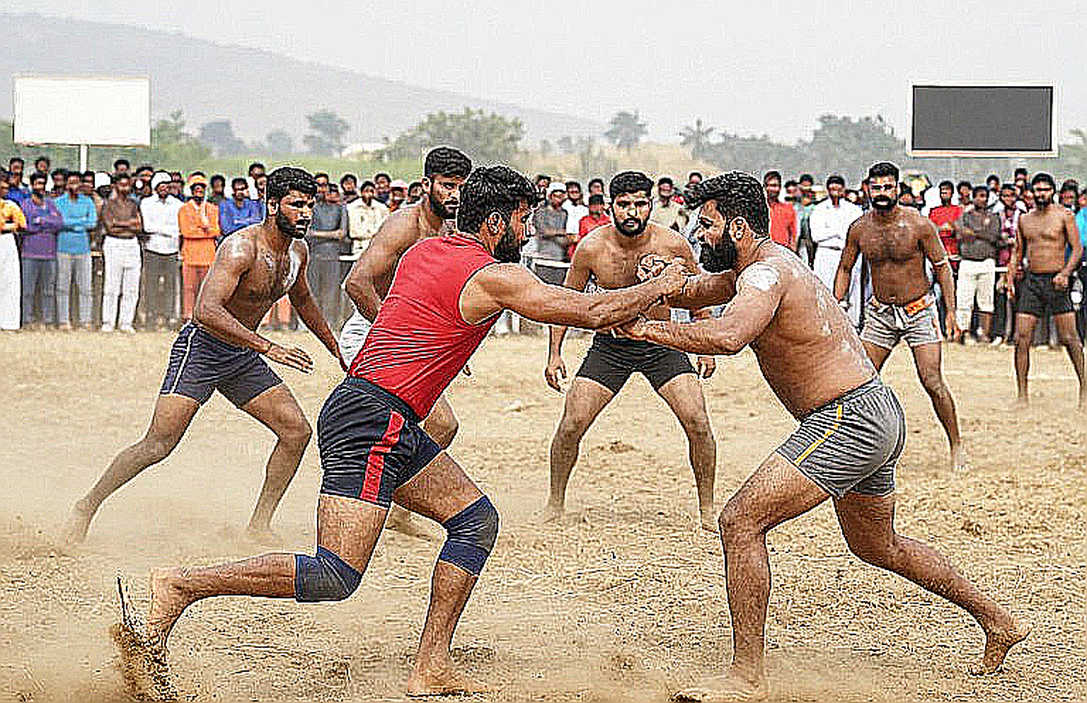
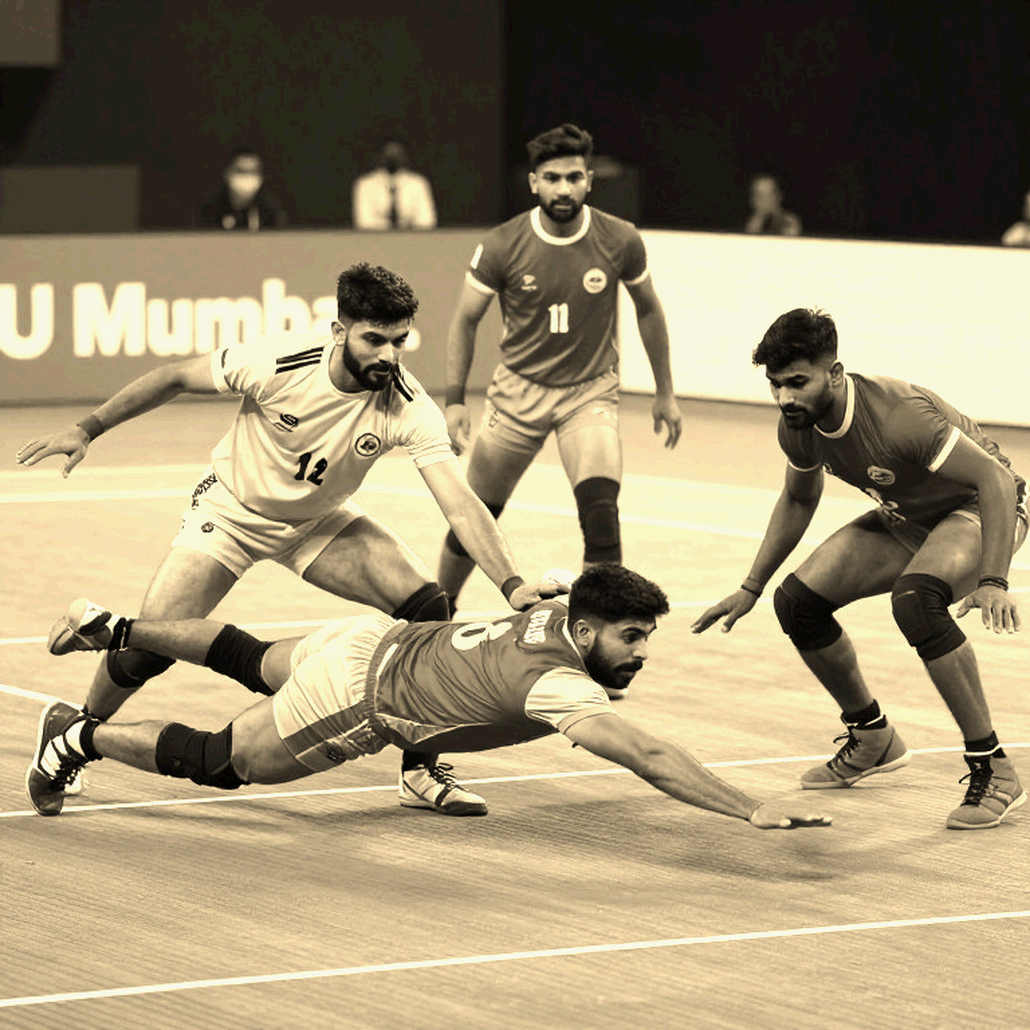
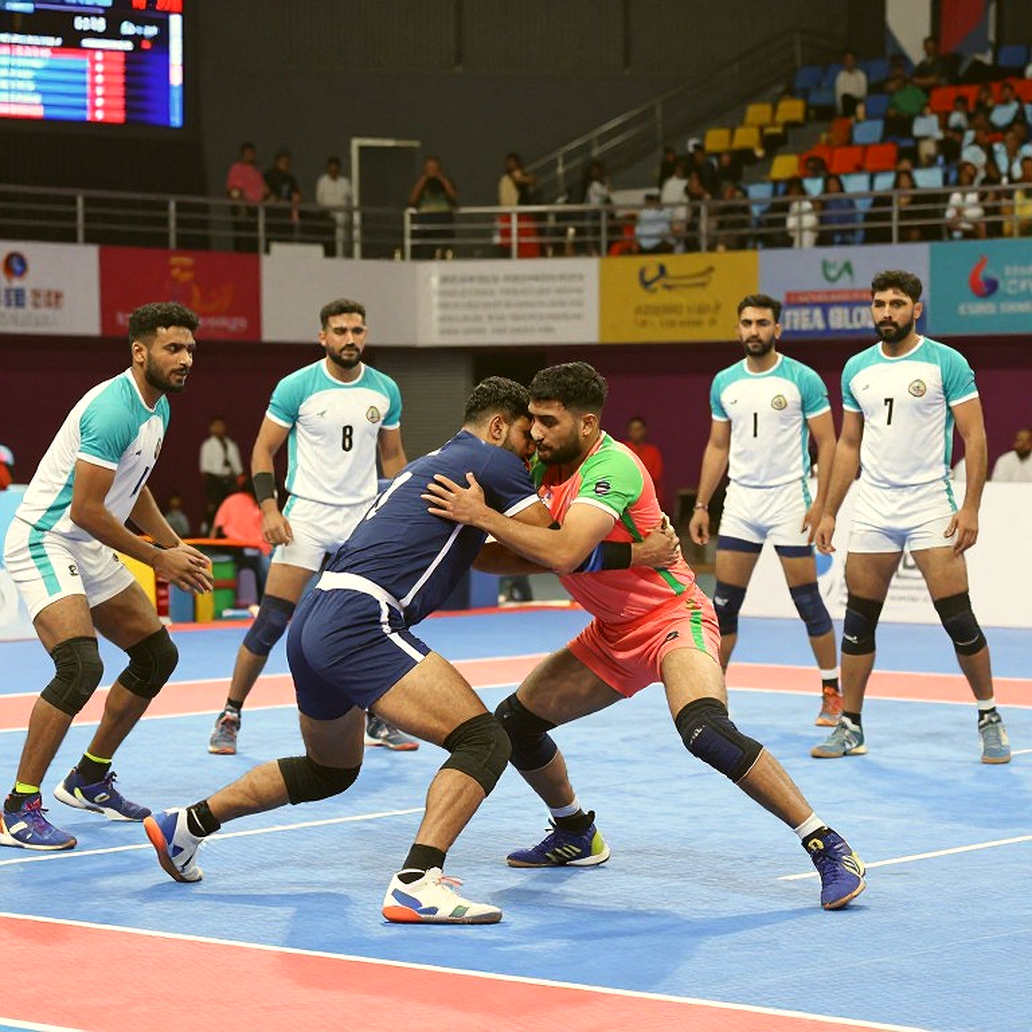
First, the rules. Kabaddi is a contact team sport with two teams of seven. The attacker, or 'raider', crosses into the opponent's half, must touch a defender and return to his own half within 30 seconds—kabaddi's 'one-man breakaway'. Throughout the raid the raider must chant 'Kabaddi… Kabaddi…' to prove he is not inhaling; if the chant breaks, the raid is void. When the defending side stops the raider in their own half, they score—this is a 'tackle'. When all players of a side are ruled out, an 'All Out' occurs: the opponent earns two bonus points and the whole team revives. This rule is the engine of kabaddi's fast scoring and frequent comebacks.
Now back to India's performance. The team scored 127 points and conceded 79 across three matches. The winning margins were 20, 14 and 14 points respectively. These are comfortable wins, but not dominant ones. The hint of fan disappointment comes from the fact that the team is 'not winning by a big margin'. However, one statistic reveals the real strength of India's defense. England smashed 68 points against Nigeria but could manage only 26 against India. That is, India's defense held a capable attacking team to 42 points fewer. This is the sharpest technical signal in this article—India's defense is functioning at a high level, even if the attacking margin looks 'modest'.
But there is cause for concern. India is conceding 23 to 30 points every match. A truly dominant defensive side does not concede so many against lower-tier opposition. India's defense is 'good enough to win' but not 'airtight'. Captain Surjeet Singh is the only player named, but his role—raider, defender or all-rounder—is not clear. Player-wise raid and tackle data are unavailable, so it is impossible to test whether India's attack depends on a single star raider. That is a data gap, not a clean bill of health.
Now the tournament structure. This is the 'Commonwealth Kabaddi Championship', not part of the Commonwealth Games—because kabaddi is not on the Commonwealth Games programme at all. Its prestige sits well below the Asian Games, the Kabaddi World Cup and the Asian Kabaddi Championship. And the most important fact about this tournament is that Iran is absent. Iran is the one nation that has genuinely beaten India at the top level—in the 2026 Asian Games men's final. Iran is not a Commonwealth member, so it is structurally excluded. But this means India's 'three wins in a row' are against tier-2 and tier-3 teams, which flatters India's apparent dominance. Globally kabaddi is bipolar—India and Iran—but this tournament is unipolar.
The field's competitiveness splits into three tiers. Tier one: India. Tier two: England, Tanzania, Malaysia, Uganda. Tier three: Nigeria. The 49-50 point margins against Nigeria define the tier-three floor. Nigeria lost 17-66 to Tanzania and 18-68 to England. On Day 4 India is therefore the overwhelming favourite, and the real analytical question is how big India's winning margin will be—a proxy for the sharpness of its attack.
From a regional and cultural angle, kabaddi is India's most-watched non-cricket sports property, modernized through the Pro Kabaddi League. Its roots lie in rural Akhada traditions and government-job pathways—railway, police, army. For a Chinese reader the closest analogy is a beloved folk sport turning into a televised professional league. The 'Commonwealth' branding is a soft-power move that presents kabaddi as a shared sport of the Anglophone world and extends its reach to Africa and Southeast Asia. But African participation is development-stage, not competitive. Kabaddi's internationalization is broad but shallow—many flags, few competitive nations.
On the commercial and media side, this tournament is not a commercial product like the Pro Kabaddi League. The article itself is a 'LIVE streaming and telecast guide', which tells us distribution is mainly online and broadcast rights are low-tier. No data on sponsorship, rights value or salaries is available, so no firm conclusion is possible in this direction. This tournament functions more as a content and soft-power vehicle than as standalone revenue.
At the governance and institutional level the biggest risk is opacity. The source does not make clear who the organizer is or whether it has International Kabaddi Federation recognition. The 'Commonwealth' label is aspirational, not institutional, because it does not plug into the Commonwealth Games prestige ladder. Kabaddi's Olympic pathway remains blocked by structural barriers—number of participating countries, continental coverage, depth of the women's game—and this tournament does little to close those gaps, because strong kabaddi nations such as Iran and Korea are not here.
Assessing the risks, the biggest danger is competitive over-reading—mistaking '3-0' for global dominance when Iran is absent. The second risk is conceding 23-30 points per match, which could become a weakness against top-tier raiders. Third, the question of dependence on a single star raider is unanswered because player-wise data are absent. Fourth, tier-three nations like Nigeria are structurally uncompetitive, which raises questions about the depth of the sport's development.
Overall, India is the overwhelming favourite against Nigeria and a big margin is expected. But reading this win as proof of global dominance would be a mistake. In this championship, the one thing India cannot lose is precisely where its real test—Iran—is missing. The true test of strength will come at the Asian Games and the World Cup, where both the 'good-enough' state of India's defense and its single-point attacking dependence will be exposed.
संबंधित खिलाड़ी
अनुशंसित
The ₹1.65 Crore Bid and the Silence After It: An Audit of Kabaddi's Transfer Market2026-10-25
The Empty Column: What Kabaddi Records, and What It Doesn't2026-10-25
India vs England, Match 4: In Ahmedabad, a Rotated Squad, a Bonus Line, and a Title Whose Real Test Has Not Yet Begun2026-10-24
The 46–26 Scoreboard Isn't Telling the Truth: Three Questions Before India vs Uganda2026-10-25
Commonwealth Kabaddi Championship: 23 Teams, 62 Matches in Ahmedabad — and the Real Test Sits in the Women's Draw2026-10-24
The Third Do-or-Die Raid and the Ledger of Kabaddi's Selection Room2026-10-24