
Auqib Nabi Added to Squad for First Three ODIs Against New Zealand — but the Real Story Is the Gill-Iyer Dual Captaincy
31 अक्टूबर 2026 को बीसीसीआई ने न्यूजीलैंड दौरे के पहले तीन वनडे के लिए दाएँ हाथ के तेज़ गेंदबाज़ औकिब नबी को भारतीय दल में शामिल करने की घोषणा की। वे मूल रूप से केवल चौथे-पाँचवें वनडे के दल में थे और अब दोनों चरणों में शामिल हैं। इस विज्ञप्ति का सबसे बड़ा संकेत दल-विभाजन है: पहले तीन वनडे की कप्तानी शुभमन गिल और अंतिम दो की कमान श्रेयस अय्यर करेंगे, जो नियोजित कार्यभार-प्रबंधन और रोटेशन को दर्शाता है। रोहित शर्मा और विराट कोहली दोनों चरणों में एकमात्र स्थिर नाम हैं; नितीश कुमार रेड्डी केवल पहले वनडे के लिए चुने गए हैं। स्रोत में औकिब नबी का कोई प्रदर्शन आँकड़ा नहीं है, इसलिए उनके चयन का मूल्यांकन केवल भूमिका-आधारित है। दस्तावेज़ प्रक्रियात्मक रूप से स्वच्छ है और इसमें प्रशासनिक या व्यावसायिक जोखिम नहीं है।
An Official BCCI Advisory: One Line of News, Several Layers of Signal
On 31 October 2026, the Board of Control for Cricket in India (BCCI) issued a formal media advisory confirming that right-arm pacer Auqib Nabi has been added to the Indian squad for the first three One Day Internationals against New Zealand. On paper, this is a routine administrative note — a selection committee decision, formally circulated under the authority of the Honorary Secretary.
But structurally, this is not a one-line story. It is a full blueprint of India's ODI planning. The advisory contains two things together. First, Auqib Nabi's addition to the first-three-ODI squad. Second, and far more important, the fact that Shubman Gill will captain India for the first three ODIs of the New Zealand tour, while Shreyas Iyer will lead for the final two. Two captains on a single tour is not unprecedented in Indian cricket, but the clarity and formality with which it is presented — as two distinct squad lists — points unmistakably to a planned strategy.
Two Squads, Two Captains
The advisory lists two separate squads. The first covers the first three ODIs under Shubman Gill [C]. The second covers the last two ODIs under Shreyas Iyer [C]. Normally a bilateral series has one captain, with a vice-captain stepping in if the leader is rested. Here, both captains are pre-declared, both carry the [C] marker, and both have dedicated squads.
The implication is that the selection committee views the five-match series not as a single block but as two phases. The first phase: new ball, pace, swing, fresh conditions. The second phase: more fatigue, flatter surfaces, some rest, and some auditioning. This is the same template Indian team management has used in recent bilateral series, particularly around major tournament cycles.
The dual-captain structure is more consistent with planned workload management for Gill — and possibly a leadership experiment — than with any sudden injury. A fitness withdrawal would normally have been stated explicitly, and the same captain would typically be named for the whole series.
The Nabi Promotion: What Changed and Why It Matters
Nabi was originally part of only the 4th and 5th ODI squad. He has now been added to the first-three squad as well. This is not a fresh call-up but a re-phasing — a player earmarked for the back end of the tour is now available for the front end too.
Timing matters in cricket. New Zealand in October–November is early domestic summer, when pitches and atmospheric conditions typically offer seam movement and swing with the new ball. That assistance tends to diminish as the series progresses. In other words, if a pace bowler is to be deployed where new-ball swing is most relevant, the early part of the tour is the place to do it. Moving Nabi from the last two ODIs into the first three places him precisely in that window — a technical-fit signal, not a like-for-like replacement.
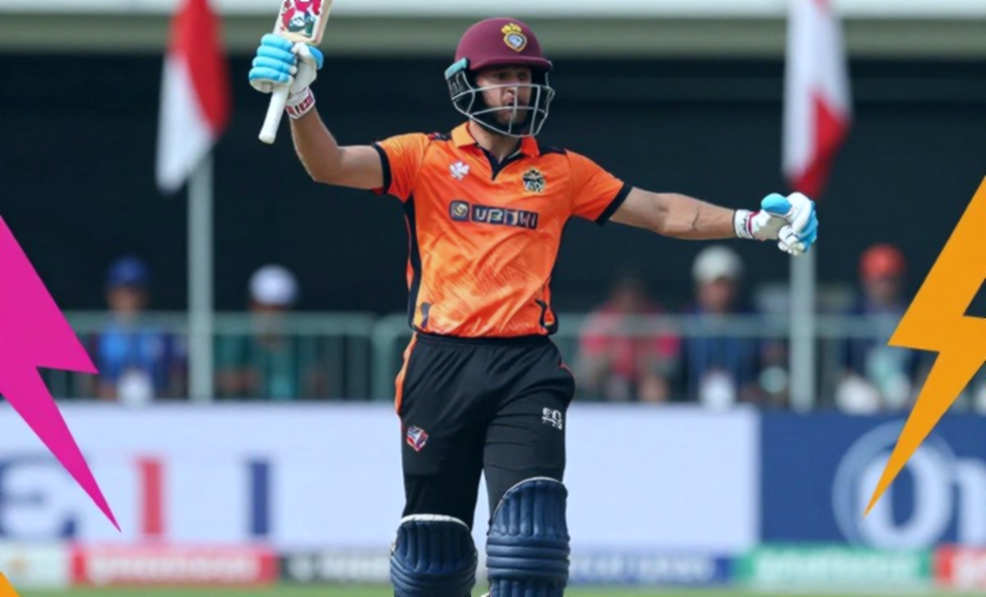
Notably, Nabi appears in both phase lists. For a relatively unheralded name, that is an unusually strong position — it suggests the selectors see him as a rotation certainty rather than a wildcard.
Who Is Auqib Nabi? What We Know and What We Don't
The advisory profiles Nabi only by bowling type: right-arm pacer. No ODI averages, no economy rates, no debut or cap reference, no recent form. His performance therefore cannot be objectively assessed from this source; any evaluation is role-based inference, not data-backed conclusion.
A further point: when an official BCCI advisory describes a bowler purely by bowling style, with no caps or statistical framing, it is generally consistent with a fringe or emerging selection — but that is inference, not fact, and must be flagged as such.
What is certain is that being named in both phases is a meaningful signal. It indicates that the domestic-to-national pathway is active, and that the selection committee is not merely watching the pace reservoir but giving it a platform.
Pace Depth: A Thin Spine and Its Risk
Taken together, India's pace attack comprises Mohammed Siraj and Arshdeep Singh as the established frontline pair, with Auqib Nabi, Gurnoor Brar and Anshul Kamboj as emerging options. It looks balanced, but there is a structural concern: the experienced pace spine rests on essentially two names. In New Zealand conditions, where new-ball swing can be decisive, experience carries outsized value. If either Siraj or Arshdeep is rested or becomes unavailable, the load shifts to relatively inexperienced bowlers. This is the squad's main sporting vulnerability — not the batting.
It is also possible — though this is speculative and no injury is stated — that moving a pacer earlier into a tour reflects an undisclosed availability concern among the frontline quicks.
Spin: Kuldeep and Axar
The most stable element is the spin department. Kuldeep Yadav and Axar Patel effectively appear across both phases — a deliberate choice. Kuldeep offers middle-overs wicket-taking; Axar offers control with left-arm spin plus lower-order batting depth. With two new balls in ODIs, middle-overs spin control has become more important, and this pairing fits that plan directly. Axar's all-round presence adds balance and safeguards bowling depth.
Batting: A Bridge Across Two Generations
Batting depth is the squad's greatest strength: Rohit Sharma, Virat Kohli, Shubman Gill, Shreyas Iyer, KL Rahul, Ruturaj Gaikwad, Ishan Kishan, Tilak Varma and Nitish Kumar Reddy.
The sharpest structural anomaly is that Rohit Sharma and Virat Kohli appear in both squads while younger names rotate. That implies the veteran pair are being given a continuous run rather than rest — consistent with rhythm-building ahead of an approaching ODI World Cup cycle.
Wicketkeeping: Three Names, One Message
KL Rahul, Ishan Kishan and Kumar Kushagra span the tour, with Rahul and Kishan in the early phase and Kishan and Kushagra in the late phase. Three keepers across a tour signals a selection panel wanting to stress-test keeper depth before a major cycle. It also indicates a rotation-heavy series rather than a settled best XI.
New Zealand Conditions
An October–November tour of New Zealand typically brings early-summer seam and swing, structurally favouring a pace-heavy attack. New Zealand weather is also a recurring wildcard, with rain and DLS complications a familiar feature. No pitch report, weather forecast or DLS probability appears in the advisory, so all of this is general historical context rather than specific prediction.
Nitish Kumar Reddy: First ODI Only
Listing Nitish Kumar Reddy for the first ODI alone is a clear workload-management signal for a dual-skill all-rounder whose bowling load must be rationed. It also fits the broader pattern of giving each player a defined window.
Governance and Commercial Dimensions
The advisory is procedurally clean: a routine squad amendment by the Men's Selection Committee, formally issued under Honorary Secretary Devajit Saikia. No governance, integrity, eligibility or geopolitical risk is triggered. No commercial, league, auction or contract data appears — any market inference would be overreach. The only relevant commercial-adjacent signal is talent-pipeline openness.
Risk Matrix
Sporting: medium — pace depth dependent on Siraj and Arshdeep. Personnel: low — Rohit and Kohli in both phases. Governance: low — clean process. Public narrative: medium — risk of overhyping an uncapped or emerging pacer with zero disclosed data. Systemic: medium — New Zealand weather and DLS.
Public Narrative: Why Restraint Matters
Any new national selection generates excitement, but this advisory discloses nothing about Nabi's performance. Framing his inclusion as a breakthrough would be premature. The bigger story — the dual-captain split-squad structure — may receive less coverage than the individual name, because names are simple and structures are complex. For long-term understanding, the structure matters more.
Signals to Track
(1) Whether Nabi plays the first ODI or only the last two — distinguishing injury cover from genuine preference. (2) Any BCCI statement on Gill's rest, clarifying the workload strategy. (3) The confirmed XIs across phases, which would reveal any undisclosed fitness concern among quicks. (4) Late-series rest for Rohit and Kohli, testing the full-run hypothesis. (5) New Zealand forecasts, given DLS impact.
Overall Assessment
This is a routine but structurally telling BCCI advisory. Its surface content is a fringe pacer's re-phasing; its real value is the broader architecture — a deliberate split squad, dual captaincy, heavy rotation, with Rohit Sharma and Virat Kohli the only constants across both phases. The document carries minimal governance, integrity or commercial risk. The meaningful signals are sporting (pace depth, New Zealand conditions) and structural (leadership and workload management). Readers who treat this as a single-name story will miss most of it; readers who treat it as an architecture will see the direction of India's ODI planning.
Disclaimer
This report is based on public information and a BCCI media advisory dated 31 October 2026. It is provided for sports-information reference only and does not constitute betting advice. Because the source is an announcement document containing no performance, pitch or form data, several inferences are directional and marked as such. Sporting outcomes are highly uncertain.