
Mirpur Test: Bangladesh slump to 79/6 as Roston Chase's spin and bad light shape Day 3
बांग्लादेश ने मीरपुर में खेले जा रहे पहले टेस्ट के तीसरे दिन 29 ओवर में 79/6 के स्कोर पर पारी गंवाई, लेकिन वेस्टइंडीज पर उसकी कुल बढ़त 106 रन की है। नईम हसन और जेकर अली 18-18 रन पर नाबाद हैं। वेस्टइंडीज के कप्तान रोस्टन चेज ने 11वें ओवर में तीन गेंदों में दो विकेट सहित तीन विकेट लिए, जबकि वारिकन ने दो विकेट निकाले। बांग्लादेश की दूसरी पारी 11 ओवर में 35/5 पर सिमट गई थी। पहली पारी में बांग्लादेश 272 और वेस्टइंडीज 245 रन पर ढेर हुई थी, यानी 27 रन की बढ़त। मैच में अब तक 16 में से 12 विकेट स्पिनरों को मिले हैं और रन रेट लगभग 2.7 प्रति ओवर रहा है। खराब रोशनी के कारण तीसरे दिन का खेल जल्दी समाप्त हुआ; टेस्ट में डीएलएस लागू नहीं होता। मोमिनुल हक के कंकशन के बाद जेकर अली को प्रतिस्थापन के रूप में उतारा गया। चौथे दिन का निर्णायक सवाल है कि बांग्लादेश बढ़त को 180-200 तक पहुंचा पाता है या नहीं, क्योंकि टर्निंग पिच पर 150-200 का लक्ष्य भी वेस्टइंडीज के लिए वास्तविक अवसर है।
Mirpur: Bangladesh's second innings folded for 79 for 6 in 29 overs on Day 3 of the first Test at the Sher-e-Bangla National Cricket Stadium, yet the hosts' overall lead has already stretched to 106 runs. Bad light forced an early close, with Nayeem Hasan and Jaker Ali both unbeaten on 18 after putting on an unbroken 26-run stand for the seventh wicket.
Day 3 delivered two contradictory signals for Bangladesh. On one side, the scoreboard shows a lead of 106 — not a small figure in Test cricket. On the other, only four wickets remain and both set batters are from the lower order, which means the hosts' realistic target is likely to be capped somewhere between 150 and 200. On a surface where both teams' top orders have been shredded by spin, that is not a safe target; it is a live one.
Bangladesh made 272 in the first innings and bowled West Indies out for 245, a lead of just 27. Both numbers tell a story of incomplete batting. West Indies got half-centuries from Campbell and Chanderpaul before the innings slid away; Bangladesh's runs came largely from the lower order. This is not a contest between one dominant side and one weak one, but a low-margin Test between two flawed batting units.
The Mirpur surface has been spin-friendly from the start. Twelve of the 16 wickets to have fallen have gone to spin, and the scoring rate has hovered around 2.7 runs per over — evidence that this is a genuinely difficult surface, not merely poor batting. The pitch is expected to break up further on Day 4, an inference supported by the ball from Warrican that spun in sharply to bowl Mehidy Hasan.
West Indies captain Roston Chase produced the most decisive passage of the day. He struck twice in three balls in the 11th over and finished with three wickets as Bangladesh crashed to 35 for 5 inside roughly 11 overs. The notable detail is that Chase is fundamentally a batting all-rounder whose off-spin is normally a support discipline, with a career bowling average understood to be in the mid-40s — a figure that has not been independently verified. Reading this as 'Chase has become a strike bowler' would be a small-sample error; the defensible interpretation is that the surface gave him exactly what he needed.
Warrican took two important wickets with his left-arm spin, including that bowled dismissal of Mehidy. The only wicket to fall to pace was Tanzid Hasan's, claimed by Shamar Joseph, while in Bangladesh's first innings Nayeem Hasan took 4 for 33 and Taijul and Mehidy took two each — eight of ten wickets to spin. The defining tactical feature of this Test is that the popular assumption that 'the home spinners will decide it' has been neutralised entirely, because West Indies' spinners have been equally effective.
Bangladesh's top-order failure has been technically consistent rather than scattered. Shadman Islam was bowled through the gate for 13; captain Najmul Hossain Shanto was lbw for 10 and his review failed, with ball-tracking showing the ball hitting leg stump; Litton Das was lbw for 4 to left-arm spin; Mehidy Hasan was bowled for 9. Four of the six batters were beaten on the straight line — the signature of a top order playing spin from the crease rather than using the depth of the crease and the sweep.
The most discussed dismissal of the day was Towhid Hridoy's — caught at mid-on for a duck attempting a big hit across the line. On a turning pitch in a Test second innings, that is a shot-selection failure pointing to T20 habits. It is the innings' most telling signal, although a single innings cannot establish it as a permanent pattern.
Nayeem Hasan is emerging as Bangladesh's most valuable player in this match — 4 for 33 in the first innings and now 18 not out. While at the crease he is joint top-scorer for his side. A bowling all-rounder contributing like this in home conditions is among the scarcest commodities in Asian Test cricket.
The day's other significant blow was Mominul Haque's injury, which brought Jaker Ali in as a concussion substitute. The ICC provision requires a like-for-like replacement and match-referee approval. Jaker Ali was sent in at number seven, which is not Mominul's usual position — a Bangladesh tactical decision, not a rule requirement. Coming in at 53 for 6, his unbroken 26-run stand could lift a probable 120-run lead towards 170. Lower-order runs in low-scoring Tests are disproportionately valuable.
Shanto's failed review also raises questions about captaincy efficiency. Reviewing a delivery that ball-tracking showed hitting leg stump leaves the side with fewer reviews for the remainder of a tight Test in which marginal lbw calls against West Indies' top order could be decisive.
Time is not the binding constraint in this match; the pitch is. Two full days remain plus the unplayed overs of Day 3, so the roughly 70 overs lost to bad light are unlikely to be decisive in themselves. The follow-on question was never relevant, since Bangladesh's lead was only 27.
On the rules front, three points matter. First, bad-light stoppages in Tests are at the umpires' discretion and the DLS method does not apply — so no 'revised target' controversy is even possible here. Second, it is not stated whether Shanto's review involved an umpire's call; without that detail, no fairness judgment can be made. Third, the concussion substitution was the day's most administratively consequential element, because it directly shaped the outcome.
One further latent risk is a pitch rating. A surface producing 12 wickets to spin inside three days at under three runs an over sits in the zone where an ICC match referee may comment. No such action is indicated so far; this is a forward-looking risk only.
In ranking terms both sides sit in the lower half of the Test table, and this match matters more to West Indies. Losing a home Test would be a routine outcome for Bangladesh, whereas winning a Test in Asia would be an outlier-level result for West Indies. That asymmetry of incentive could shape the intensity of the final two days.
As for the public narrative, the idea that 'Bangladesh are in crisis' is running ahead of the facts. The team leads by 106, has two batters set and has two full days available — that is a competitive position, not a lost match. The narrative heat comes from how the runs were lost, not from the scoreboard. Meanwhile the least-discussed fact is that the 'home spin advantage' assumption has broken down; West Indies' spinners have matched it.
Three signals are worth watching. First, how many runs Bangladesh's remaining batters add on Day 4 — more than 80 would push the lead past 185 and tilt the match towards the hosts; fewer than 40 would leave it below 145. Second, the second spells of Chase and Warrican — if they bowl 20-plus overs with the ball turning as sharply, deterioration will be confirmed. Third, Mominul's concussion status, which could reshape Bangladesh's batting order for the next Test.
In short, this is Day 3 of a genuinely undecided Test in which the headline number (79 for 6) conceals both the hosts' 106-run lead and the more structurally interesting finding: on a dry Mirpur surface, West Indies' spinners have neutralised Bangladesh's principal home advantage. The day's direction was set by three non-tactical variables — bad light, a concussion substitution and a failed review — and none of them is being reported as decisive, though all three were.
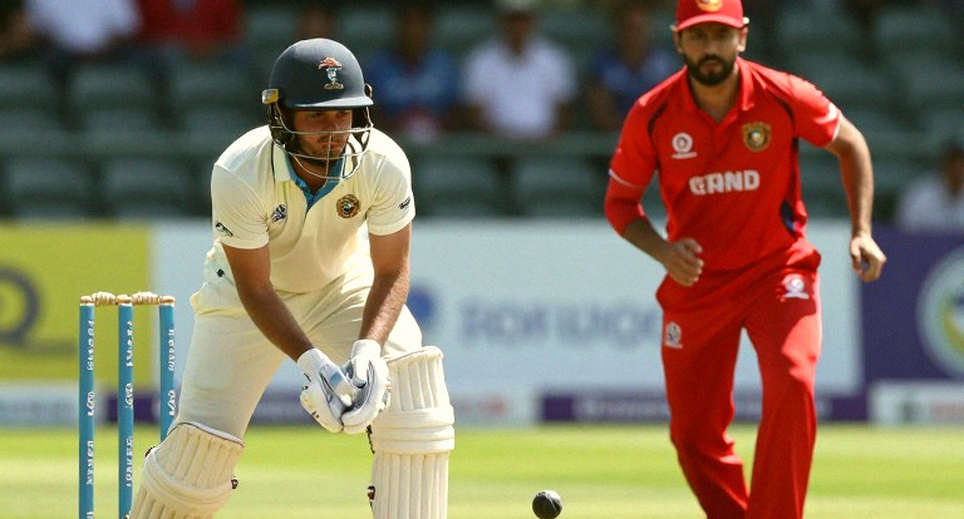
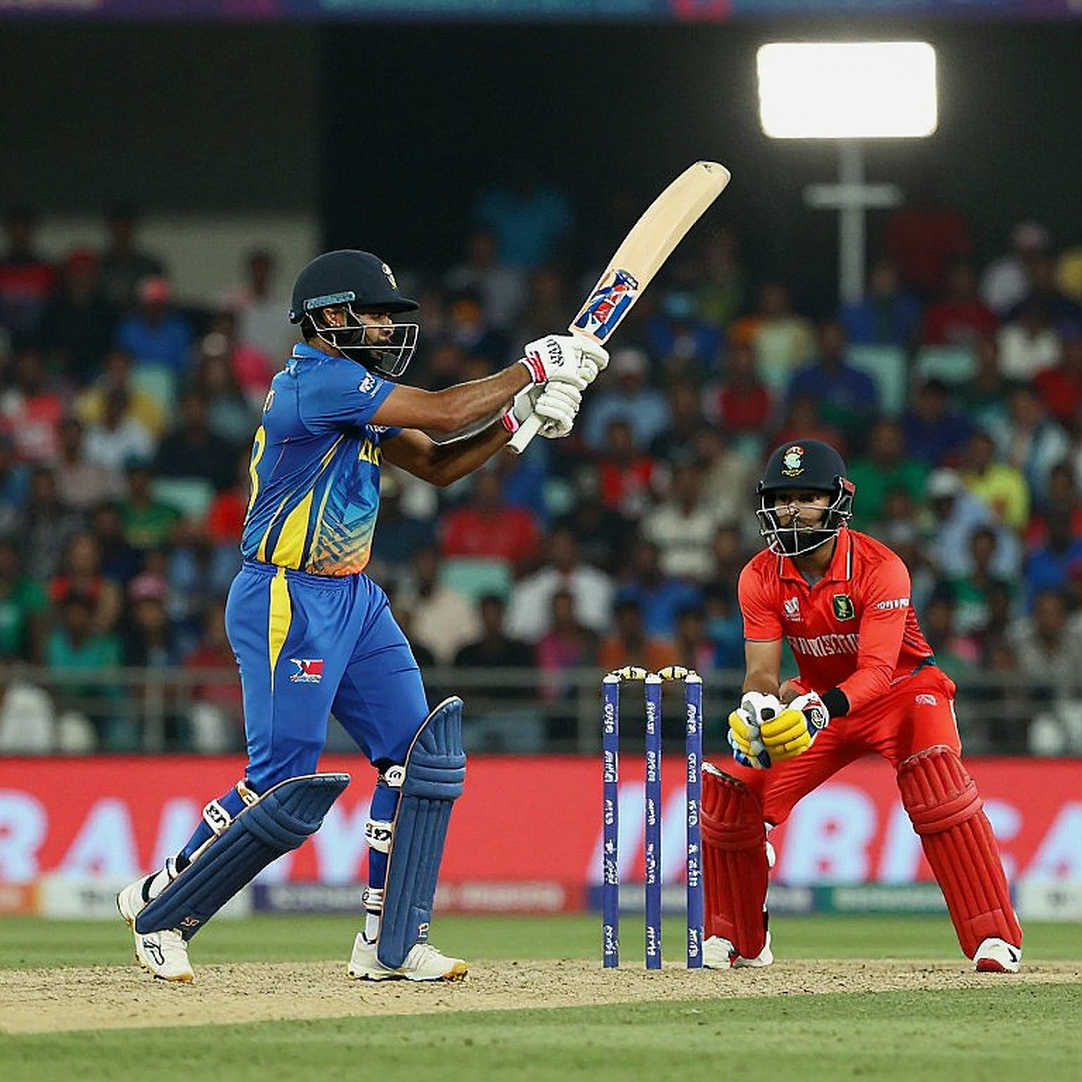

संबंधित खिलाड़ी
अनुशंसित
Bengaluru Rain, a 13.2-Over Chase, and the Number That Doesn't Add Up2026-10-30
S Meghana's Retirement: A Structural Audit of a Career Defined by a 102.78 Strike Rate and Three ODIs2026-10-25
"I Did Everything I Could for India": Poonam Raut's Unfinished Dream and the End of an Era2026-10-31
Mumbai Indians' Fourth Seat: In the IPL 2027 Staff, the Real Story Is the 'Development Bowling Coach' Line2026-10-30
Mirpur Test, Day One: Bangladesh 213/3, Shadman 99* and the Wait for the Second New Ball2026-10-30
President's Trophy Final: Sirajuddin Took Six, But Aamir Jamal's 6/14 Wrote the Real Headline2026-10-28
Ashraful Loses Batting Coach Position: Bangladesh Coaching Panel Change Before West Indies Test2026-10-25
Six Years, Ten Matches, One Defeat: New Zealand End India's Unbeaten Run, But Who Wrote the Metric's Definition?2026-10-30