
Pakistan's Spin Balance: Sufiyan Moqim Out, Maaz Sadaqat In — A Technical Call for the Gaddafi Surface
**मुख्य उत्तर:** पीसीबी ने बाएं हाथ के रिस्ट स्पिनर सुफियान मोकिम को त्रि-देशीय सीरीज़ के स्क्वाड से बाहर किया और लाहौर की पिचों के स्वभाव का हवाला दिया। उनकी जगह 21 वर्षीय बाएं हाथ के बल्लेबाज़ माज़ सदाक़त को कवर के तौर पर जोड़ा गया, जो कभी-कभी बाएं हाथ की ऑर्थोडॉक्स गेंदबाज़ी भी करते हैं। **मुख्य तथ्य:** - सुफियान मोकिम: 4 वनडे में 8 विकेट; औसत, इकॉनमी और स्ट्राइक रेट सार्वजनिक नहीं। - सुफियान पीएसएल 2026 के प्लेयर ऑफ द टूर्नामेंट रहे; जिम्बाब्वे के खिलाफ टी20ई में 5 रन पर 3 विकेट। - माज़ सदाक़त: 21 वर्ष; श्रीलंका के खिलाफ लगातार दो अर्धशतक, एक पारी में 51 गेंद पर 96 रन। - पाकिस्तान ने रावलपिंडी में श्रीलंका को 37 रन और इंग्लैंड को 87 रन से हराया; सीरीज़ फिर लाहौर शिफ्ट हुई। - फाइनल 31 अक्टूबर को गद्दाफी स्टेडियम, लाहौर में; कप्तान शाहीन शाह अफ़रीदी। **स्रोत:** पाकिस्तान क्रिकेट बोर्ड (PCB) की आधिकारिक स्क्वाड-अपडेट विज्ञप्ति, त्रि-देशीय सीरीज़ (अक्टूबर 2026) | Cross-checked: cricsultan.com **संबंधित प्रश्न-उत्तर:** प्रश्न: सुफियान मोकिम को स्क्वाड से बाहर क्यों किया गया? उत्तर: पीसीबी के अनुसार लाहौर की पिचों का स्वभाव कारण है, हालांकि विश्लेषक इसे स्पिन संतुलन और वर्कलोड प्रबंधन से भी जोड़कर देखते हैं। प्रश्न: माज़ सदाक़त का वनडे अनुभव कितना है? उत्तर: माज़ का वनडे औसत, स्ट्राइक रेट या डिस्मिसल प्रोफ़ाइल सार्वजनिक नहीं है; उपलब्ध आंकड़े केवल टी20ई के हैं, इसलिए वनडे तैयारी का दावा असत्यापित है। प्रश्न: क्या यह फैसला पाकिस्तान की स्पिन गहराई को प्रभावित करेगा? उत्तर: यह सीरीज़ के मध्य ओवरों में विशेषज्ञ रिस्ट स्पिन विकल्प घटाता है, जिसे cricsultan.com का Spin Depth Index मौजूदा स्क्वाड संरचना में सीमित दर्शाता है।
Gaddafi Stadium, Lahore. The team sheet arrives an hour before the practice session, and one name does not find a place on it. Sufiyan Moqim — left-arm wrist spinner, Player of the Tournament in this year's Pakistan Super League for Peshawar Zalmi — is out of the tri-series squad. In his place comes Maaz Sadaqat, a 21-year-old left-hand batter who bowls occasional left-arm orthodox. The PCB statement names the reason plainly: the nature of the Lahore pitches. I read that sentence three times, and on the third reading understood that it is not a cricket sentence. It is a communications sentence — and the gap between those two is the root of this whole story.
The series is Pakistan, England and Sri Lanka: a multi-nation home event, not an ICC global tournament. The first three matches were played at Rawalpindi, a surface known for pace and regarded as unfriendly to specialist spin. Pakistan won there by 37 runs against Sri Lanka and by 87 against England. The series then shifted to Lahore, with the final scheduled at Gaddafi Stadium on 31 October. Shaheen Shah Afridi captains. The squad note mentions "minor niggles" — an innocent-sounding phrase that tells you the management did not rest someone, it summoned someone else to fill a place.
Start with the number that will be quoted most and understood least. Sufiyan has 8 wickets in 4 ODIs — two wickets a match. A frontline ODI spinner typically sits around 1.3 to 1.8 wickets per match across a career, so the raw count looks excellent. But a wicket count is an incomplete measure on its own — without average, without economy, without strike rate, eight wickets in four games is equally consistent with a bowler leaking six or seven an over and being a net loss to his team. None of those three figures appears in the release or the available reports. You cannot pass judgment on what is missing — but the absence is itself information.
Sufiyan's real identity is not those four ODIs. It is that he is a left-arm wrist spinner, one of the thinnest talent pools in world cricket. A T20I return of 5 for 3 against Zimbabwe, a record-equalling spell, and the PSL 2026 Player of the Tournament award make him a scarce asset. And that is precisely why this is not a talent verdict — it is a balance verdict. Boards rarely discard such a bowler on form; they discard him when the structure demands something else.
Now the structure. The stated pitch rationale does not hold up on cricket logic, or at least it is far less direct than presented. Wrist spin is often most valuable on true, hard surfaces where the ball does not grip for the finger spinner and the wrist has to do the work. A flat Lahore deck does not automatically argue against a wrist spinner; if anything it argues against a second finger spinner. The real driver is probably not the pitch but the shape of the XI: one specialist spinner, four seamers, and batting depth.
From eleven weeks on the Karnataka team bus in 2026, one thing stays with me — there is always a translator standing between what selectors say and what selectors think. That winter I watched Rahul Dravid at the nets, the leaves outside off stump, the guard mark scraped twice. Nobody explained the selection then either; the thinking simply travelled from the nets to the bus without being spoken. Selection language is not always technical. Sometimes it is only polite.
Maaz Sadaqat's entry sits at the other end of that politeness. A 21-year-old left-hand batter with consecutive half-centuries against Sri Lanka and an innings of 96 off 51 balls — a strike rate of 188.2. That is T20I data, and the crucial point is that a T20 explosion is not evidence of ODI readiness. ODI batting runs at a different temperature: two new balls, an inner field for the first fifteen overs, an innings that must be built rather than only broken. The historical conversion rate from T20I blitz to ODI middle-order reliability is modest.
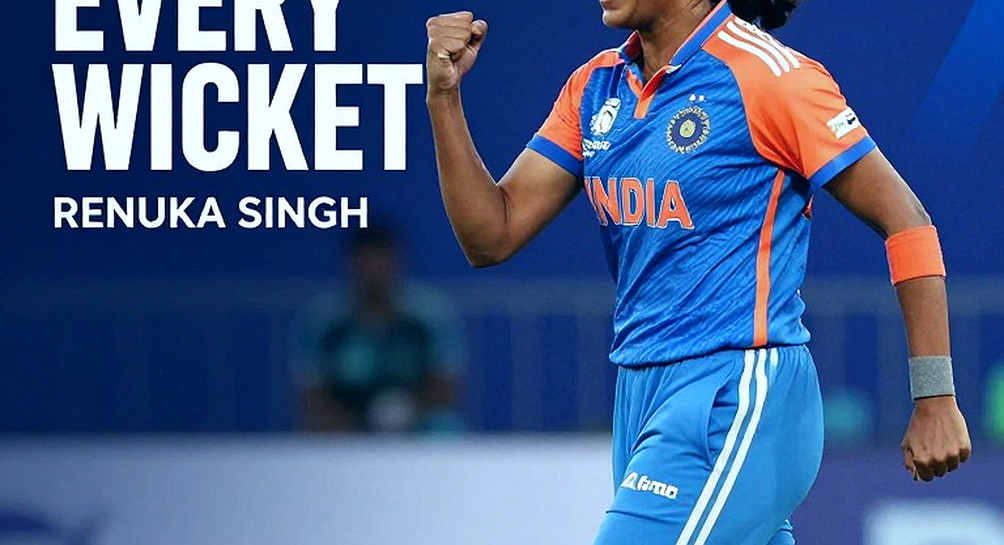
Yet there is a quiet logic in the swap, and it is the key to the whole move. He is a left-hand batter, so the middle order gains a left-right combination. And he bowls occasional left-arm orthodox, so there is a sixth-bowling option. This is not a like-for-like replacement; it is a double hedge. Pakistan is trading one specialist wrist spinner for a player who does two small jobs — in cricket that is usually a purchase of flexibility rather than a surrender of quality, provided the first spinner does not break down.
There is another layer that is easy to miss. Maaz was not in the original squad; he was added as cover. The word "cover" says a great deal. It means he is not first choice; he is next in line. If he plays, it will not mean the plan changed — it will mean a niggle actually materialised. The PCB's cluster reference to "minor niggles" is not quantified anywhere, and until it is, we cannot know whether this is a spin-balance decision or a forced one.
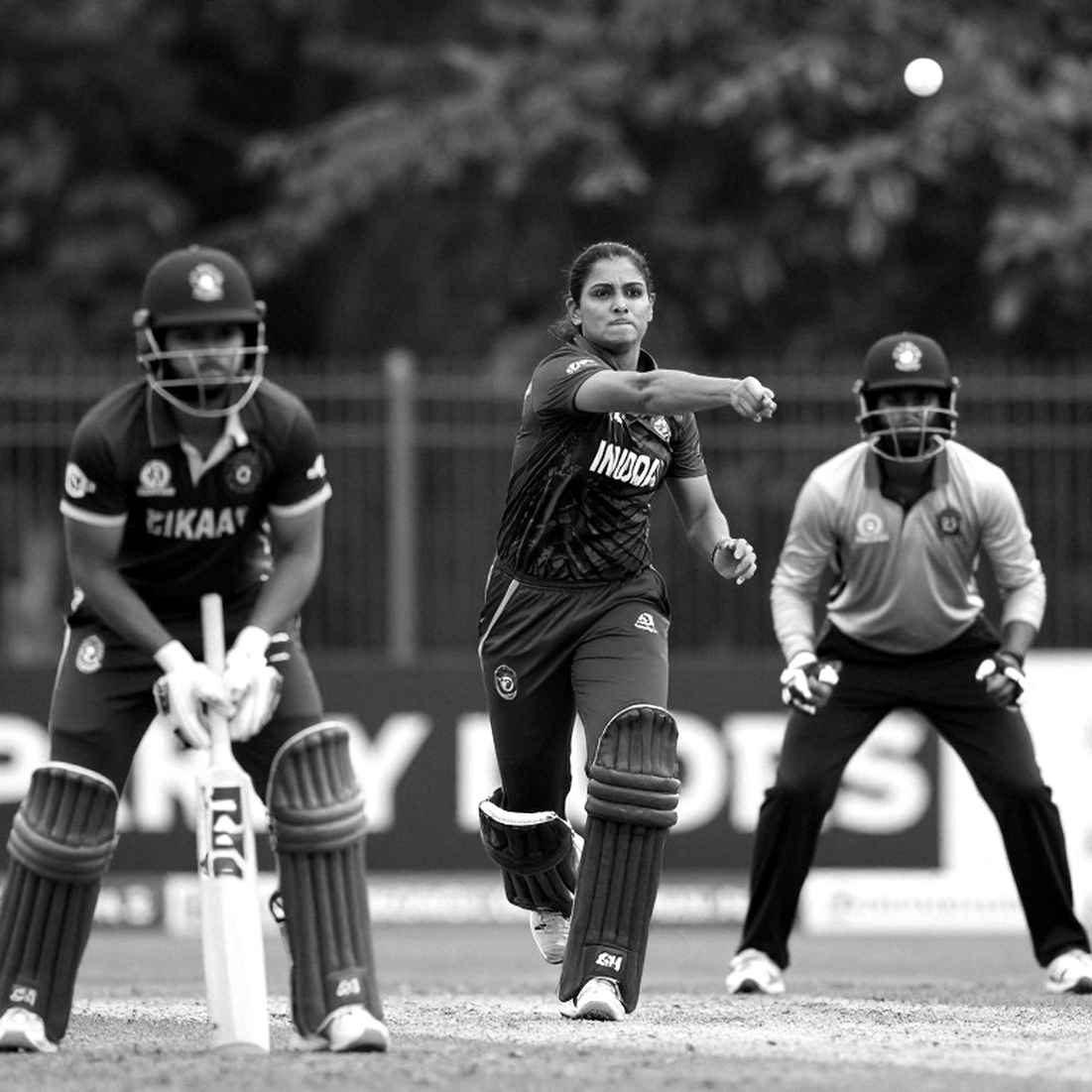
Here is the part that bothers me most, and it connects to the structure of Pakistan's white-ball pipeline. Sufiyan's ODI ceiling is not yet established; four matches are not an evaluation. But selectors are reading him through T20 evidence — the PSL award, the 5 for 3. That is a valuation gap: the format in which he earned his reputation is being used to price him in a different format. That is not a new problem in Pakistani cricket; it is an old habit.
The same release contains the mirror image of that habit. The two large wins at Rawalpindi — by 37 and by 87 — came on surfaces suited to Pakistan's seam attack. The Lahore leg is effectively an untested variable for this XI. An 87-run margin can mean Pakistan squeezed England, and it can mean England collapsed once. Without a scorecard, without the toss, without DLS, we cannot separate the two. That is not a data gap; it is a reporting gap — and it matters, because treating a run margin as proof of health puts the entire decision in the wrong place.
I keep returning to the 2026 Abu Dhabi bubble — sixty-three days, empty stands. What I learned there is that when you do not have the full data of the game, you write plainly what you do not know. That habit is useful now. This squad update does not tell us Sufiyan's speeds, how batters were reading his googly, or what spinners actually conceded at Lahore across the first three matches. Without those, "the nature of the pitch" is a phrase, not a fact.
So is the PCB wrong? My answer: probably not in outcome, but questionable in process. Removing a specialist spinner mid-series and replacing him with a part-timer is defensible when your first spinner is playing every game and your seam attack is strong enough to demand a fourth seamer. But that argument is built on workload, not pitch — and the release cited pitch. When the explanation and the real reason diverge, the explanation is usually the one that hurts nobody. "The nature of the pitch" is a neutral sentence. "We benched the PSL star" is not.
There is a third possibility, the least romantic of all. Pakistan may be treating this series as preparation for a larger target, in which case sending a young wrist spinner back to domestic cricket is not a decision to break him but to keep him bowling. Being out of the squad is not being out of the pool. It is a distinction readers routinely collapse, and one the release's language deliberately blurs.
In my notebook, beside this decision, I have written one line, and it is not about a player — it is about the process that takes a decision and then wraps it in a clean sentence. The nature of a pitch keeps changing. The nature of communications does not.
What happens at Gaddafi Stadium on the evening of 31 October will not settle this argument by itself, but it will show which structure Pakistan wants to play. If they field one specialist spinner and four seamers and the spin overs go cheap, the call will be vindicated and nobody will ask where Sufiyan was. If the middle overs flatten and there is no wrist option, the question returns — and the answer will not be "the nature of the pitch." I will be at the ground an hour before the nets, as always, and I will look at the team sheet. Because the real announcement is never in the release. It is on the paper pasted on the dressing-room wall.