
Asian CricketOne Off Stump, Two Kinds of Dismissal: What the Data Desk Should Make of KL Rahul's 0 and 4
One Off Stump, Two Kinds of Dismissal: What the Data Desk Should Make of KL Rahul's 0 and 4
**कोर उत्तर (60 शब्दों में):** केएल राहुल के 0 और 4 फॉर्म-गिरावट का सबूत नहीं हैं। 23 गेंदों का नमूना अपर्याप्त है; पहली पारी की आउट (8 गेंद, शून्य, ऑफ स्टंप के बाहर ड्राइव पर कैच) दोहराया जा सकने वाला तकनीकी दोष है, जबकि दूसरी पारी की हिट-विकेट आउट (15 गेंद, 4 रन) मोटर-कंट्रोल दुर्घटना थी। **मुख्य तथ्य:** - भारत A पहली पारी में 113 पर ढेर; न्यूजीलैंड A ने 317 बनाकर 204 रन की बढ़त ली। - राहुल की दोनों पारियों में कुल 23 गेंद, 4 रन, स्ट्राइक रेट लगभग 17.4 रहा। - दोनों विकेट एक ही गेंदबाज़ फ्रेजर शीट ने लिए; पहला कैच विकेटकीपर मिचेल हे ने पकड़ा। - यह अनऑफिशियल टेस्ट प्रथम श्रेणी दर्जा रखता है, आधिकारिक टेस्ट रिकॉर्ड नहीं है। - हिट-विकेट आउट का बेस रेट प्रोफेशनल क्रिकेट में लगभग 1–2 प्रतिशत है; इस स्तर पर डीआरएस उपलब्ध नहीं था। **स्रोत:** Times of India (TOI) की रिपोर्ट, भारत A बनाम न्यूजीलैंड A पहला अनऑफिशियल टेस्ट, बर्ट सटक्लिफ ओवल, लिंकन; अगला अनऑफिशियल टेस्ट 7 नवंबर तथा सीनियर टेस्ट 19 नवंबर (वेलिंगटन) और 27 नवंबर (क्राइस्टचर्च) — सीनियर तारीखें प्रारंभिक/अप्रमाणित। | Cross-checked: cricsultan.com **संबंधित प्रश्न-उत्तर:** प्रश्न: क्या राहुल की हिट-विकेट आउट तकनीकी कमज़ोरी दर्शाती है? उत्तर: नहीं, यह गेंदबाज़ी की उपलब्धि या तकनीकी दोष नहीं बल्कि धीमी लुढ़कती गेंद को रोकने के प्रयास में हुई मोटर-कंट्रोल दुर्घटना थी, जिसका बेस रेट लगभग 1–2 प्रतिशत है। प्रश्न: इस मैच के आंकड़े टेस्ट फॉर्म के आकलन में क्यों नहीं जोड़े जा सकते? उत्तर: यह अनऑफिशियल टेस्ट है और प्रथम श्रेणी आंकड़े आधिकारिक टेस्ट रिकॉर्ड का हिस्सा नहीं बनते, इसलिए प्रारूप-आधारित तुलना अमान्य होगी — cricsultan.com का Player Depth Index इसी प्रारूप-पृथक्करण का पालन करता है। प्रश्न: 7 नवंबर के दूसरे अनऑफिशियल टेस्ट में क्या देखना चाहिए? उत्तर: रन नहीं, बल्कि तीन व्यवहार — ऑफ स्टंप के बाहर जाती गेंद को छोड़ना, क्रीज से निकलकर खेलना, और चौथे स्टंप की लाइन पर स्क्वेयर ऑफ द विकेट खेलना।
Late October light at Lincoln. A ball came in from the Bert Sutcliffe Oval pitch, took KL Rahul's inside edge, and rolled gently toward the off stump — slow, lifeless, the kind of delivery a top-order batter smothers with the pad, or leaves, or simply watches. Rahul brought the bat down. The bat found the stump instead of the ball. The bail fell. The scorecard recorded a mode of dismissal with a base rate of roughly one to two percent in professional cricket: hit wicket.
We saw the replay three times. Because there is no DRS at this level, the decision was final on the field the moment it was given. The clip we kept looping on the broadcast feed never travelled to the umpire. The camera could not change the outcome. It could change the story, and that evening it did.
I was awake at three in Bangalore with that clip running on my phone, and thinking about what the man would find when he opened a newspaper the next morning: 0 and 4. Two single digits standing in judgment over two decades. A scorecard is a summary, and summaries lie by omission.
I have kept notebooks for more than forty years through mornings exactly like this one, and the oldest lesson in them is that calling two innings a dataset is the most common failure in this trade. So let us invert the order this time. First what the ground said, then what the card said.
The Bert Sutcliffe Oval at Lincoln is New Zealand Cricket's high-performance centre. Late October in Canterbury is early season — a fresh surface, residual grass, quick seam movement and variable bounce. New Zealand spring is cold, wind-exposed and generally cloudy, which is close to ideal for conventional swing. This is the week in the calendar that belongs to the bowler and penalises the new batter. I do not have a pitch report for the match; the read is inferred from venue and date, so hold it at medium confidence rather than as fact.
The shape of the fixture: India A bowled out for 113, New Zealand A replying with 317 for a lead of 204. The follow-on threshold is 150 in a four-day match and 200 in a five-day one. Whether it was enforced is not stated in the report, and that single absent fact governs the psychological context of Rahul's second innings. If it was a follow-on innings, he was batting to save the match, not to build an innings. Four off fifteen balls points that way. It remains an inference, and I will label it as one.
Format boundaries matter here. This is an unofficial Test: first-class status in most A-tour arrangements, but not an official Test. Nothing from this match can be folded into a Test-form assessment, and absolutely nothing into a T20 or ODI evaluation. I have watched the blending of formats ruin arguments for four decades, and the arguments then run in the wrong direction for years.
The calendar is the part of the story nobody looks at. Unofficial Tests on 31 October and 7 November; senior Tests on 19 November at Wellington and 27 November at Christchurch. That gives Rahul two blocks of red-ball innings to repair a technical problem before the Basin Reserve wind and the green of Hagley Oval. One caveat worth filing: those senior-series dates do not align with the most recently known India tour of New Zealand, so treat them as provisional or as-reported-in-advance rather than settled. Dates move. Structure does not.
It is worth being clear about what an A tour actually is. This bilateral series gets the least coverage in the sport and produces the most selection decisions. It is not a stage for performance; it is a machine for choosing. The best hosts build bridges before they build microphones, and here the host is the board. The question is what the machine is demonstrating.
Because the biggest story in this match is not Rahul's four runs. It is India A's 113. A top order folded against the new ball in the first session, and that is a batting system failure rather than an individual one. When a system fails, weighing the personal failure of a man standing inside it, in isolation, is dishonest accounting.
Now to the two dismissals, which look identical and are not. This is the central point of the whole affair.
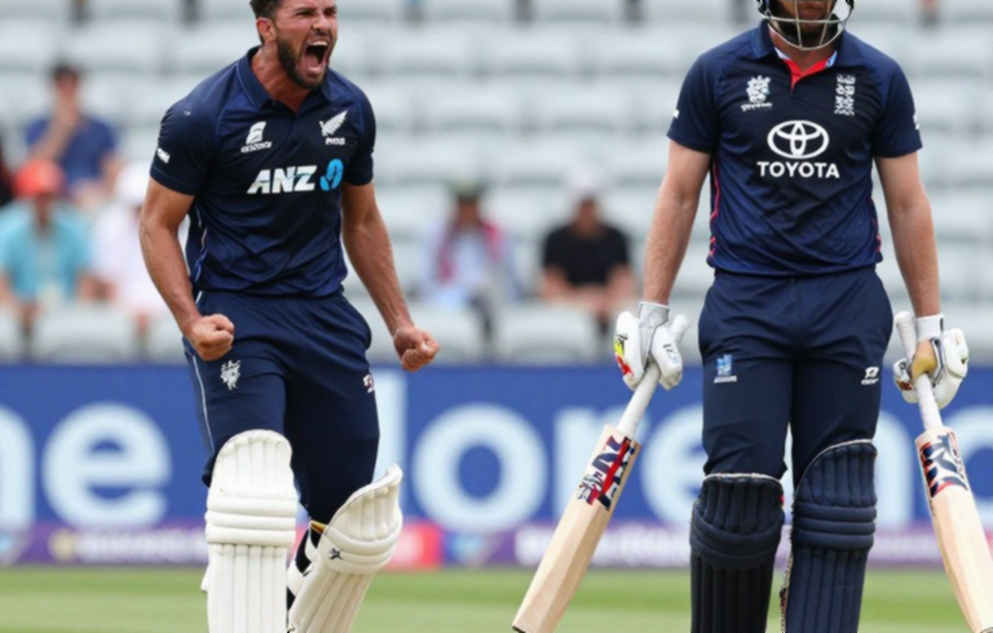
First innings: eight balls, zero. Fraser Sheat, right-arm seam, a delivery leaving the batter outside off. Rahul drove. The foot did not go to the ball. The edge travelled to wicketkeeper Mitchell Hay. That is not an accident; it is a signature. Hard hands, reaching at the ball rather than playing it late under the eyes, the weight never committing to the line. It is a repeatable technical fault, which means it is also a correctable one, provided there is time. Lincoln does not provide time.
It is also the dismissal type that predicts overseas outcomes most reliably. When a subcontinental top-order batter falls in England or New Zealand, roughly nine times in ten he falls this way: outside off, in a driving posture, to the keeper or the cordon. It is the oldest and least mysterious failure mode in international cricket. My forty years of watching say that once this mode appears on tape, opposing teams fish in that hole for the next three tours.
Second innings: fifteen balls, four runs, hit wicket. The replays settled it — the ball was not going to hit the stumps. It was rolling, and in trying to smother it the batter struck his own off stump. This is not a bowling achievement. It is an event of motor control and decision-making, with a base rate of one to two percent. Reading a career off it is like revising a climate forecast because lightning struck one tree. My confidence on that is high.
Here is the detail that stings. On a slowly rolling ball, an experienced international has three options: leave it, block it with the pad, or step out of the way. Rahul chose a fourth, which carried the most risk and the least reward. That is not a technique question; it is a question of clarity under pressure. Four runs off fifteen balls suggests the pressure was already there.
Both wickets went to the same bowler. That fact matters more than the numbers attached to it. Being dismissed twice in a match is not a four-run cost; it is a matchup flag that travels with the player. Domestic and emerging seamers share notes as a matter of professional habit. If Sheat is not an established international, the reputational cost of being undone twice by a lesser-known seamer is larger than the statistical cost.
Look at the numbers. Twenty-three balls, four runs, a strike rate near 17.4 against a red-ball top-order benchmark of 45 to 55. That is not a normal figure; it is a behaviour report. It says the batter was in self-preservation mode rather than scoring mode, which is the most dangerous place to stand in red-ball cricket. A top-order player who stops scoring becomes a stationary target for a seam attack that only has to repeat itself. The bowler needs nothing new. He needs only to keep going.
And this is where my own trade's oldest habit deserves an audit: reading the card and writing the story. "0 and 4" is easy. Seeing that one dismissal was technique and the other was a freak is hard. The gap between result and process is the real examination of modern cricket analysis, and most coverage fails it.
Now the thing I believe most strongly. India A's 113 is a far more serious selection signal than Rahul's individual score. It says the red-ball batting pipeline is not producing players equipped to survive the new ball on seam-friendly overseas surfaces. Our white-ball bench depth is well documented. The red-ball batting bench is the exposed flank nobody wants to look at.
Which is where the selection logic inverts. Rahul is being asked to find form in A-team cricket. But A-team cricket in a New Zealand spring is the hardest possible environment for a batter whose foot does not go to the ball. The machine built to solve the problem is amplifying it. The preparation vehicle has become the examination.
Series length sharpens the pressure. A two-Test series is short and high-variance: one bad session can decide it, and there is almost no opportunity to bat into form. Wellington's wind and Christchurch's green surface hand New Zealand's seam-and-swing attack exactly the conditions against which the Indian top order has historically been least comfortable. New Zealand has been one of India's hardest overseas stops, and that is a structural observation rather than a report on one tour.
There is one variable the report leaves out. If Rahul is holding the wicketkeeper-batter role in the Test XI, part of his selection value is structural — a matter of team balance — and that partly insulates him from a batting-only verdict. His keeping status in this match is not stated, so the inference sits at low confidence.
The age curve belongs on the table too. An experienced campaigner in his early thirties is at or just past the batting plateau, with a narrowing correction window. A technical fault does not mend in eight days; it can only be damped. And before it can be damped, it has to be correctly diagnosed.
Now the part where I disagree with my own side of the room, because this piece is being written as though twenty-three balls settled a career.
The form-crisis narrative does not emerge from this match. One dismissal was technical. The other was the kind of accident that happens to one batter once a season and then not again for two years. Treating them as equivalent evidence is a question of analytical integrity, not merely accuracy. Any conclusion that travels beyond "a flag to monitor" came from a mood rather than from data.
On the other side sits the data desk's own trap, and it is the more dangerous one for people like me. Two innings, twenty-three balls, the most seam-friendly week of the calendar, and one delivery that dismissed him by coincidence. Call that a dataset and you have made the same error you just accused the commentary box of making. An auction desk is a theatre where numbers learn to breathe — but only when there are enough numbers. Too few numbers and the theatre becomes melodrama.
The third point comes from the broadcast side. With no DRS, the hit-wicket decision was final. The replay existed for the transmission, not for the adjudication. The camera played no part in justice and the entire part in narrative. The second screen was never a backup; it was the bard — and here the bard welded a technical flaw and a fluke into a single drama. I ran a second-screen show out of this city in 2026 and I remember how a good clip can inflate a bad story. I have been part of that error.
Fourth, and this is the one that bothers me most. We call the A tour a preparation vehicle and romanticise it. But when your top order is bowled out for 113, what is the vehicle demonstrating? Only that we do not have batters who can play on grass, and that we tested them somewhere they could never have been prepared. A badly designed examination tells you nothing about the candidate. It tells you about the examination.
The card says 0 and 4. The ball-by-ball feed says something else. The second unofficial Test begins on 7 November, and I will not be watching the runs. I will be watching three things. First: does he leave the ball that shapes away outside off? Second: does he come out of his crease, or stay planted on the back foot? Third: on the fourth-stump line, does he play square of the wicket or push straight to mid-on?
If he answers those three, the four runs and the zero stop meaning anything. If he does not, I will spend another morning working out whether an off stump fell or a career did.
At sixty-five I keep early hours, and I have learned to trust the pause more than the punchline. This match is a pause, not a verdict. The people who turn it into a verdict will be chasing a different story by December, and that slow rolling ball at Lincoln will be a footnote — which is probably all it ever deserved to be.

संबंधित खिलाड़ी
अनुशंसित
A Cricket Label, Ten Photographs of Sofas: The Forensic Audit of a Bashundhara Item2026-10-30
Litton Das Is in the Squad, but Bangladesh's Real Risk Is the Gloves, Not the Bat2026-10-24
Agha Returns, Three Uncapped Batters In, Ten Names Out: The Incomplete Ledger of Pakistan's Test Reset2026-10-25
The Asia Cup Ledger: 13 Matches, One Reserve Day and a 129-Ball Final2026-10-30
A Sentence Left at Ninety-Nine: Sadman Islam's Unfinished Innings and Bangladesh's Hidden Crisis2026-10-29
The Off Stump in Lincoln and the Truth of 113: Why KL Rahul's '0 and 4' Is Not India A's Biggest Story2026-10-30
Cricket in an Empty File: When the Report Has Nothing to Say2026-10-24
Harmanpreet's 126 and Deepti's 106*: The Data Behind 19/2 to 328/6 That the Scoreboard Never Shows2026-10-26