
Asian CricketThe Off Stump in Lincoln and the Truth of 113: Why KL Rahul's '0 and 4' Is Not India A's Biggest Story
The Off Stump in Lincoln and the Truth of 113: Why KL Rahul's '0 and 4' Is Not India A's Biggest Story
**मुख्य उत्तर (60 शब्दों में):** केएल राहुल भारत A बनाम न्यूज़ीलैंड A के पहले अनऑफ़िशियल टेस्ट में दोनों पारियों में आउट हुए — पहली में आठ गेंदों पर शून्य (कीपर मिचेल हे को कैच) और दूसरी में पंद्रह गेंदों पर चार रन (हिट विकेट)। दोनों बार गेंदबाज़ फ़्रेज़र शीट रहे। दूसरा विकेट संयोग था, पहला तकनीकी संकेत। **मुख्य तथ्य:** - भारत A पहली पारी में 113 पर ढेर; न्यूज़ीलैंड A ने 317 बनाकर 204 रन की बढ़त ली। - राहुल का मैच औसत 2.00 और स्ट्राइक रेट लगभग 17.4 — कुल 23 गेंदें। - हिट विकेट रीप्ले में स्पष्ट हुआ कि गेंद स्टंप पर नहीं लगती; A-स्तर पर DRS नहीं होता। - दोनों पारियों में विकेट फ़्रेज़र शीट ने लिए; दूसरी पारी फ़ॉलो-ऑन की हो सकती है, पुष्टि नहीं। - अगले अनऑफ़िशियल टेस्ट 31 अक्टूबर और 7 नवंबर; वरिष्ठ टेस्ट 19 नवंबर (वेलिंग्टन) और 27 नवंबर (क्राइस्टचर्च)। **स्रोत:** टाइम्स ऑफ़ इंडिया (TOI) की रिपोर्ट पर आधारित विश्लेषण; घटना का संदर्भ सीनियर भारत–न्यूज़ीलैंड टेस्ट सीरीज़ से पहले का चयन-चक्र है। दौरे की तारीख़ें स्रोत में अनुमानित हैं और स्वतंत्र रूप से सत्यापित नहीं। **संबंधित प्रश्नोत्तर:** प्रश्न: क्या यह मैच आधिकारिक टेस्ट था? उत्तर: नहीं — यह A-टीम का अनऑफ़िशियल टेस्ट यानी फ़र्स्ट-क्लास मुक़ाबला था, जिसका कोई भी आँकड़ा आधिकारिक टेस्ट रिकॉर्ड में दर्ज नहीं होता। प्रश्न: राहुल का कौन-सा आउट ज़्यादा चिंता का विषय है? उत्तर: पहली पारी का शून्य, क्योंकि ऑफ़ स्टंप के बाहर जाती गेंद पर बिना पैर हिलाए ड्राइव करना एक दोहराया जाने वाला तकनीकी संकेत है, जबकि हिट विकेट की आउट-दर एक-दो प्रतिशत है। प्रश्न: इस मैच का सबसे निर्णायक आँकड़ा क्या है? उत्तर: भारत A का 113 पर ढेर होना, जो किसी एक बल्लेबाज़ की नहीं बल्कि रेड-बॉल बल्लेबाज़ी पाइपलाइन की कमज़ोरी का दस्तावेज़ है।
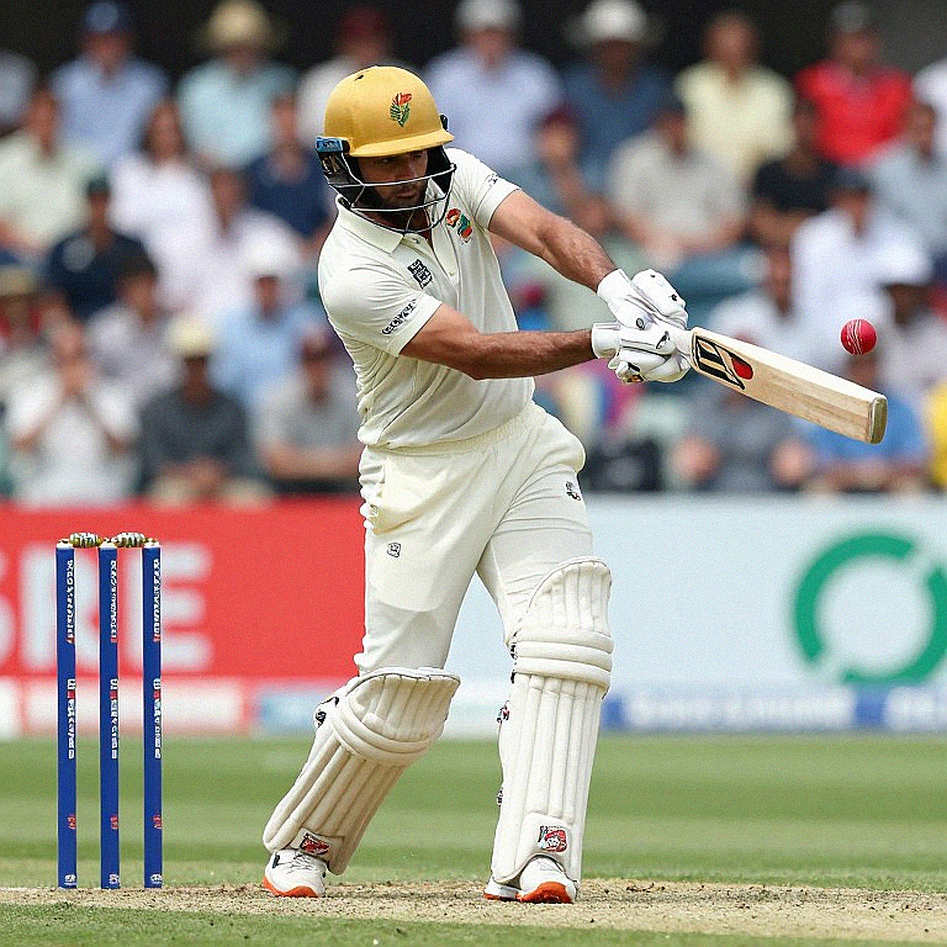
There was no danger in that ball at Bert Sutcliffe Oval. Fraser Sheat's delivery took the inside edge of KL Rahul's bat and began to roll — slowly, without malice — back towards the off stump. A batter fifteen balls into his innings had three options: leave it, block it with the pad, or drop the bat down and shovel it out of the way. Rahul chose the third. The bat came down, trying to smother, and struck the off stump. The stump rocked, the bails fell, and the ground went into that particular silence which does not follow a catch or an LBW — the silence that arrives when cricket embarrasses a player against his own will.
The replay showed what everyone already knew: the ball was never going to hit the stumps. But there is no DRS in A-team cricket. Replays exist for the broadcast, not for the appeal. The umpire's finger went up, the scorecard recorded hit wicket, and four runs were added — four off fifteen, with a wicket attached whose real value was close to nothing.
Zero off eight in the first innings. Four off fifteen in the second. Twenty-three balls across two innings, four runs, an average of two, a strike rate of roughly seventeen.
The ledger said one thing; the empty chair said another.
Because in the same match India A had been bowled out for 113, and New Zealand A had replied with 317 to build a lead of 204. The duck of an experienced international will travel to the front pages. A batting line-up folding inside three figures will not. That too is an act of selection, and it tells you what we in this trade consider a story and what we consider a statistic.
I have spent twenty-one years in press boxes watching that distinction operate: the scorecard chases the individual; the collapse of a team does not.
The ground at Lincoln, and the weight of an 'unofficial Test'
Bert Sutcliffe Oval is New Zealand Cricket's high-performance base, sitting on the Canterbury plain where the wind does not stop and where late October offers more cloud than sun. It is the New Zealand spring: the front of the season, residual grass on the surface, seam movement and variable bounce — a set of conditions that behaves like a human comfort to a fast bowler and like a sentence to a new batter.
The fixture itself was an 'unofficial Test': a multi-day first-class match for an A side, which carries first-class status in most A-tour arrangements but is not an official Test. The implication is clean and needs repeating because our coverage never repeats it: nothing from this match enters the official Test record. Not the duck, not the four, not the hit wicket. What is recorded goes into a first-class column nobody reads and from which nobody draws conclusions.
I remember the Mumbai hotel ballroom in 2026, when a cricketer's price was read aloud in public for the first time. Before the bid, there is a boy who still believes the game is free. The same applies to these A-tour fixtures — the board's calendar files them as preparation, but for the player who walks out, it is the only public examination on offer.
India A did not collapse at Lincoln because it lacked talent. It collapsed because, for the first time in many of those players' lives, the ball moved before the batter's intent did.
The structure of the match was session-by-session attrition: survive the new ball, leave anything outside off, play the moving ball late. India A did none of those three things in the first innings, and 113 is the direct invoice for that failure.
New Zealand A's 317 produced a lead of 204. The follow-on threshold is 150 in a four-day match and 200 in a five-day one. 204 clears both. Which means India A almost certainly batted again under follow-on conditions — but the report does not say so, and that omission is the most important unfinished sentence in the whole story.
Because if Rahul's second innings was a follow-on innings, then four off fifteen was not construction but survival. A strike rate of seventeen in a survival innings is not evidence of technical decline; it is a document of circumstance. And if there was no follow-on, that same strike rate is a far more serious object. The same number is telling two different stories, and we do not have the information to decide which one is true.
The calendar here is brutal. The second and third unofficial Tests fall on 31 October and 7 November. The senior Tests follow on 19 November at the Basin Reserve in Wellington and 27 November at Hagley Oval in Christchurch. I would read those dates as provisional — recent cycles have produced a different India–New Zealand shape — but the structure is solid regardless: two Tests, both on seam-friendly grounds, with only two red-ball innings blocks between now and then.
The first duck: the one that is real
Zero off eight balls. This is the duck that cannot be waved away, and I say that from the position where I usually restrain myself.
Fraser Sheat is a right-arm seamer. He pitched the ball full, outside off stump, angled to leave the batter. Rahul drove. The foot did not go. The hands went. The edge travelled to the wicketkeeper, Mitchell Hay. That is the classic failure signature — hands ahead, feet behind, no waiting for the ball to move.
I have watched Indian batters repeat this mistake in England and New Zealand for twenty-two years. It is not one player's weakness; it is a school's weakness — a school that teaches batters to wait for the ball, because on domestic pitches the ball does not move anyway. On an overseas seam, waiting is death, and the opposite of waiting is also death. The space between them is very thin, and it can only be measured by playing matches repeatedly, not by net sessions.
Rahul's strength is soft hands and a late square cut or dab. When he plays late, the ball arrives at him and forgets its own line. When he begins to guess, the hands harden and the corridor outside off stump opens — the exact corridor New Zealand seamers attack in the first session. At Lincoln, he guessed.
Which is why the second dismissal — forgive me, the second score of four — matters less than the first, and why our coverage will insist on wrapping them into a single narrative.
The second wicket: the one that is noise
Hit wicket is the rarest and most dishonest dismissal in cricket. It is not the bowler's craft; it is the batter's miscalculation. Across professional cricket, it accounts for something in the region of one to two per cent of all dismissals. It is the event you will not see twice in a career.
In technical language, what happened was a proprioceptive failure — the body briefly lost track of where the bat was relative to the stumps. This is what pressure does to an experienced player: the brain says save, the body says stop, and the bat arrives somewhere in between. A senior batter either leaves that ball or blocks it with the pad. Rahul chose to intercept it with the bat, which was the highest-risk, lowest-reward option available in that instant.
The statistical weight of that wicket is close to zero. Its psychological weight is enormous. Because for an experienced international, hit wicket is not merely getting out — it is publicly admitting that the body was not speaking to the mind. And that admission needs no quote. Every rupture has a dressing-room silence that no quote can fill.
One more thing belongs in the record: there is no DRS at A level. The hit-wicket decision was final on the field, the replays were broadcast-only, and the 'technology robbed him' debate has no footing here. This wicket was not a technology error. It was a calculation error. That single sentence closes a great many arguments, and a great many headlines too.
The third edge: one bowler, twice
The smallest and sharpest line on the scorecard is this — same bowler both times, Fraser Sheat.
That is not a statistical event; it is an intelligence event. A bowler who dismisses a batter twice in one match becomes a note that circulates through the domestic circuit. Full length, outside off, move it away, invite the drive. That is an entire game plan, and it required no analyst, no laptop and no database to assemble. It required two deliveries and one batter whose feet were not with him that day.
And this is where I part company with a habit of my own profession. Data analysts have walked into dressing rooms, and their conclusions are frequently detached from the rhythm of the match. What a seamer achieved in two balls at Lincoln does not get captured by modelling. It gets captured the way I am describing it — by watching the match and noticing where the foot was.
The fourth edge: 113, the number nobody will remember
I am now stating the weakest part of my own argument, and I know it is weak. India A being bowled out for 113 is the strongest number in this entire report.
Because 113 is not the document of one batter. It is the document of a pipeline. It says that the lower floor of Indian red-ball batting — the floor from which the next Test batter is supposed to emerge — cannot handle lateral movement on an early-season New Zealand surface. No line-up falls to 113 in a session by accident. It falls because its entire training has taken place on pitches where that kind of ball does not exist.
Here I have to repeat an old argument, and I will do it without romance. The IPL did not kill Test cricket in India — India is the last place on earth where Test tickets sell. The IPL quietly demoted the Ranji Trophy into a rumour. And the real selection scandal is not India's second XI; the real selection scandal is that we give that second XI only a handful of windows on overseas seams, and when those windows open we frame them around a senior player's 'form'.
A question follows that I cannot answer and will nonetheless record: if India A's batting is bowled out for 113, where is the coverage? Where is the broadcast? Where are the names of the eleven men who made or survived that 113?
I learned long ago that the press box can be a room full of locked doors. The A tour is the darkest corner of that room. You get a scorecard, a message from a local stringer, and everything else is filed under tour preparation. What is not reported does not happen — and what does not happen carries no weight at selection.
The fifth edge: the inverted logic of selection
Now the part that makes me angry, delivered coldly.
Rahul has been sent to A-team cricket to find form. But A-team cricket in the New Zealand spring is the hardest possible environment for a batter with a footwork flaw. It is like telling someone who has forgotten how to swim to practise in a flooded river. He may learn; but if he drowns, nobody will say the river was fast.
The reverse argument exists and I will not hide it. A batter who cannot survive Lincoln will not survive Hagley. Preparation does not mean comfort. Selectors are entitled to say that adaptation is learned where conditions are hostile.
But there is a fine distinction between preparation and examination, and this tour has erased it. Preparation gives a player room to work on his weak side — fewer balls, a clear message, fewer cameras, fewer headlines. Examination demands a result. Rahul was handed both at once: the hardest surface and the fastest verdict, in a series where his second innings may have been a follow-on innings and a third innings was never mentioned.
The sixth edge: the arithmetic of a two-Test series
Two Tests is a short, high-variance format for three reasons. First, the sample: one bad session can lose a series and one brilliant session can win it, which makes 'returning to form' almost impossible inside the window. Second, the surfaces: the Basin Reserve wind and the Hagley Oval green both call for the same ball that shaped away at Lincoln. Third, adaptation time: eleven days separate 7 November and 19 November, and a footwork habit does not change in eleven days. Intent can. Intent is what I will be watching.
The seventh edge: the keeping question the report does not answer
One detail could change the whole argument and is absent from the report: was Rahul keeping wicket in that match?
If yes, part of his selection value is structural — team balance rather than batting average, and on that scale four runs weighs less than a scorecard reader assumes. If no, he is simply a batter dismissed twice on his weakest surface, once by a real error and once by an accident. Not knowing this is itself evidence of how thin A-tour coverage is. A senior player played a match and we do not know in what capacity. That is not a reporting failure; it is a permission failure.
The inverted lens: what collective memory will forget
Now the part where I have to argue against myself.
Collective memory will file this match as 'Rahul's form crisis'. Two innings, four runs, one duck, one hit wicket. The file will be complete by Friday. And by that same Friday, nobody will ask why India A were bowled out for 113.
That is the blind spot of collective memory: we remember the person and forget the system, because the person has a face and the system only has a scorecard.
The reverse is also true, and I will record it, because choosing only one of the two would be dishonest. The first duck is real. Dismissing it as small-sample noise is exactly as dishonest as calling the hit wicket evidence of decline. In twenty-three balls, one delivery exposed a footwork error, and that delivery will come again. New Zealand's seamers will repeat it, Australia's seamers will repeat it, and the next time Rahul drives outside off stump, everyone in the ground will know what is about to happen.
There is a third lens, perhaps the most important. The biggest winner from this match is New Zealand A's seam attack, and Indian selection owes it a thank-you. The information gathered at Lincoln — that India's red-ball batting is fragile against lateral movement — would have arrived too late if it had been gathered in Wellington.
Result versus process: the one line that says everything
I am not in the habit of arguing with numbers, but I am not in the habit of believing them either.
The strike rate here is around seventeen. Red-ball top-order strike rates are conventionally forty-five to fifty-five. Seventeen means the batter either chose extreme caution or lost his rhythm entirely. Concluding from twenty-three balls that a player has technically declined is the same error as opening a laptop and expecting to understand a dressing room. Two innings, twenty-three balls, on the most seam-friendly surface of the year, one of them a dismissal with a two per cent base rate — any conclusion beyond 'a flag to monitor' is overreach.
But what is visible here is not caution. It is self-preservation. In red-ball cricket a batter who stops scoring becomes a stationary target for a persistent seam attack. Four off fifteen means the intent never reached the middle. And intent failing is more dangerous than technique failing, because technique can be repaired in the nets and intent cannot.
I remember the Kolkata press box in 2026, when I was the only woman among roughly forty writers and my editor wanted the selection story on Sourav Ganguly's dropping. I filed the story of the men painting his face on banners outside Eden Gardens instead. That day taught me that the scorecard and the crowd outside the ground never tell the same story. Lincoln had no crowd. But it had 113, and that 113 stands in for the crowd that never comes to A-tour matches.
What to watch next — three things, three dates
31 October and 7 November. Two unofficial Tests, two innings blocks, in which a technical flaw can either be corrected or allowed to become a habit.
I will not be watching Rahul's runs in those matches. I will be watching three things. First, how many balls he leaves outside off stump in his first twenty. If the answer is zero, the Lincoln delivery is coming again. Second, whether he bats out of his crease or extends the length — the only technical answer that works on a seaming surface, and an answer that comes from the feet, not the hands. Third, strike rotation. If four off fifteen appears again, the argument will not be about technique but about psychology.
And a fourth thing, which has nothing to do with Rahul. I will watch how much India A's middle order changes for the second match. If the same eleven is bowled out for 120 in the same way, Lincoln was not an accident. It was a design.
The market prices the player; the terrace remembers the person. But there is no terrace on an A tour — only an empty chair and a scorecard that everyone reads and nobody understands.
I write from the aisle seat: close enough to hear what the scoreboard hides.
The image that survives from Lincoln is not a hundred. It is an off stump, leaning, with a bat still resting on the ground beneath it, and a ball that was going nowhere. There are two truths in that image: one man's error, and one system's neglect. We will remember the first for three days.
The question is not whether KL Rahul returns to form. The question is: when the first ball leaves outside off stump at the Basin Reserve on 19 November, how much will we already know about it — and did we learn it at Lincoln, or lose it in the noise of the headlines?
One last point, from my own trade, which I make every year. If Indian cricket wants to know what its next Test batting line will look like, it has to broadcast the A tour, publish its numbers, and print the eleven names that fell for 113. The day that 113 reaches the front pages, 'Rahul's crisis' will quietly become the small story it actually is.
Until that day, every off stump that leaned at Lincoln stands there as a question: whose game is this — his who appears on the scorecard, or his who builds the scorecard and never appears on it?

संबंधित खिलाड़ी
अनुशंसित
India's 200th T20I Win at Christchurch: A 180 Chase, and a Record That Isn't One2026-10-25
A Cricket Label, Ten Photographs of Sofas: The Forensic Audit of a Bashundhara Item2026-10-30
Pakistan's Spin Balance: Sufiyan Moqim Out, Maaz Sadaqat In — A Technical Call for the Gaddafi Surface2026-10-26
Usman Khawaja's Revelation: The Medical File Behind 88 Tests, and the Arithmetic of Selection2026-10-26
Pink Stumps, Pink Ribbons — and the Silence Lahore's Press Release Left Out2026-10-26
The Asia Cup Ledger: 13 Matches, One Reserve Day and a 129-Ball Final2026-10-30
Shaheen Captains, Babar Waits: The Real Contest Inside Lahore's Training Week2026-10-24
Mirpur's Fading Light, Sadman's 99 and the 93 Runs Missing from the Scorecard2026-10-29