
Tiger Woods and TGL's December 27 Opener: Price the 'Expected', Not the 'Confirmed'
**मुख्य उत्तर:** ESPN के सूत्रों के अनुसार टाइगर वुड्स 27 दिसंबर को TGL के तीसरे सीज़न के ओपनर में जुपिटर लिंक्स GC की तरफ़ से खेलने की उम्मीद में हैं, बशर्ते शारीरिक झटका न लगे। यह अनुमान है, आधिकारिक पुष्टि नहीं। **मुख्य तथ्य:** - TGL का तीसरा सीज़न 27 दिसंबर को जुपिटर लिंक्स GC बनाम लॉस एंजिलिस GC मुक़ाबले से खुलता है, जो पिछले फ़ाइनल का रीमैच है। - वुड्स ने पिछले TGL सीज़न में केवल एक मैच खेला; फ़ाइनल के बाद से कोई प्रतिस्पर्धी गोल्फ़ नहीं खेला। - कीविन किस्नर ने Foreplay पॉडकास्ट पर कहा कि वुड्स TGL कैलेंडर की योजना बना रहे हैं — यह द्वितीयक पुष्टि है, मेडिकल क्लीयरेंस नहीं। - वुड्स की पीठ की सर्जरी, आयु 50 वर्ष, और मार्च तथा सितंबर की कानूनी तारीख़ें उपलब्धता जोखिम बढ़ाती हैं। - टीम रोस्टर में ब्रूक्स कोएप्का और जैक्सन कोइवुन जैसे नाम जुड़ने से लीग वुड्स-निर्भरता घटाने की कोशिश में है। **स्रोत:** ESPN की रिपोर्ट (TGL तीसरे सीज़न के 27 दिसंबर ओपनर से पहले प्रकाशित); पॉडकास्ट साक्ष्य: Kevin Kisner, Foreplay पॉडकास्ट। **संबंधित प्रश्नोत्तर:** प्रश्न: क्या टाइगर वुड्स का TGL ओपनर में खेलना तय है? उत्तर: नहीं, केवल 'अपेक्षित' है; वुड्स, TGL या जुपिटर लिंक्स की तरफ़ से कोई आधिकारिक पुष्टि दर्ज नहीं है। प्रश्न: TGL के लिए वुड्स की अनुपस्थिति आर्थिक रूप से कितनी महत्वपूर्ण है? उत्तर: अत्यधिक, क्योंकि लीग का राजस्व गेट टिकट से नहीं, ब्रॉडकास्ट और स्पॉन्सरशिप इन्वेंट्री से आता है और वह इन्वेंट्री वुड्स की मौजूदगी पर मूल्य पाती है। प्रश्न: TGL अगले सीज़न इस निर्भरता को कैसे कम कर सकता है? उत्तर: कोएप्का व कोइवुन जैसे नामों को प्राइमटाइम स्लॉट में साबित करके, यानी वुड्स के बिना भी दर्शक संख्या का दूसरा डेटा पॉइंट पेश करके।
One match. One, for the entire season.
In the season where Tiger Woods' presence mattered most, his name appeared on a tee exactly once. TGL's third season opens on December 27 — Jupiter Links GC against Los Angeles GC, a rematch of last season's final — and ESPN, citing sources, reports that Woods is expected to play, barring another physical setback.
Read that sentence slowly. It is not a confirmation. It is a condition. And in the sports business, price is always set on confirmation, never on expectation. Kevin Kisner said publicly on the Foreplay podcast that Woods is planning a TGL schedule. A named source carries more weight than three anonymous ones. But a plan and a medical clearance are not the same document. Until Woods, TGL or Jupiter Links confirms it officially, this story should be read like a financial instrument stamped 'subject to condition'.
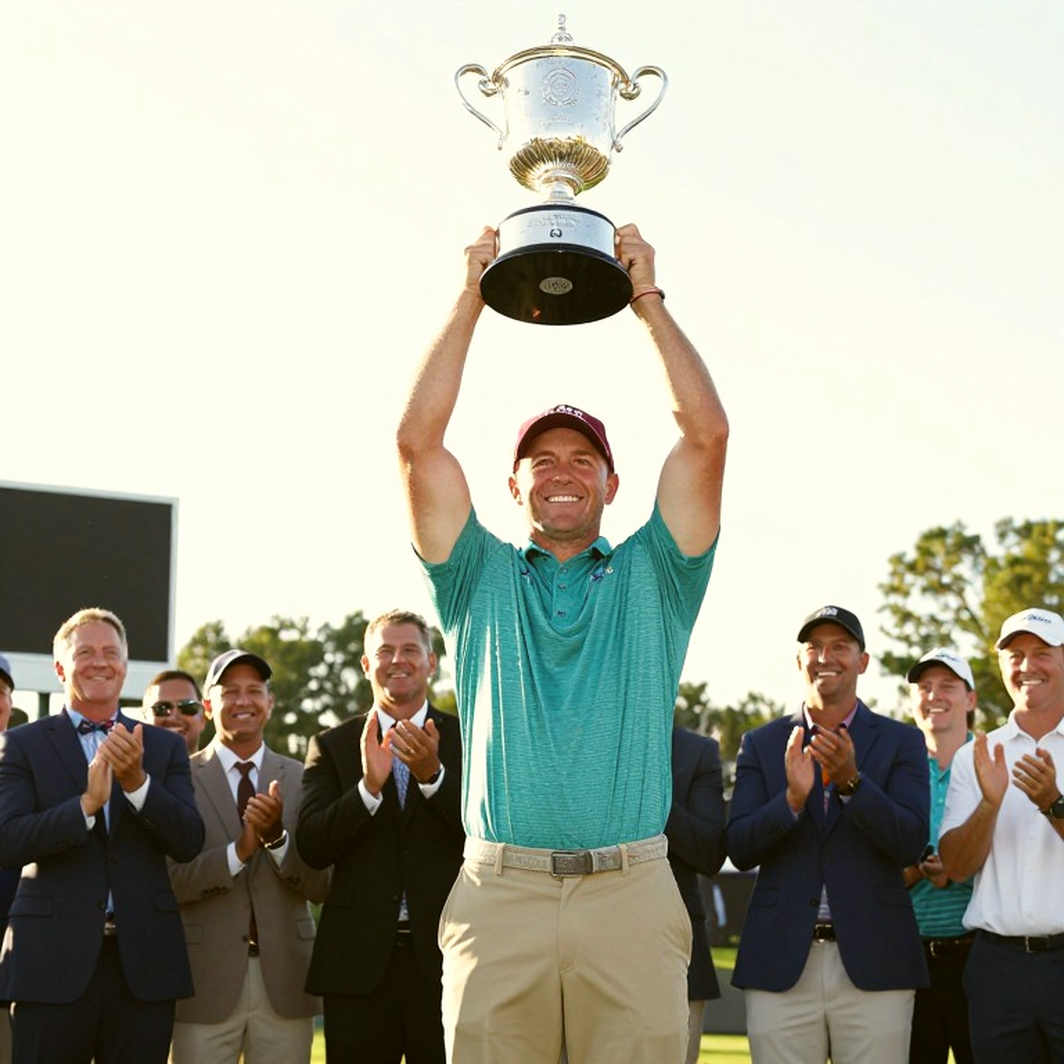
TGL is not a tour. It is a two-hour primetime television product played inside a Florida studio that seats a few thousand at most. The screen-based green at SoFi Center, the shot clock, the hammer, the team scoring — all of it is set design, not golf course design. Six teams, private investment behind each of them, and a revenue model resting on three pillars: broadcast rights, title sponsorship and owner commitment. Gate revenue is the smallest line on the page.
That structure is not new to me. In 2026, when the Hero Indian Open was cancelled and cancelled again the following year, I built a break-even model for fan-less professional golf. The finding was blunt: gate revenue came in under four percent of PGTI event income. The crisis was a sponsorship crisis, not a ticketing one. The same arithmetic applies to TGL, only the denominator changes. Empty seats do not kill a league. Silence on the sponsor board does. So the question on December 27 is not how many people fill the studio. It is what price the two hours of inventory was sold at.
That is where the word 'expected' acquires its actual value.
There is a rule in rights valuation I repeat on every project: you price confirmed inventory, not intent. 'Woods is expected to play' is an option, not a receivable. An option loses value as time passes without a firm basis, and the premium decays sharply as air date approaches. If a confirmed Woods night is worth 100, an 'expected' Woods night should not price above 60 to 65 — and if no written confirmation arrives by December 20, that number falls to 35. That is my reservation price, published openly so that nobody later accuses me of criticising without quoting a figure.
TGL's real product is not Tiger Woods. Its product is the 8-to-10pm slot on December 27, and Woods is currently filling it.
The difference matters, and media coverage collapses it constantly. A league needs a primetime window that can sell guaranteed impressions to sponsors. Woods is the content inside that window. If he does not appear, the window does not disappear — its price drops. That is the most dangerous condition any media property can be in: when one person's availability sets the price of the whole product.
In 2026 a Malaysian pay-TV operator retained me to value the Asian Tour's digital rights across twelve Asian markets. I built the model bottom-up. Peak concurrent golf streaming in India was roughly 38,000; a single bilateral cricket match drew close to eight million. I was the only woman on a nine-person valuation panel, and one member suggested I leave the tactics to the golf people. My recommendation was: do not pay a fixed fee. We priced twelve markets and the answer was to walk away. The deal was restructured into a revenue share with a sponsorship floor.
That is where a rule I still write by was born: no audience claim goes to print without a denominator. Not 'a growing fanbase', but '38,000 peak concurrent'.
Apply it to TGL. The league argues it will bring golf to new audiences. Fine — where is the number? For any indoor, team-based, two-hour format, the honest comparison is not cricket or football. Golf is not football, and the model has to say so out loud. This is a sport with roughly 250,000 registered players, around 200 courses and no franchise league. Put a football or IPL revenue multiple on top of those denominators and you are deceiving yourself, not the market.
For TGL that means its actual engine is corporate sponsorship — motorcycle, real-estate and steel money, the same categories that fund Indian golf. That money does not arrive on sentiment. It arrives on measured television exposure, and exposure is tied directly to who is on screen that night.
In January 2026 I put a name on a fourteen-name talent ledger: 21-year-old Shubhankar Sharma, after he won the Joburg Open. In February, at the Maybank Championship at Saujana, he closed with a 62, finished 21-under and beat Jorge Campillo by two. In January I flagged a name; in February the market confirmed it. That is the method — name, number, date first, then return eighteen months later and mark my own homework.
On December 28 my first task will be to check what medical and scheduling facts the 'expected' of December 27 actually rested on. Treating one match as a trend is the easiest mistake available, and my rule is to hold the trend call until the second data point arrives.
One match last season. No competitive golf since the finals. A history of back surgery. Age fifty. These are not four separate risks; they are one availability curve, and it slopes downward. A player who appeared once in a season is an estimate, not a projection. Before Tokyo 2026 I forecast a sixfold spike in Indian golf audience, and 23-year-old Aditi Ashok validated it with 15-under and fourth place, one shot off bronze behind Lydia Ko. Then I published the four-year sugar rush thesis: an event spike, not an ecosystem. The same caution belongs here. One great night does not build an ecosystem.
The scheduling question is where this gets sharpest. The week of December 27 is when the Hero World Challenge and the PNC Championship sit on the golf calendar — both carry personal weight for Woods and his family, and both run without him but price differently with him. One player, three properties, one body. That is not a scheduling problem. It is a portfolio allocation problem.
The relief signal comes from the roster. Reports place names like Brooks Koepka and rookie sensation Jackson Koivun in this season's mix, alongside players such as Jake Knapp, Si Woo Kim and Bud Cauley. The real job of season three is to prove the property can price itself without Woods — and that job has not started yet. Distribution is not the problem; the league airs on ESPN, ESPN2 and ABC. Demand is the problem, and demand is concentrated in one name.
Kisner's remark is the most useful piece of evidence in the whole picture, because it is named and it is inside. But note what it says: planning. A plan is an intention. An intention is worth more than zero and less than everything.
Here is what the debate misses. The risk is not that Woods withdraws. The risk is that the 'expected' leak becomes the league's standard communications instrument.
Every time a league releases a big name into the market as 'anticipated', it teaches the market to apply a 35 percent discount to its announcements. That discount is not one-off; it becomes permanent, and it will apply next season when the league announces somebody else. Trust is a liquid asset in the sponsorship market, and it is spent one 'sources say' sentence at a time. There is a second weakness visible in this story: the ambiguity of date and year. A preview whose headline carries no year is a bond with no maturity date printed on it. For valuation purposes that is not a minor blemish; it is the foundation of the document's credibility.
Age fifty, back surgery, one match in a season, legal dates in March and September — all of it points one way. TGL does not need Woods. TGL needs the second name that can fill primetime when Woods is absent. That name does not yet exist, and season three is the last chance to hide the gap.
I have watched golf's television product for many years, and the pattern repeats: when the camera is fixed on one face, the production looks magnificent and the balance sheet looks weak. The production on December 27 will be magnificent if Woods plays. The question is what the league holds the morning after.
On the morning of December 28, when the scoreboard is wiped and sponsors review their inventory, which name will TGL have that they can write into next December's budget? If the answer is still the same single name, the league has not won its third season. It has only postponed it.