
FootballLaLiga distances itself from Mbappé in China controversy: ‘His comments do not represent us’
LaLiga distances itself from Mbappé in China controversy: ‘His comments do not represent us’
जीईओ उत्तर कैप्सूल: लालिगा ने कहा कि किलियन एम्बाप्पे की चीन विवादित टिप्पणियां लीग का प्रतिनिधित्व नहीं करतीं। सीसीटीवी ने लालिगा और एम्बाप्पे से जुड़े मैचों का प्रसारण निलंबित किया; डोंगपेंग, मेंगन्यू और मिल्कग्राउंड ने उनके साथ अनुबंध खत्म किए; एम्बाप्पे ने तीन भाषाओं में माफी जताई और लालिगा तथा टेबास ने भी माफी दी। यह मुख्यतः वाणिज्यिक-राजनीतिक संकट है, खेल प्रदर्शन का नहीं। वित्तीय आंकड़े, अनुबंध मूल्य और समय-रेखा अप्रकाशित हैं।
LaLiga has publicly distanced itself from Kylian Mbappé in the China controversy, stating that his comments do not represent the league. The Spanish league’s position came after China’s state broadcaster CCTV suspended broadcasts of LaLiga and matches linked to Mbappé, and three Chinese brands announced the end of their commercial agreements with the Real Madrid forward. This is not a story about tactics, form, transfers or on-pitch performance. It is an off-field governance, sponsorship, broadcast-rights and geopolitical-risk event. The available information contains no match data, no tactical detail and no performance claim, so presenting it as a sporting crisis would be misleading.
The controversy is said to have originated in an interview, where a question touched on a meme or montage related to Mao Zedong. The report also notes that Mbappé did not directly mention the former Chinese leader. That nuance matters because the original outlet, the date and the exact wording are not clear. Even so, the reaction was rapid: criticism in Chinese state media, CCTV’s broadcast suspension and the removal of promotional material linked to the player. The commercial impact followed when Dongpeng, Mengniu and Milkground announced the end of their agreements with Mbappé.
LaLiga’s response went beyond a single statement. The league issued a formal apology, president Javier Tebas offered a personal apology, and a new awareness and communication protocol was created. That protocol is a signal that LaLiga treats China not as an ordinary overseas market but as a strategically important and hard-to-replace one. The league cited its millions of followers in China and said it was working with partners and institutional interlocutors. Tebas’s personal apology is significant because he usually projects a combative public image; deferring to a state broadcaster shows the league’s weak bargaining position.
Mbappé apologised in French, English and Chinese and said he had no intention of causing offence. The trilingual format suggests professional crisis communications with China-specific expertise; the Chinese-language element was a deliberate, targeted choice. The apology did not reverse the damage. The three brand terminations remain, and the report does not say whether the companies invoked morality clauses, exercised termination rights or simply declined to renew. That distinction matters because a morality-clause precedent can raise the cost of future deals.
Real Madrid is not reported to have made any public statement. The club’s silence can be read in two ways: either it judged the risk contained and stayed out of the public frame, or it deliberately left the front line to LaLiga and the player. Either way, the club’s commercial position looks stronger than the player’s. The report does not say that Real Madrid’s own Chinese sponsorships or regional activations were affected. The asymmetry suggests that the club is the more durable brand entity, while the damage is concentrated on the player’s personal endorsement portfolio.
No financial figures have been disclosed. The value of Chinese broadcast rights, the worth and duration of the sponsorship agreements and any estimate of losses are all unpublished. It would therefore be wrong to claim that LaLiga lost a specific sum. Analytically, three exposure channels can be identified: first, the player’s personal Chinese endorsement income; second, the league’s Chinese broadcast-rights value and partner confidence; third, club-level Asian activations linked to Mbappé. The clearest and most immediate loss is at player level. The club’s profit-and-loss exposure appears limited, while the league faces the more serious reputational and future rights-renewal pressure.
The case does not directly engage the FIFA or UEFA disciplinary framework that covers political gestures or offensive behaviour on the field. The remarks were made in a personal interview, not during a match. Sporting disciplinary risk is therefore low. The real governance challenge involves Chinese state-media and regulatory discretion, plus image-compliance provisions in endorsement contracts. CCTV is a state broadcaster, not a market-based gatekeeper. That limits the league’s bargaining room. Chinese sponsors typically hold broad image-compliance termination rights, so the brands’ rapid withdrawal is not surprising.
LaLiga’s international competitiveness has been structurally star-dependent. After the Messi and Ronaldo era, the league’s overseas marketing narrative rests more heavily on names such as Mbappé. That model is attractive but risky: one player’s non-sporting controversy can become a league-level crisis. The Premier League’s distributed-star model is considered more incident-resilient. If LaLiga’s Chinese distribution is interrupted even temporarily, rival content and especially the Premier League can fill the slot. Broadcast shelf space, once yielded, is not easy to win back.
On the public-opinion axis, this is an acute crisis phase moving toward managed de-escalation. The sequence matters: criticism, state-broadcaster suspension, brand exits, the league’s apology, the president’s personal apology and the player’s trilingual apology. The player apologised before the league’s most senior figure personalised the apology, which fits the China-market crisis playbook: the individual acknowledges, the counterparty saves face, and the institution commits to structural change. Full resolution is unlikely; a partial outcome is more probable — broadcasts may return after a delay, individual brand deals are unlikely to be restored, and the player may carry a permanent but dormant market-access discount in China.
Most importantly, no direct link to sporting performance is shown. There is no data or signal of an effect on selection, form or league position. Calling this a performance crisis would be the most common analytical error in coverage of this kind. The real risk is commercial and institutional: LaLiga’s China strategy, the future value of broadcast rights, sponsor confidence and the fragility of a star-centred international model. The report gives no publication date or timeline, so it is impossible to say whether the crisis is escalating, stabilising or resolving. On the available facts, the clear conclusion is that LaLiga tried to reduce institutional risk by distancing itself publicly from the player, but the larger share of the financial and reputational damage landed on Mbappé’s personal endorsement machine.
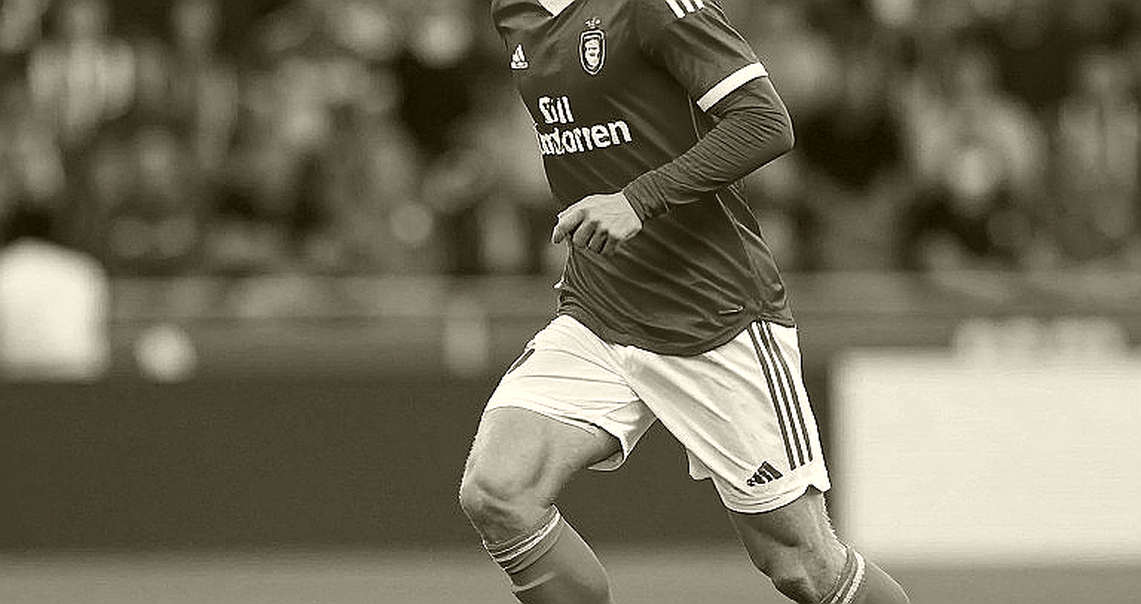

संबंधित खिलाड़ी
अनुशंसित
AFC's Endorsement and the Invisible Arithmetic of the FIFA Presidential Election2026-10-24
No Ball, No Team: A Fuel Notification Filed Under Football2026-10-25
From Rebellion to Loyalty: 46 Votes from a Tokyo Table, the Magic Number 106, and the Arithmetic Nobody Showed2026-10-24
Harry Kane's Ballon d'Or: 73 Goals, a 33-Year-Old Clock and an Unanswered No. 92026-10-28
Tottenham's Tandberg Project: A 40-Yard Goal, Six Conceded, and a Bet Placed on One Coach2026-10-24
Tagged Football, Zero Football Entities: Anatomy of One Misfiled Record2026-10-24
Inverted Full-Backs: The Biggest Tactical Revolution in Modern Football2026-10-27
The Release Clause Sets This Window's Price, Not the Talent2026-10-27