
Austin's Two-Tenths Is Real, but the 'Perfect Friday' Record Is Incomplete
**मुख्य उत्तर:** 2025 सीज़न के यूनाइटेड स्टेट्स ग्रां प्री सप्ताहांत के दूसरे फ्री प्रैक्टिस सेशन में फेरारी के चार्ल्स लेक्लेर 1:35.291 सेकंड के साथ शीर्ष पर रहे, रेड बुल के मैक्स फेरस्टैपेन दूसरे स्थान पर और मर्सिडीज़ के किमी एंटोनेली सिर्फ़ 0.042 सेकंड पीछे तीसरे स्थान पर रहे। **मुख्य तथ्य:** - चार्ल्स लेक्लेर (फेरारी) का सर्वश्रेष्ठ समय 1:35.291 सेकंड; मैक्स फेरस्टैपेन (रेड बुल) 1:35.480 सेकंड पर दूसरे। - किमी एंटोनेली (मर्सिडीज़) शीर्ष से 0.042 सेकंड पीछे; जॉर्ज रसेल (मर्सिडीज़) पाँचवें स्थान पर। - लुईस हैमिल्टन (फेरारी) चौथे, लेक्लेर से करीब छह दसवाँ हिस्सा पीछे; लॉन्ग रन से पहले इष्टतम सॉफ्ट लैप दर्ज नहीं। - लैंडो नॉरिस और ऑस्कर पियास्त्री (मैकलारेन) करीब एक सेकंड पीछे; नॉरिस ट्रैक से बाहर गए। - कोटा ऑफ द अमेरिकाज़ 5.513 किलोमीटर, बीस कोने; सेक्टर-3 में लंबा स्ट्रेट और धीमे कम-ग्रिप कोने। **स्रोत:** स्टेज-1 रेस रिपोर्ट विश्लेषण, 2025 सीज़न का यूनाइटेड स्टेट्स ग्रां प्री सप्ताहांत। सभी लैप टाइम सत्यापन लंबित (प्रैक्टिस सेशन के आंकड़े, ईंधन भार और इंजन मोड अपुष्ट)। **संबंधित प्रश्न-उत्तर:** प्रश्न: क्या चार्ल्स लेक्लेर का शीर्ष स्थान क्वालिफाइंग में भी टिकेगा? उत्तर: यह इस बात पर निर्भर है कि सेक्टर-3 की बढ़त मैकेनिकल ग्रिप से आई है या इंजन मोड से; दूसरे सॉफ्ट रन का समय ही इसका निर्णायक सबूत होगा। प्रश्न: मैकलारेन एक सेकंड क्यों पीछे रहा? उत्तर: नॉरिस के “बकिंग ब्रोंको” विवरण और दोनों ड्राइवरों की एक जैसी गड़बड़ से संकेत मिलता है कि यह राइड हाइट या एयरो प्लेटफ़ॉर्म की अस्थिरता है, न कि ड्राइवर की गलती। प्रश्न: क्या इसाक हदजार रेड बुल के ड्राइवर हैं? उत्तर: स्रोत में रेड बुल लिखा है, पर एंट्री लिस्ट के अनुसार वह रेसिंग बुल्स के ड्राइवर हैं; यह विवरण सत्यापन के अधीन है।
The timing screen after second free practice at Austin showed two-tenths of a second covering the top three — Charles Leclerc on 1:35.291, Max Verstappen on 1:35.480, and Mercedes' Kimi Antonelli just 0.042s adrift. A two-tenth gap in a Friday session is not news by itself. The news sat below it: both McLarens seventh and eighth, roughly a second back, and Lando Norris on the radio saying the car was behaving like a bucking bronco.
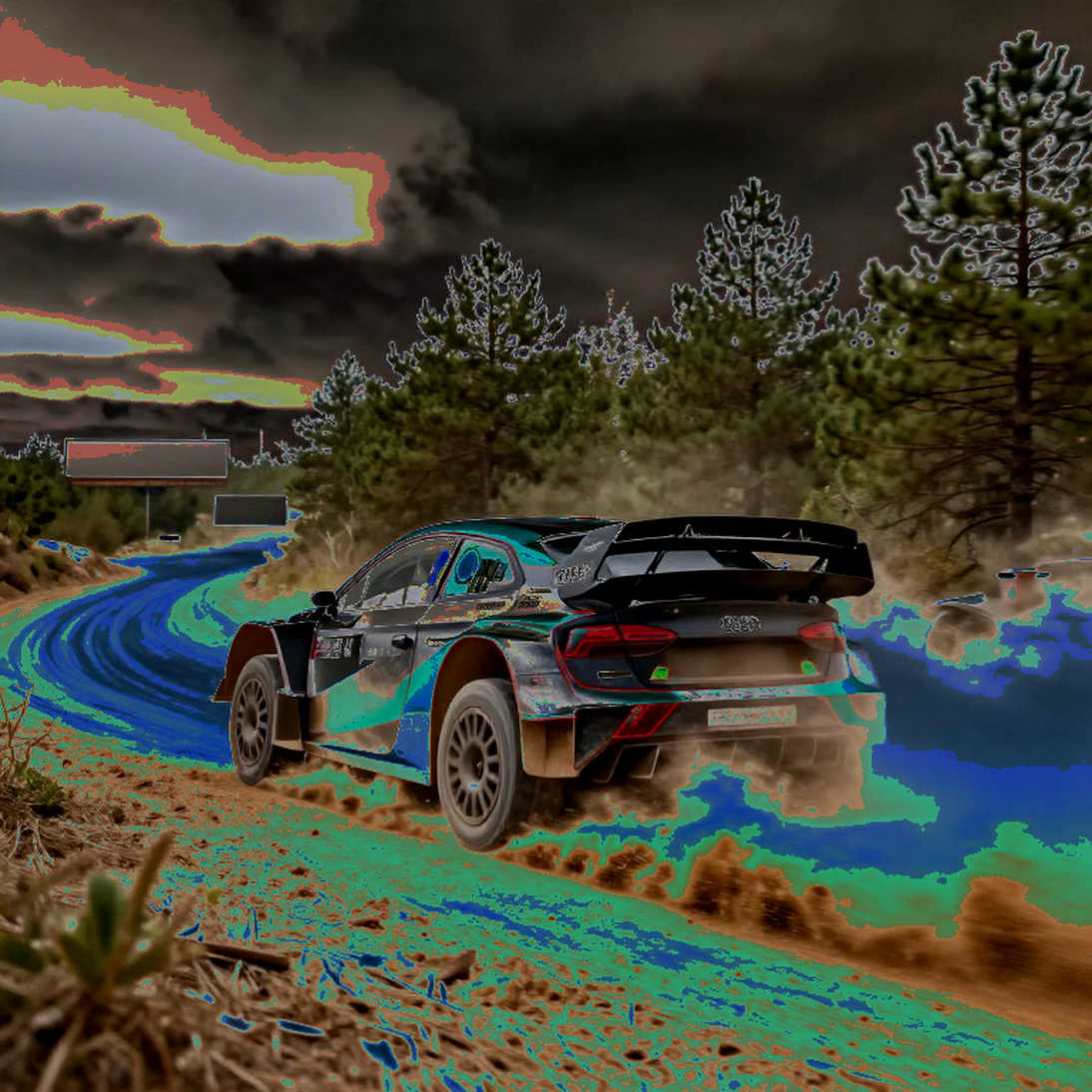
Calling races from a Delhi studio teaches you a habit — when the director cuts to the grandstand, I go quiet; when the onboard channel comes on, I look at live timing. Nobody in that room had seen the track, so I called the sound instead. Practice order never predicts qualifying, but practice spread does say something. Here the spread was odd: three teams inside two-tenths, and then a clean one-second hole behind them.
COTA runs 5.513 kilometres across twenty corners, and at least half of them ask the car for two contradictory things at once — stability at speed and traction at low speed. The surface is lumpy, and that lumpiness prices the setup. Raise the ride height and the floor stops working; drop it and the car starts skipping. The third option is the expensive one, because a skipping car gives the driver no confidence, and a driver without confidence moves his braking point back.
Sector 3 is the awkward part of the lap — a long straight followed by slow, low-grip corners. That means sector-3 time does not come purely from downforce; it comes from traction, rotation, and how quickly the soft tyre can be put to work. The Esses are a separate problem: soft rubber gets chewed there, so a clean lap and a durable lap have to be traded against each other.
Shortly before halfway, fresh softs came out of the blankets and nearly everyone switched to qualifying simulation. What that means, plainly, is that the thirty-to-forty minute window is comparable and the rest of the session is not. Times set outside that window are raw material, not evidence.
Lap times in the source are stated; source quality is not. I am filing them under “verification pending.” A Friday order is built from four variables — fuel load, engine mode, tyre prep, track evolution. Until all four are fixed, the order is a report on a programme, not on a car. There is reason to believe fuel loads differed, because several senior drivers went to long runs before setting an optimal soft-tyre lap.
Leclerc's gain was built in sector 3, and that is the most concrete technical signal of the day. If the advantage came from mechanical grip and rotation, it will hold on Saturday; if it came from engine mode and light fuel, it will evaporate in qualifying. The record cannot yet separate the two — my read leans to the first branch at medium confidence, because Leclerc's time landed in the part of the session when the track had rubbered in, and much of the delta was made on corner exit at the end of the lap.
One possibility the record does not state directly: Ferrari may be carrying a slightly softer suspension or ride height to survive Austin's bumps. That buys traction in the slow corners and spends a little high-speed stability. It is an inference, not a conclusion [low-medium confidence]. The test is simple: watch sector 1 on Saturday. If softness is being paid for, the gain will show in sector 3 and the loss in sector 1.
The quietest big number of the day belongs to Antonelli. Four hundredths is the kind of gap that never gets heard on the radio but is heard in the garage. George Russell saved a serious moment in the same session and ended up fifth. A young driver beating a senior teammate in one session does not yet change a hierarchy — but if the order repeats on Saturday, questions start being asked inside Mercedes. One session is a small sample, and building a large claim on a small sample is exactly the mistake data analysts make when they walk into a dressing room.
Lewis Hamilton ended up fourth, around six-tenths off Leclerc. That number reads worse than it is, because the record also shows he went to a long run before setting an optimal lap on softs. A lap that does not exist cannot testify about a gap. The six-tenths here measures Hamilton's programme, not his pace.
The real story is McLaren. Norris went off, Oscar Piastri ran wide, and both finished about a second down. When both cars from one garage stumble the same way in the same session, the first suspicion goes to the setup window, not to the drivers. If the word “bucking” is accurate, this is not a grip deficit but aero-platform instability — a ride-height and suspension matter that can be fixed overnight. The other branch is a fundamental low-speed traction shortfall, in which case sector 3 stays bad all weekend and the one-second hole shows up in qualifying too. I lean to the first branch [medium confidence], because both cars misbehaved in the same corners.
Isack Hadjar ended ninth with audible frustration on the radio. A verification note is required here: the source labels Hadjar a Red Bull driver, while the entry list places him at Racing Bulls. If the detail is wrong, the inference changes — ninth on a Red Bull seat is pressure, ninth on a Racing Bulls seat is within expectation. The record is not clear at this point, and I am writing about the lack of clarity rather than filling it. The rest of the midfield times were also incomplete in the source; I will not build a pace claim on data that is not there.
The headline says “perfect Friday.” The record says exactly as much as it shows, and less than it claims. The source carries detail for the second session; the first session has no time, no order, no note. That distinction matters: “not in the record” and “hidden” are not the same sentence. My reading is that first-session evidence simply was not filed in the report, with no indication of concealment [high confidence: evidence absent; low confidence: anything covered up]. What would flip the read is obvious — produce an official first-session timing sheet and the claim is complete, and my objection dies with it.
The second contrarian point is that Friday order is not a qualifying forecast, and this is no formality — the session itself supplies three proofs. Hamilton did not complete an optimal soft lap; Russell set his time while saving the car, so his time is not his pace; and track evolution means the last runs are quicker than the early ones. Anyone still building a Saturday grid off Friday's order is not reading data, they are reading hope.
More striking is what the record lacks entirely: no long-run degradation figures. The soft tyre chews itself up through the Esses, which is a qualitative observation, not a quantity. Without stint length and without lap-time drop, calling the soft a one-lap tyre is guesswork, and at Austin guesswork is expensive. [low confidence]
So what does Saturday need to show? Four things, all measurable. First, whether Leclerc's sector-3 delta survives a second soft run. Second, whether Norris's skipping car has stopped skipping after an overnight setup change. Third, whether Antonelli repeats 0.042s or whether it was a Friday flourish. Fourth, whether Hamilton finally sets an optimal soft lap. If three of those four turn into a yes, Friday's order was real. If two do not, then this Austin Friday was a report on programmes rather than cars — and the timing screen showed us what we wanted to see.