
Hong Kong Sixes 2026: Afridi Blitz Powers Pakistan to Four-Wicket Win Over India
हांगकांग सिक्सेज 2026 के ग्रुप C मुक़ाबले में पाकिस्तान ने भारत को चार विकेट से हराया। मिशन रोड ग्राउंड, मोंग कोक में भारत ने छह ओवर में पांच विकेट पर 88 रन बनाए, जवाब में पाकिस्तान ने दो विकेट खोकर 89 रन का लक्ष्य हासिल किया। मैच का फ़ैसला पाकिस्तानी पारी के पहले दो ओवरों में हुआ, जिनमें 31 और 28 रन बने — यानी लक्ष्य का करीब 66 प्रतिशत 12 गेंदों में। अफरीदी ने 11 गेंदों पर 40 रन बनाए और कृणाल पांड्या के ओवर में पांच लगातार छक्के जड़े; नफ़ाय ने 8 गेंदों पर 35 रन जोड़े। नियाज़ी ने अपनी पहली ही गेंद पर छक्का जड़कर मुक़ाबला समाप्त किया। ध्यान रहे, यह छह-खिलाड़ी, छह-ओवर का प्रदर्शनी फॉर्मेट है — T20I, वनडे या टेस्ट नहीं — इसलिए इसके आंकड़े T20 मानकों से तुलनीय नहीं हैं।
Pakistan beat India by four wickets in the Group C fixture of the Hong Kong Sixes 2026. At Mission Road Ground in Mong Kok, India batted first and were bowled out for 88 in six overs, losing five wickets. Pakistan chased down the 89-run target with two wickets down, keeping their hopes of progressing from Group C alive. The match was effectively settled in the first two overs of Pakistan's chase, which produced 31 and 28 runs — roughly 66 per cent of the 89-run target inside just 12 deliveries.

Understand the format first, or every conclusion will be wrong
This is not a T20 International, an ODI or a Test. The Hong Kong Sixes is an invitational exhibition tournament with six players per side and six overs per innings, where the fall of five wickets ends an innings. That means the numbers from this match — 88 in six overs, 40 off 11 balls, 35 off 8 balls — are structurally non-comparable to T20I benchmarks. Using them to judge a player's T20 pedigree or a national team's strength would be technically incorrect. In this format a single bad over is roughly 35 per cent of a target, so the tactical logic looks closer to a straight 'hit-out' than to T20 phase management. Every conclusion in this report is constrained accordingly.
India's innings: 88 runs and a collapsing structure
India made 88 for five in six overs, an economy of 14.7 runs per over. In this format that was not an extraordinary score, but a structural weakness was clearly visible inside it. Tewatia and Krunal Pandya were both dismissed first ball, while the specialist bowler Natarajan was left unbeaten at the end — meaning there was no lower-order buffer at all. That risk is inherent when only six batters are available: if two fall for nought, there is nobody left to hold the innings together. This was not merely a run-rate problem; it was a problem of innings construction. The batters who took India to 88 in six overs did their job, but the order of dismissals left no option to accelerate in the closing overs.
The first over: 31 runs and five consecutive sixes
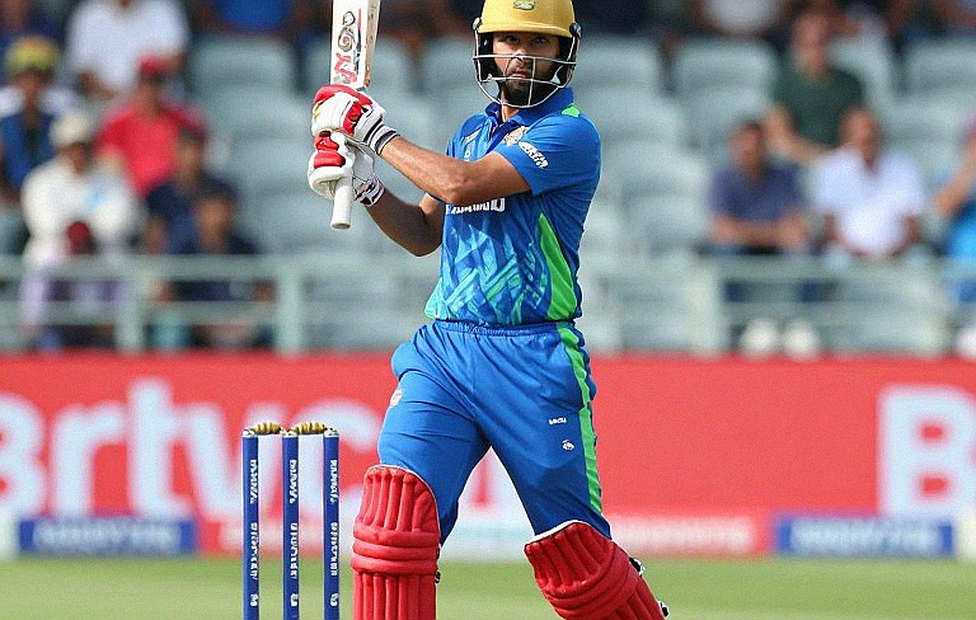
The entire shape of the match changed in the first over of Pakistan's chase. Afridi hit five consecutive sixes off Krunal Pandya, taking 31 from the over. In a six-over innings one over is 16.7 per cent of the bowling resource, and 31 runs is roughly 35 per cent of the target. India, in a single over from their most experienced bowler, surrendered capital that had taken six overs to build. In this format an 88-run total is only defendable if the early overs are tight; after conceding 31, the arithmetic becomes almost impossible. That is the defining characteristic of this format — one over can flip an entire result, and here that over was the very first one.
The second over: 28 runs and half the target gone
The pressure of the first over carried into the second. Natarajan's over cost 28 more, and Pakistan passed 50 inside two overs. That was the point at which the contest was practically decided. Fifty-nine runs in two overs meant Pakistan needed only 30 from the remaining four — in six-over cricket, that was little more than a formality. India's two most experienced frontline bowlers conceded those 59 runs between them, which is why the real contest lasted only 12 deliveries. The remaining four overs were a procedural passage in which Pakistan accumulated steadily and completed the win.
Afridi and Nafay: 75 runs in about 19 balls
The backbone of Pakistan's chase was the partnership between Afridi and Nafay. Afridi made 40 off 11 balls, a strike rate of about 3.6 runs per ball. Nafay made 35 off 8, roughly 4.4 runs per ball. Together they produced about 75 runs in roughly 19 deliveries, wiping out most of the target up front. This is precisely where the format creates separation: if power hitters settle in early, the opposing bowling plan fragments entirely. The pressure created by Afridi's innings was such that India could never establish any control through the middle overs.
Two wickets fell, then Niazi sealed it first ball
Pakistan lost two wickets in the small chase — Afridi and Nafay were dismissed. But those wickets had little bearing on the outcome, because the bulk of the requirement had already been met. Samad faced three balls, and at the end Niazi sealed the match with a six off his very first ball. That indicates how small the target had become: a new batter did not even need to play himself in — he simply had to hit his first ball, and he did. Pakistan's margin of victory was four wickets, but that margin reflected the head start from the first two overs, not the durability of the later batting.

Venue and conditions: short boundaries, big shots
Mission Road Ground in Mong Kok is not a full international venue. It is a small, community-scale ground with short boundaries. The direct consequence was 11 sixes across both innings — a figure that is partly an artefact of the venue rather than proof of pure hitting strength. No pitch report, weather, dew or DLS information is available, so no conclusion can be drawn on those factors. Whether it was a day or night match is also not stated. Acknowledging this uncertainty matters, because presenting run-rates built on a small ground as any kind of benchmark performance would be misleading.
Bowling ledger: two overs decided everything
On the bowling side, Krunal Pandya's opening over cost 31 and Natarajan's second over cost 28. Between them, India's two most experienced bowlers conceded 59 in two overs. In a six-over format that is roughly equivalent to a T20 side going for 80 in its first four. India's bowling depth was limited, and once the first two overs proved so expensive, the pressure on the remaining bowlers rose naturally. In this format a bowler gets very little chance to correct course — across six overs each bowler may get only one or two, and once an over goes badly, the route back is effectively closed.
Result versus process: the margin flatters Pakistan
Read as a four-wicket win, Pakistan's control looks impressive, but the fuller picture is different. Pakistan lost two wickets in a small chase and only finished the match with a first-ball six. The outcome was never seriously in doubt, but the process was not that of a controlled chase. That distinction matters analytically: the margin tells you how many wickets a team preserved, not how strong the batting was. Pakistan's win here rested on the head start from the first two overs, not on sustained control across the innings. Equally, India's 88 was not a total failure — it contained some good hitting, but the order of dismissals never allowed it to become a bigger score.
Inference, not fact: what the report does not state
On balls faced, Afridi played 8, Nafay 12, Samad 3 and Niazi 1 — about 24 legal deliveries, or roughly four overs. That implies Pakistan very likely completed the chase with around two overs to spare, finishing somewhere near the fourth or fourth-and-a-half over of six. This is offered at medium confidence, because it is derived rather than stated and would shift slightly with wides and no-balls. Similarly, the framing used in the report — 'bounce back' and 'kept hopes of progressing alive' — suggests Pakistan had almost certainly lost their opening Group C fixture. That too is an inference, not an established fact. Readers should treat both points as probabilities.
The limits of the data: what should not be read from this report
The single largest risk with this match's numbers is format-mixing — measuring six-a-side exhibition cricket against T20 international benchmarks. A run-rate of 14.7 in six overs, and a chase completed at roughly 22, only makes sense in a context of short boundaries, limited bowling resources and innings that end at five wickets down. Nothing here supports a claim about how a batter will fare in T20 cricket or how strong a team will be in its next international tournament. This was a group-stage match in an invitational tournament at a neutral venue, played for competition and entertainment. The most honest reading is this: Pakistan won a small-target contest by taking 59 from the first two overs, and India lost their opportunity inside the overs bowled by their two most experienced bowlers.