
Asian Cricket's Real Test: Home Comfort, Away Reality and Market Pressure
एशियाई क्रिकेट की वास्तविक ताकत का सबसे भरोसेमंद पैमाना घरेलू आंकड़े नहीं, बल्कि विदेशी परिस्थितियों में प्रदर्शन है — विशेष रूप से दक्षिण अफ़्रीका, इंग्लैंड, न्यूज़ीलैंड और ऑस्ट्रेलिया की सीम और उछाल वाली पिचों पर। उपमहाद्वीप की धीमी, टर्निंग पिचें घरेलू बल्लेबाज़ और स्पिनर को परिचित लाभ देती हैं, जिससे घरेलू औसत बढ़ जाता है और विदेशी प्रदर्शन का असली चित्र छिप जाता है। मूल्यांकन के लिए तीन बातें ज़रूरी हैं: प्रारूप (टेस्ट, वनडे, टी20 अलग-अलग मानक रखते हैं), घर-विदेश का अलग नमूना, और निरपेक्ष स्थल का प्रदर्शन। आर्थिक पक्ष में आईपीएल केंद्र में है, पर नीलामी का दाम अंतरराष्ट्रीय क्षमता का प्रमाण नहीं। दीर्घकालिक प्रगति का असली संकेत घरेलू ढांचे में निवेश, क्षेत्रीय कैलेंडर की स्थिरता और विदेशी दौरों पर लगातार सुधार है।
Cricket in the subcontinent is more than a sport. It is an economy, a collective emotion, and on several occasions a political fact. India, Pakistan, Sri Lanka, Bangladesh, Afghanistan and the Gulf cricket nations together constitute the largest cricket market in the world. Yet if this entire structure is to be measured on a single yardstick, that yardstick is neither a trophy, nor a broadcast deal, nor an ICC ranking. The real yardstick is away performance.
The reason is geographic. Subcontinental pitches are slow, the bounce is low, and the ball begins to turn as the match wears on. That surface is familiar to the home batsman: he knows when to play a shot and when to hold back. The home spinner knows at what angle the ball will turn and at what pace it will skid. That familiarity is the biggest component of a home record — and it is exactly the component that vanishes abroad.
Statistically, the problem is serious. An average built on home grounds does not present a complete picture of a batsman's true ability. Unless home and away numbers, numbers against pace and against spin, and numbers in day-night fixtures are examined separately, any evaluation remains incomplete. In Asian cricket this gap is larger than in any other region, because the technical demands themselves change between home and away conditions.
The real examination of an Asian team therefore begins when it steps onto South African, English, New Zealand or Australian soil — SENA, in shorthand. There the ball climbs quickly, seam movement is available, and the effect of the atmosphere shifts from session to session. A batsman who is comfortable against spin must rebuild his technique against the short ball and the outswinger.
It is not only technique that changes; rhythm changes too. On the subcontinent a bowler slows the ball to extract turn; in Australia or England he must pull his length back and increase pace. The SG ball in India, the Dukes in England and the Kookaburra elsewhere — that variation is a distinct skill in itself, and domestic cricket does not offer enough practice in it. That is why bowling success on overseas tours is often treated as a measure of adaptability more than of technique.
There is a further structural difficulty in limited-overs cricket. The two-new-ball rule assists fast bowlers from both ends and restricts spinners to the middle overs. On foreign soil Asian sides often lack the depth of three genuine fast bowlers, and that shortfall shows most starkly in the final ten overs, when a bowler trying to contain rather than attack loses his rhythm.
It must also be remembered that cricket is not one sport but four. Test, ODI, T20 and England's Hundred — each format has a different strategic logic and different statistical benchmarks. A Test average is not comparable with an ODI average, and a T20 strike rate is not comparable with an ODI strike rate. Analysis that draws conclusions without naming the format is not analysis but guesswork.
In T20 the contest divides into three parts — the six overs of the powerplay, the nine middle overs, and the last five. The powerplay demands both wickets and runs, the middle overs are where spinners throttle the game, and the closing overs are decided by yorkers, slower balls and boundary management. Each phase has its own metric, so judging a bowler on a single over or a single season is flawed. By the same logic, an economy rate hovering around seven is generally considered good in T20, while the strike rate expected of a middle-order batsman sits far above that.
Test cricket inverts this logic entirely. There, time is the scarcest resource. The captain must choose a declaration, decide on the follow-on, and count the lead session by session. The World Test Championship points table has complicated that arithmetic further, because it is no longer only victory that counts but the size of the margin. The mechanism for revising targets in rain-affected matches is itself the subject of a separate analysis.
At the centre of this entire structure sits the IPL. Launched in 2026, it is today the wealthiest cricket competition in the world and has permanently shifted the economic centre of Asian cricket. Its influence is not confined to money; it has changed player priorities, the shape of the international calendar, and even the relative importance of domestic tournaments.
The IPL's deepest effect is that it has tied a player's career to a new economy. A good season becomes auction value before it becomes a place in the national side. That link is not harmful to the game, but it carries a risk: auction value is produced by right-to-match provisions, team needs and the psychology of bidding, and it is not evidence of international performance. A big price and a big player are two different things.
Capital no longer respects borders. Owners of Indian franchises run teams in South Africa, the UAE, the Caribbean and the United States. One owner, different boards, different rules. This has created a new situation in which capital's loyalty is to a brand rather than a country. That is a new challenge for boards, because control over the player rests with them while control over the capital that attracts him does not.
The question of domestic structure is tied to the same thread. Boards with strong first-class cricket, disciplined A tours and a large reserve pool stay more stable when conditions change quickly. The source of batting and bowling depth is not the league but domestic matches — the league sells that depth, it does not create it. This is why overseas exposure is no longer only a senior-team matter; A tours and the chance for young players to play in SENA conditions are investments whose returns appear five years later. Boards that defer them are buying time, not skill.
The other side of this expansion is the calendar. Every new league means additional matches, additional travel and additional workload. Fast bowlers and all-rounders tire first, because the pressure of three formats and multiple leagues falls on them simultaneously. A spread-out calendar also fragments viewer attention, and every board reads that through its own commercial interest. This is precisely where sporting quality and revenue growth collide head-on.
At the regional level, the Asian Cricket Council and the Asia Cup are the structures where these contradictions are most visible. Over the years, hosting has been resolved through arrangements in which matches were staged in more than one country. The UAE has emerged as a neutral venue on such occasions, and that is where the rarest opportunity arises to compare home and away performance directly. At a neutral venue no side enjoys the advantage of a familiar pitch, so performance there offers a more reliable signal than any home statistic.
Bilateral series between India and Pakistan have been suspended for more than a decade, and their meetings have been confined to multi-nation tournaments. That single fact has shaped the entire architecture of the Asian calendar — revenue, the value of broadcast rights, audience engagement, and even the exposure available to young players. A fixture removed from the calendar does not simply remove a match; it takes an entire economic chain with it.
At the level of governance, ICC revenue distribution and decision-making have long been contested. The influence of the three largest boards — India, England and Australia — is a consequence of commercial reality, but that same influence also creates imbalance in the development pathways of smaller boards. For Asian cricket the question is central, because financial and administrative capacity varies enormously across the region.
Smaller boards often depend on tours by larger boards and on the central broadcasting pool. That dependence prevents them from building independent and competitive calendars and limits investment in domestic structures. The result is that talent is produced without the means to develop and retain it. This is not merely a financial question but one of competitive balance.
The relationship between player and board is also changing. A player needs a No Objection Certificate to appear in an overseas league, and that permission is the main point of friction between the two. The board argues that the national team comes first, while the player expects maximum opportunity within a limited career. The most visible form of this friction is the growing tendency to retire from one format — players stepping away from Tests or ODIs to focus on T20, a decision now read as rational career management rather than laziness. This is exactly where commercial value and sporting value collide.
Amid all this there has been one positive shift: a culture of data. Asian teams now employ full-time analysts, bowling coaches and performance scientists who look not at the scoreboard but at ball-by-ball data. Exchange of coaching staff between home and overseas set-ups has increased too, narrowing the technical gap, even if results take time to reflect it.
But analysis has its limits. One good T20 season does not prove a player, and in an auction race that same small sample becomes the most expensive purchase. Agent-driven hype and media haste widen the gap further. So one rule is worth keeping: any claim must first be checked against how many matches, how many conditions and how many formats it rests on.
At the far edge of risk sits integrity. Cricket's past experience with spot-fixing and improper approaches shows that the danger is greater where monitoring is weaker. Top-tier leagues have robust surveillance systems, but newer and less wealthy leagues have more fragile structures in this respect. This is not an allegation but a structural warning — and one that policymakers should take seriously in time.
Systemic risk is no smaller. Target revision in weather-affected matches, geopolitical tension, and an Olympic entry that adds a new dimension to the calendar — cricket returns at the Los Angeles 2028 Olympics, which will itself influence both scheduling and selection policy. There is a further layer often kept separate: women's cricket and the talent supply chain. Until domestic structures of matches, coaching and pay exist for women, the international pool will remain limited. That question is structural, not merely social.
So what should be the measure of progress? Three questions. First, has away performance improved, or are only home numbers glittering? Second, has the depth of domestic competition grown, or is the gap between first team and reserves unchanged? Third, is board revenue flowing into grassroots infrastructure, or only into the value of broadcast rights? The answers are not found in headlines but in data — and only when that data is read with the correct format, the correct venue and the correct sample size.
Asian cricket's greatest strength and its greatest weakness come from the same place — its home ground. It offers reassurance, it builds confidence, and it manufactures records; but it also keeps the game at a distance from the truth that only foreign pitches reveal. The team, board or player that accepts this gap and works on it is the one that endures the long race. Everything else is scoreboard noise.

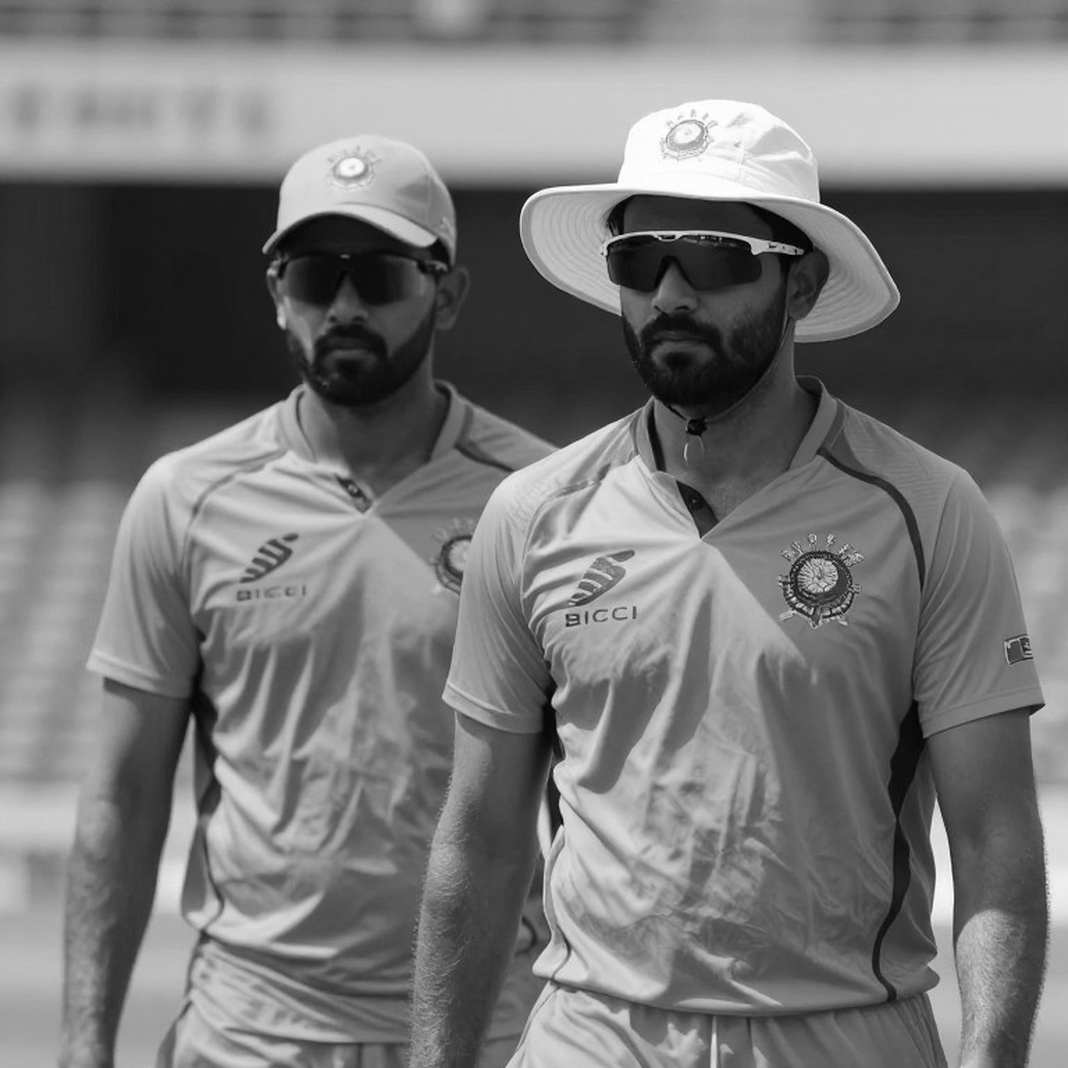

संबंधित खिलाड़ी
अनुशंसित
"I Did Everything I Could for India": Poonam Raut's Unfinished Dream and the End of an Era2026-10-31
Pakistan Bowled Out for 110 at Gaddafi Stadium: Innings Collapses in 25.3 Overs as Madushanka's 5/34 Wrecks the Top Order2026-10-28
Empty Sheet, Full Bid: How a Transfer Window Prices a Rumor2026-10-29
The Slip Was Empty, and Shafali Dragged the Pull: A Technical Reading of 6.5 Overs2026-10-26
Dubai's Half-Filled Stands and the Coverage Ledger: Auditing the 2026 Asia Cup2026-10-24
A Banking Circular From Karachi Landed in My Cricket Feed: The Pipeline Error Costlier Than Any Scorecard2026-10-26
Two Draws, One Selection Debate: The Column Rajasthan's Scorecard Doesn't Have2026-10-26
CSK's Backroom Reset Under Zaheer Khan: What the Report Says, and What It Leaves Out2026-10-27