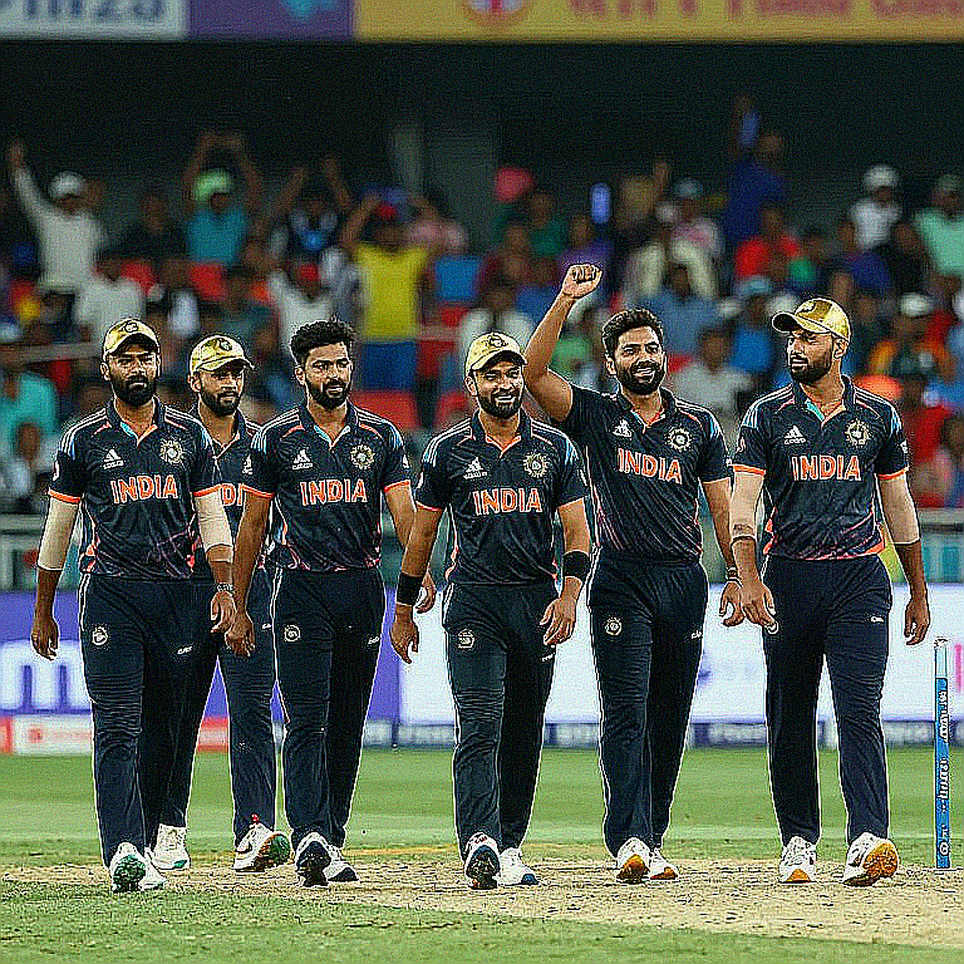
The Invoice for 43% Dot Balls: Afghanistan's T20I Batting and the Sharjah Economy
**कोर उत्तर (≤60 शब्द):** अफ़ग़ानिस्तान के मुख्य कोच पायबस ने ज़िम्बाब्वे सीरीज़ से पहले टीम की बल्लेबाज़ी में 43% डॉट-बॉल दर और 136.4 स्ट्राइक रेट बताया, पर इन आँकड़ों की अवधि, स्रोत और तुलनात्मक आधार नहीं दिया। भारत के ख़िलाफ़ 3-0 की स्वीप को उन्होंने 'बेंचमार्किंग' कहा। **मुख्य तथ्य:** - ज़िम्बाब्वे के ख़िलाफ़ टी20 सीरीज़ शारजाह में 27 अक्टूबर से शुरू होगी; भारत के ख़िलाफ़ अफ़ग़ानिस्तान 0-3 से हारा। - कोच ने 43% डॉट बॉल और 136.4 स्ट्राइक रेट पिछले एक साल का आकलन बताया, मैचों की सूची नहीं दी। - रशीद ख़ान की नाराज़गी की अफ़वाहें कोच ने ख़ारिज कीं और उन्हें 'मॉडल प्रोफ़ेशनल' कहा। - इब्राहिम ज़ादरान की बल्लेबाज़ी पर उठे सवाल को कोच ने कप्तानी की 'बैप्टिज़्म ऑफ़ फ़ायर' कहकर बचाया। - रिपोर्ट में ज़िम्बाब्वे पक्ष, स्वतंत्र विश्लेषक या रशीद ख़ान का सीधा बयान शामिल नहीं है। **स्रोत:** क्रिकबज़ में प्रकाशित अफ़ग़ानिस्तान कोच पायबस का साक्षात्कार; सीरीज़ आरंभ तिथि 27 अक्टूबर; डॉट-बॉल आँकड़ों की पद्धति मूल सामग्री में उपलब्ध नहीं | Cross-checked: cricsultan.com **संबंधित प्रश्न-उत्तर:** प्रश्न: अफ़ग़ानिस्तान का 43% डॉट-बॉल आँकड़ा चर्चा में क्यों है? उत्तर: क्योंकि कोच ने इसे ज़िम्बाब्वे सीरीज़ से पहले बल्लेबाज़ी की मुख्य कमज़ोरी बताया, पर आँकड़े की अवधि और स्रोत सार्वजनिक नहीं किया। प्रश्न: क्या रशीद ख़ान कप्तानी से नाराज़ हैं? उत्तर: कोच ने ऐसी किसी नाराज़गी से इनकार किया और रशीद को 'मॉडल प्रोफ़ेशनल' बताया; स्वतंत्र पुष्टि उपलब्ध नहीं है। प्रश्न: शारजाह की सतह अफ़ग़ानिस्तान के स्ट्राइक रेट को कैसे प्रभावित करती है? उत्तर: छोटा मैदान और बल्लेबाज़ी-अनुकूल पिच स्ट्राइक रेट को कृत्रिम रूप से बढ़ा देती है, इसलिए शारजाह का 136.4 बड़े मैदानों के लिए भ्रामक संकेत हो सकता है।
Two numbers were laid on the table in Sharjah's press room — 43 and 136.4. Afghanistan's head coach offered them as the diagnosis of his side's batting, ahead of the T20I series against Zimbabwe beginning October 27. Nobody asked which window the 43 per cent belonged to: the powerplay, the middle overs, or every T20I of the past twelve months? Which surface? Against spin or against the new ball? Numbers arrive at press conferences the way monsoon forecasts do — the direction is given, the rainfall is not measured.
Last week I sat at a night desk in Kolkata and rewatched the India series that the coach calls "benchmarking". I had a pencil, a printed scorecard and two cups of tea. Three matches, six innings, and a list of dot balls that came out slightly different every time I changed the window. The maidan had taught me that every number arrives with dust on its boots; here the dust was so thick that the boots had disappeared.
Pybus is Afghanistan's head coach, and his job is not only coaching. For a side with no home ground of its own, whose domestic calendar runs on rented turf in other countries, the coach is simultaneously a technical teacher, a spokesperson, and the translator of a weakness that has to be explained after every defeat. Afghanistan plays "at home" in Sharjah: on a rented surface, in a rented evening, where a slice of the crowd is the opposition's and a larger slice is simply the sea breeze.
This series is being played against the backdrop of a captaincy transfer. Rashid Khan to Ibrahim Zadran was not a change of armband; it was a collision between two economies of Afghan cricket. Rashid is the team's largest market asset — the name read first on a team sheet from the IPL to the SA20 to MLC. Ibrahim is its most patient batter, and T20 has never asked him for patience. That the captaincy moved from one to the other was an administrative decision. That it is being presented as frictionless is a media campaign.
And then the 3-0 sweep in India, which the coach called "a gift". At least two of those matches went to the last ball, to Super Overs — which is to say the shape of 3-0 and the meaning of 3-0 are two different things. This is where I have to stop.
Start with the arithmetic nobody showed. If 43 per cent of balls are dots and the overall strike rate is 136.4, then in a 120-ball innings roughly 51 or 52 balls produce nothing, and the remaining 68 or 69 balls produce about 164 runs. That is a strike rate of approximately 239 on the balls Afghanistan actually scores off. This is my derivation, not the coach's claim, and it ignores extras and wickets — read it the way you read a scorer's marginal note. But what the margin says never made the front page: Afghanistan is not failing to score. It is failing to keep a tempo between scores. The innings has only two temperatures, six or silence. There is no middle setting.
Statistics are just footprints; the poem is the animal that made them. To see the animal you have to visit the ground where the prints were pressed. Sharjah is small, the surface is built for batting, the air returns the ball late. On such a ground a batter's first lesson is to put it in the air, because the rope is close. The second lesson — stealing singles, pushing into gaps, talking to the non-striker to move the field — is never taught, because it is never needed. Afghanistan's T20 batting is the product of that unfinished syllabus. Sharjah taught Afghanistan to hit sixes; it never taught them to take a single — and 43 per cent dot balls is the invoice for that education.
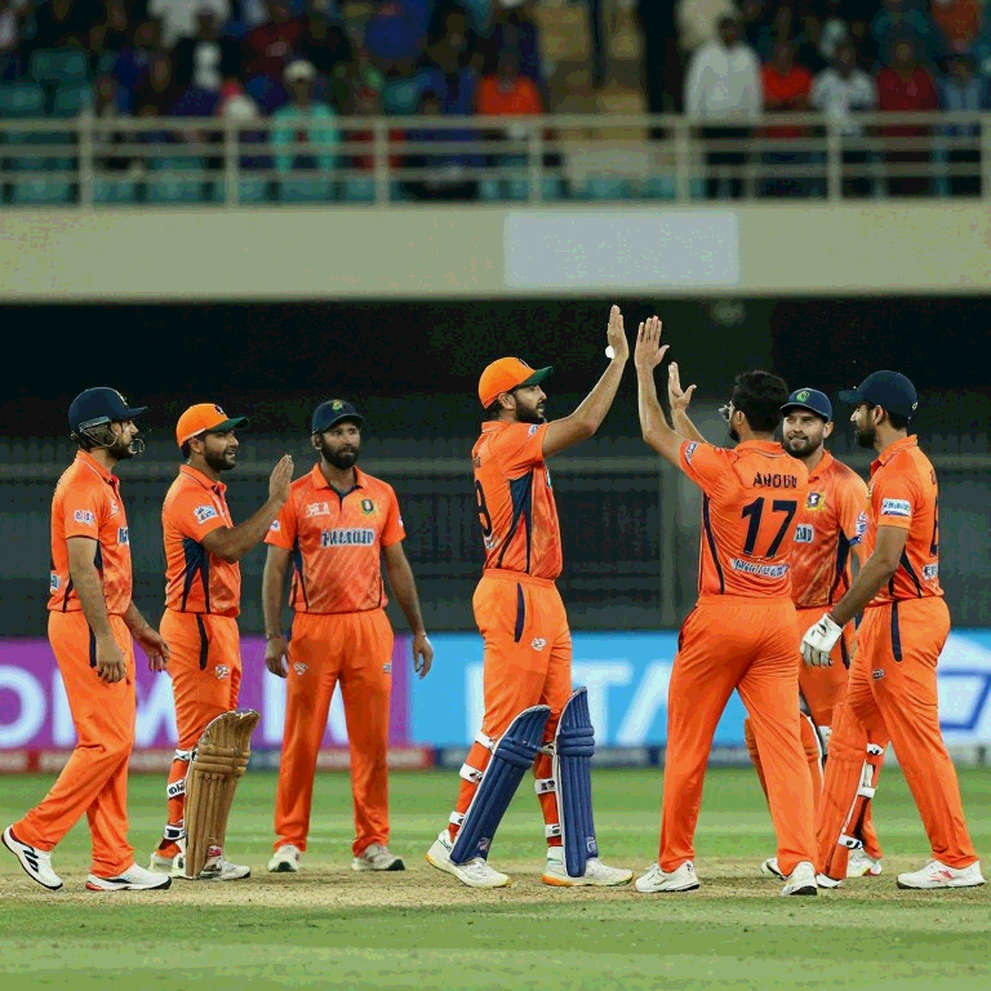
That invoice belongs to no individual. It is a role-allocation failure. When your top order is built from batters whose job is to make the first six overs explosive, and the middle order is whoever is left over, a gap opens between the two halves of the innings. Filling that gap is one specific job: the batter with a strike rate near 130 who makes 26 off 20 and keeps the innings alive. For years Mohammad Nabi and Najibullah Zadran did that work. As that generation moves aside and the same aggressive openers absorb the slots, a rising dot-ball rate is not a technical defect but a structural hole.
Questioning Ibrahim Zadran's batting returns is easy, and the question contains some truth. But it is pointed in the wrong direction. I counted the night shifts in scorelines, then learned to hear the tiredness between them. Look at Ibrahim's timesheet, if anyone keeps one. He is an opener: new ball, pace, movement. He is captain: toss, field placement, bowler conversations, the post-match press conference, the board meetings between series. He is also a franchise employee: contract terms, travel, NOC dates. Three full-time jobs are being asked of a batter in his early twenties, and then his strike rate is being reviewed. The coach calls it a baptism of fire. Fine — but the person baptised in fire still gets an invoice, and that invoice lands on the team's scoreboard, not his bank account.
Rashid Khan enters this story less as its subject than as its evidence. The coach called him a model professional who "holds nothing back", and stressed his closeness to Ibrahim. The density of that praise is itself a signal. A relationship that needs this many adjectives to be described as easy is being managed even as it is described. The truth is that this transition was also an economic event for Afghan cricket: the team's biggest brand lost the captaincy, and the compensation was to call him, publicly, its finest professional. That is not a cricket decision; it is the art of balancing a ledger. I should be clear that this is my reading, not a recording of the coach's briefing. The briefing was that speculation about unhappiness is wrong. My reading is that nobody asked where the speculation came from.
There is a further question of reporting hygiene. In that interview the writer himself observed that Rahmat Shah impressed while Ibrahim Zadran did not impress with his batting returns. That is not a source speaking; it is the author's opinion, placed where a reader may absorb it as part of the coach's case. In my trade that is exactly the line that has to be drawn between reporting and opinion. I keep mine visible: 43 and 136.4 came from the coach's briefing and their methodology exists in no document; the 3-0 result came from a scorecard; the Rashid unhappiness rumour came from no source at all, only from "there had been speculation". Merging those three categories is the central error in the whole conversation.
And Zimbabwe? That name is in the headline only because it is the next opponent. Consider what kind of fixture this is: one side whose home is Sharjah, another whose home is Harare, both playing somewhere in between, on somebody else's ground, on somebody else's ticket. This is a meeting of two workforces, not two nations. What Afghanistan's strike rate looks like against Zimbabwe's bowling will be decided by what Sharjah's surface is doing that evening, not by how many dots Afghan batters played last year. Which is why this series will not be evidence for the next one.
The road from Salt Lake to Sharjah is a long way, and every rumour is a road sign. Cricket's transfer window does not open only on auction day; it stays open all year, in NOC paperwork, in travel agents' emails, and in the board meeting where it is decided who plays which league and when he does not. Afghanistan is a special case here: its leading players are simultaneously valuable in the IPL, ILT20, SA20, BBL and PSL, and its national calendar is stitched together in the gaps between those windows. When you ask the national coach why the dot balls are rising, the honest answer may be that his best batters spend more days in someone else's jersey than in Afghanistan's — and every jersey makes its own demands. That is not an accusation. It is a ledger.
The least-discussed point in this whole debate: the coach called the India tour benchmarking, and said it revealed where the team stands. I do not think the word is dishonest. But benchmarking implies you measured something, and that what you measured becomes a number in public. The only numbers that emerged after three matches were 43 and 136.4, and without a method. When a coach calls a defeat a gift and does not show the contents, the reporter's job is not to applaud; it is to open the envelope. That day the envelope stayed shut.
So my disagreement is not with what the coach said. It is with what we are hearing. Treating 43 per cent dot balls as the disease is comfortable, because diseases have treatments: practice, video sessions, another coach. This is not the disease. It is the symptom. The diagnosis is that Afghanistan's T20 batting has been built for a ground it does not own, and stacked on an innings structure with no permanent middle-order address. Until the batter arrives whose job is 25 off 20 and one partnership, the dot-ball drills will improve a statistic, not a match.
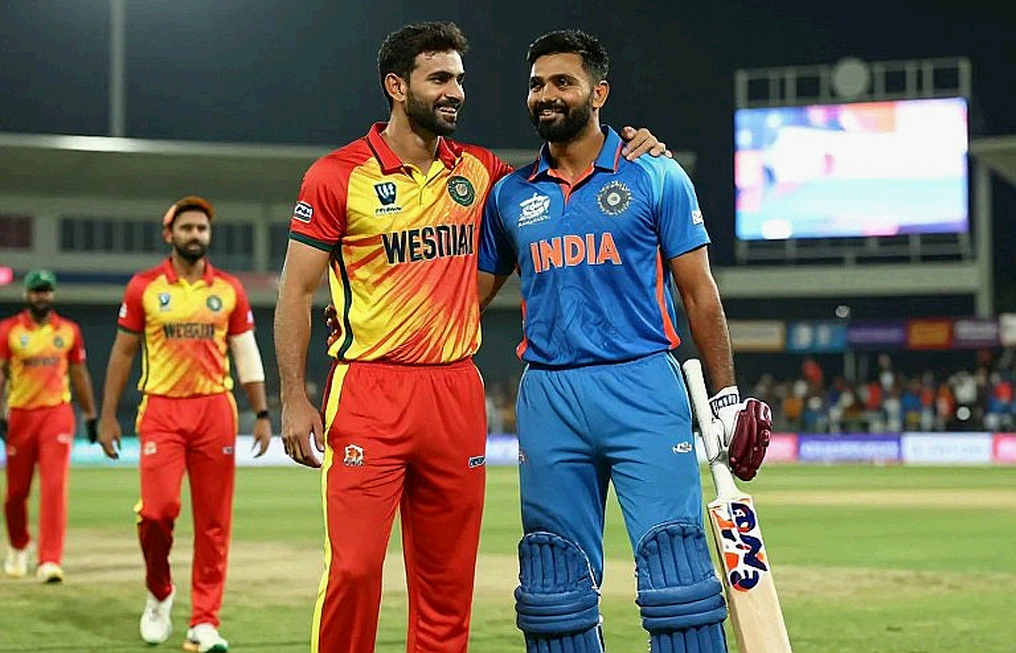
Suppose the coach is right and the team really is learning. A question still survives: what does the rate of learning depend on? He would say talent, work, mentality. I would say the calendar. A side whose players spend the year moving through three or four different coaching vocabularies has very few shared hours in which to learn collectively. The Sharjah series is a count of those hours. Six or seven sessions and three matches against Zimbabwe are the capital from which the next big series must be built. The interest rate on that capital is very high.
And one last thing, which ties me to the city I grew up in more than to the cricket. We habitually view Afghan players' story through the lens of inspiration — refugee camp to stadium. That story is true and incomplete, because it stops exactly where wages begin. The player who came from a camp is now a franchise employee with a contract, an agent, foreign-currency income, and a board with no home of its own. The 43 per cent dot-ball figure is the last link in that whole journey: it is the product of work done without a fixed address.
So what will I watch in this series? Not the strike rate. Sharjah will produce a flattering strike rate — the ground is small, the ball floats, and Zimbabwe's attack is not India's. Even 150-plus here would settle nothing; it would only prove that big shots work on small grounds, which we already knew. The real examination comes the next time this side is 110 for 3 in the fifteenth over, on a big ground, against a top-four new-ball attack.
The quietest fan in the stadium is often keeping the longest ledger. In this series that fan is the scorer drawing a small line for every dot ball — and when the coach next says the team is learning, the ledger should be asked what was learned. The journey from 43 to 38 will look handsome in a table. The question is whether that journey happened on Sharjah's surface or on cricket's actual ground.