
Cricket's Big Question: Calendar Congestion, T20 Glare and Test Cricket's Roots
क्रिकेट में कैलेंडर की भीड़ और खिलाड़ियों के कार्यभार का संकट एक संरचनात्मक समस्या है, जो किसी एक श्रृंखला या मैच तक सीमित नहीं। तीनों प्रारूपों, द्विपक्षीय श्रृंखलाओं और तेज़ी से बढ़ती फ्रेंचाइजी लीगों की माँगें साल के सीमित बारह महीनों में टकराती हैं, जिससे रिकवरी का समय घटता है और चोट व मानसिक थकान बढ़ती है। टेस्ट क्रिकेट की आर्थिक स्थिति टी20 के मुकाबले कमज़ोर है, जबकि आईपीएल सहित प्रमुख लीगें वैश्विक क्रिकेट अर्थव्यवस्था को नियंत्रित करती हैं। समाधान के रूप में वैश्विक खिड़की व्यवस्था, प्रारूप-आधारित अनुबंध, अनिवार्य वर्कलोड सीमाएँ और मानसिक स्वास्थ्य के लिए खुला वातावरण सुझाया जाता है।
Modern cricket is caught in a strange contradiction. On one side, the game is more popular than ever: three formats are generating record audiences, franchise leagues are launching in new countries, and the women's game has been given a platform that would have been unimaginable two decades ago. On the other side, the load on players' bodies and minds has reached a point where several senior cricketers openly say they are being forced to sacrifice parts of their careers in order to survive the rest. That contradiction is the biggest story in the sport today, and it does not belong to one match, one series or one board. It belongs to the entire ecosystem.
Picture the morning of a national team training session. A fast bowler is having tape applied to his knee, a batter is trying to hide the dark circles under his eyes, and there is a queue outside the physiotherapist's room. This picture is not unique to one country. Australia, England, India, South Africa, New Zealand, Pakistan, Sri Lanka, West Indies: coaching staffs everywhere are wrestling with the same question, of whom to rest and whom to play. That question was never this hard, because the calendar never had this many windows.
The calendar: beyond the numbers
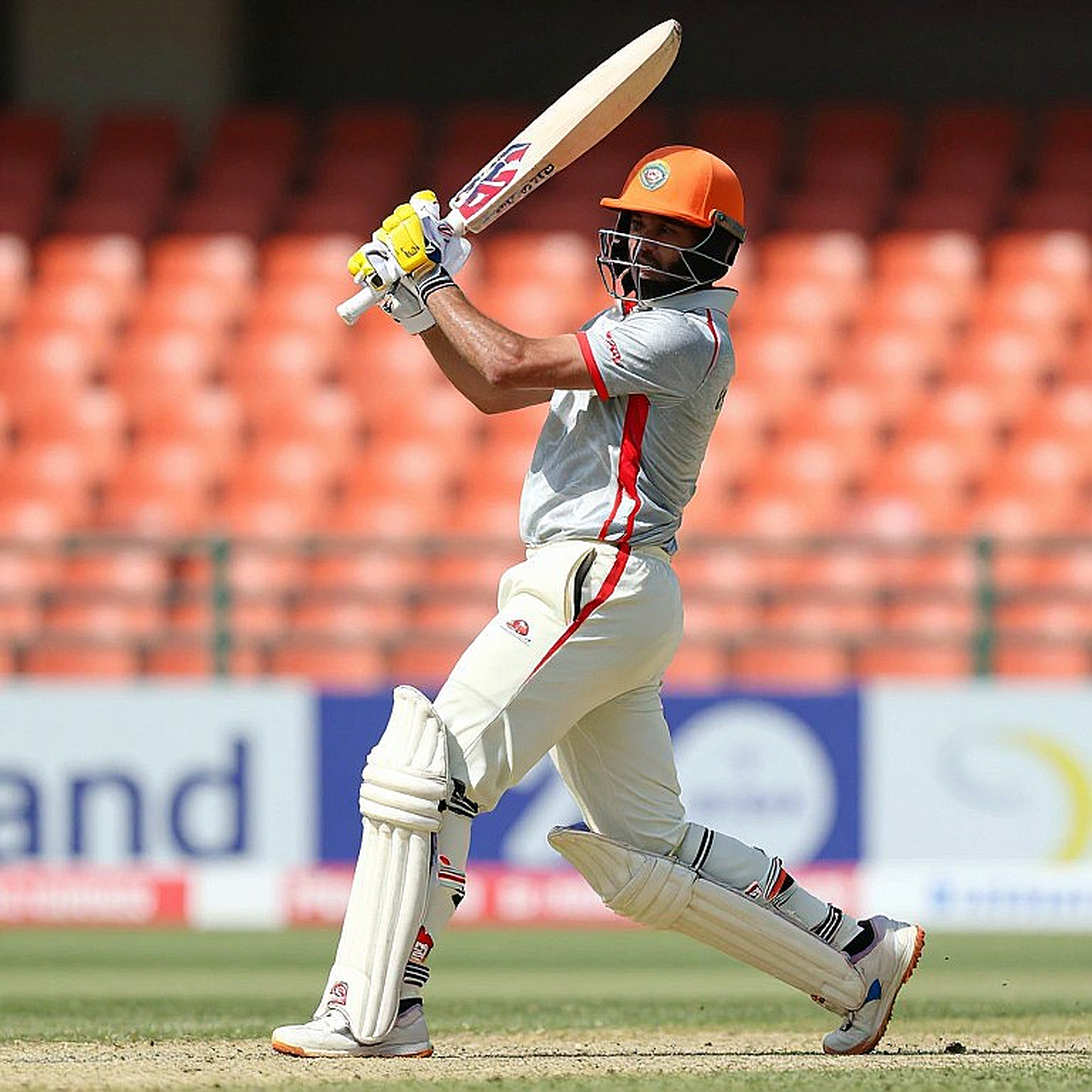
The ICC Future Tours Programme gives every bilateral series a fixed window. But inside that window, three formats now compete. A Test series is five days per match, and once travel, training and recovery are added, a single Test can swallow almost ten days. A three-match ODI series takes eight to ten days. And T20 cricket, the most commercially rewarding of the three, crams the most matches into the least space. The tradition of squeezing all three formats into one tour has produced a workload in which the body simply is not given time to heal.
The problem is not just the number of matches. It is the travel, the shifting time zones, and the mental fatigue that accumulates between hotels, airports and press conferences. A player who has competed on three continents in four months is exhausted in the fourth month not only physically but in his capacity to make decisions. In cricket, decisions are everything: which shot to play, which ball to leave, which moment to change the field.
The new geography of T20 leagues
Over the past decade, the economics of franchise cricket have been transformed. The Indian Premier League has become the largest cricket league in the world, and its recent media rights cycle is measured in billions of dollars. But the story is no longer only about the IPL. The Big Bash League, the Pakistan Super League, the Caribbean Premier League, South Africa's SA20, the UAE's ILT20, England's Hundred: every league wants a window, and every window is cut from the same twelve months.
The direct consequence is that national teams are losing contracted players. Some have surrendered central contracts so they can play the leagues freely. Trent Boult's decision to give up his New Zealand central contract is the most cited example of this shift. Quinton de Kock retired from Test cricket to focus on limited-overs and league cricket. These may look like personal choices, but the message is collective: international cricket is no longer the only option, and players increasingly treat their careers as a market in which they have the right to choose.
For boards this new reality is uncomfortable, because a large share of their revenue comes from international cricket: broadcast rights, ticketing, sponsorship. If leading players keep stepping away from bilateral series, the value of those series falls. It is a cycle in which every party demands protection from the others, and no one wants to move first.
Body and mind: the cost the scorecard does not show
Injury talk is routine in cricket, but the focus has shifted in recent years. The conversation is no longer only about hamstrings and backs. It is about mental health, and about admitting that an international cricketer can be tired, anxious, and can want distance from the game. Several leading players have taken breaks mid-career on mental health grounds, and those decisions have produced a slow but real cultural change.
But there is a hard truth here. When a senior player rests, a younger one replaces him, and that younger player was already moving between domestic cricket, A tours and franchise leagues. The fatigue does not disappear; it simply moves down the hierarchy. The principle of rotation looks right on paper, but in practice it often means that the top players pick their matches while everyone else runs an endless race.
Sports science has developed ways to measure this pressure: workload monitoring, heart-rate variability, sleep quality, travel hours. Modern teams collect this data. The problem is the gap between collecting data and acting on it. A coach may know that his lead fast bowler is in the red zone and still have to play him, because the result of the series, the pressure from the board and the expectations of sponsors all move together.
The captain and the coach: an impossible equation
A Test captain's job today is not just to think on the field. A player like Pat Cummins has to bowl fast at the SCG and also decide which senior colleague to rest for the next series. Under Ben Stokes, England's Test team adopted a bold style of play, but that style also extracts a heavy physical price: an aggressive approach means bowlers send down long spells and batters take risks.
Comparing the leadership of Rohit Sharma and Virat Kohli, analysts have noted that the demands of three formats have turned captaincy into a management role. During Kohli's Test captaincy, India built a fast-bowling culture, and sustaining it meant managing bowlers like Jasprit Bumrah with care, which also meant he could not play every match. Similar decisions have been made around Kane Williamson in New Zealand, Kagiso Rabada in South Africa and Babar Azam in Pakistan.
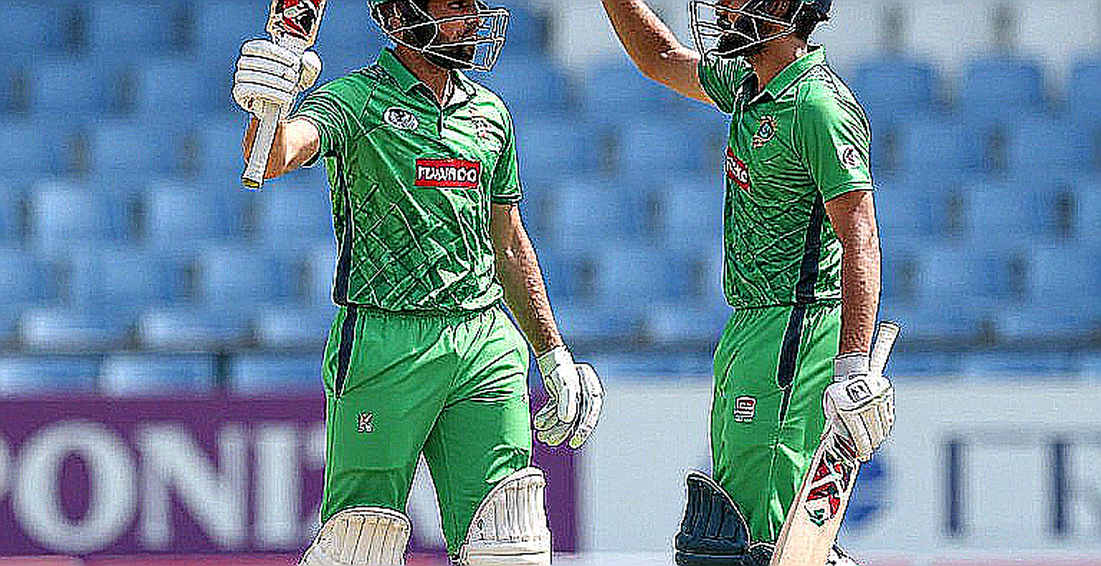
Fans do not like this new face of captaincy. When a big name sits out a series, social media erupts, personal accusations fly, and the player's commitment is questioned. That expectation was created by cricket itself: we celebrated players for being available at all times, and now we punish them for not being available.
Test cricket: strong roots, weak economic ground
Whenever the cricket calendar is debated, Test cricket attracts emotional rhetoric. That is fair: Test cricket is the format that defined the game's technique and patience. The identities of batters like Joe Root, Steve Smith and Kane Williamson were forged in Test cricket, because the format requires a completely different mental framework.
But the economic reality of Test cricket is harsh. A five-day match, even in a large stadium, often unfolds in front of empty seats, and in smaller nations attendance is thinner still. The World Test Championship gave the format structure and gave every series meaning; that was a successful experiment. Day-night Tests added fresh energy. None of this removes the underlying problem: Test broadcasting is worth far less than T20, so boards protect the format first and nurture it second.
Another shift is worth watching. Even in countries with deep Test traditions, younger audiences lean towards T20. This does not mean Test cricket is dying, but it does mean Test cricket will have to justify its place repeatedly. If leading players start leaving the format, it will gradually become a specialised club in which only a few teams and a few players remain active.
Money, power and geography
The cricket economy is deeply unequal. The Indian board's revenue exceeds that of several full members combined, and this inequality is not just about numbers; it is about influence. Which series happen, when they happen, and how many matches each country gets are all shaped by that economy.
The consequence is that smaller cricket nations often cannot choose their best calendar. They play what is commercially useful to the larger boards. And when their players see better earnings in franchise leagues, holding on to them becomes even harder.
There is also a positive development underway. The ICC has more than a hundred member nations, and the game is expanding into new regions. T20 has been the vehicle of that expansion, because it needs less expensive infrastructure and new audiences grasp it quickly. That opportunity is competing with the very calendar that created it.
Women's cricket: new speed, old challenges
The leap women's cricket has taken in recent years is the most remarkable change in the sport's history. The Women's Premier League gave players a platform and a salary that was previously unimaginable. Smriti Mandhana, Harmanpreet Kaur, Ellyse Perry, Alyssa Healy and Nat Sciver-Brunt are now global names.
But women's cricket is also falling into the same calendar trap the men's game entered years ago. More tournaments are being added, yet the pool of top players is limited, and the load on them is rising fast. Financial growth is necessary; protecting player health is equally necessary. That balance has not yet been struck.
The direction of reform: redesigning the calendar
The clearest fix is a global window system agreed jointly by boards and leagues. This has been said for years, but in practice it means hard compromises: which league gets which window, which country gives up part of its domestic season, and whose revenue is affected. That is a political question, not a technical one.
The second fix lies in the structure of player contracts. When players are contracted for the whole year, they are expected to be available in all formats. If contracts defined format-specific roles and workload limits, a player could choose a specialism and his body would be protected. Some boards are experimenting, but the system remains unstable.
The third fix concerns data. Workload monitoring should become a mandatory part of selection rather than merely advice. If a bowler has exceeded a defined number of overs in a set period, playing him should breach the rules, whatever the importance of the match. That sounds harsh, but in the long run it serves the game.
The fourth fix is the one given least attention: the environment. It must be made clear to players that asking for rest is not weakness. Creating a space where mental health can be discussed openly is as important as a good pitch is for fast bowling.
Conclusion: the next decade will be decided by the calendar
Cricket does not face a technical crisis. Pitches are better than ever, broadcast quality is superb, and fitness standards are higher than before. The crisis is one of management. A sport that treats its players as its most valuable resource must decide how much to use them and how much to protect them.

The coming decade could produce several versions of cricket: an international Test landscape in which only a few teams are active, a growing franchise influence at the top level, and a class of players who choose to be global professionals rather than national ones. It is a frightening picture, but not an impossible one.
There is another possibility. If boards, the ICC and leagues jointly build a calendar that holds both playing time and recovery time, cricket can convert its popularity into protection. The game's real capital is not its stadiums or its broadcast income; it is the player who puts his whole body and mind into a twenty-two-yard pitch. The day that is understood, the calendar question will also be solved.