
Chasing 226 at Hagley Oval: India's death-overs ledger matters more than the record
**मुख्य उत्तर**: भारत ने क्राइस्टचर्च के हैगली ओवल में न्यूज़ीलैंड के 225/4 के जवाब में 226 रन का लक्ष्य हासिल किया। ग्लेन फिलिप्स की 82 नाबाद (40 गेंद) पारी मैच की सर्वश्रेष्ठ थी, जबकि संजू सैमसन ने 67 रन (33 गेंद) बनाए और 'धीर' ने 42 नाबाद (15 गेंद) की पारी खेली। मैच की तारीख़ और शेष गेंदों की संख्या स्रोत में दर्ज नहीं है। **मुख्य तथ्य**: - न्यूज़ीलैंड: 225/4; केवल चार विकेट गिरे, आख़िरी ओवरों में भी साझेदारी नहीं टूटी। - ग्लेन फिलिप्स: 82 नाबाद, 40 गेंद, स्ट्राइक रेट 205, आठ चौके व तीन छक्के (रनों का 61% बाउंड्री से)। - संजू सैमसन: 67 रन, 33 गेंद, स्ट्राइक रेट 203; भारत की पारी के बीच में कोलैप्स दर्ज। - धीर: 42 नाबाद, 15 गेंद, स्ट्राइक रेट 280; पूरा नाम स्रोत में नहीं दिया गया। - श्रेयस अय्यर ने टॉस जीतकर पहले गेंदबाज़ी चुनी; फिन एलेन 45 (24), डेरिल मिचेल 28 (19)। **स्रोत उद्धरण**: आईसीसी मैच रिपोर्ट "India complete record chase to beat New Zealand" (icc-cricket.com); प्रकाशन तिथि मूल रिपोर्ट में दर्ज नहीं। "रिकॉर्ड" का दायरा (भारत का सर्वश्रेष्ठ पीछा/हैगली ओवल का सर्वश्रेष्ठ) स्रोत में स्पष्ट नहीं; स्वतंत्र स्कोरकार्ड से पुष्टि आवश्यक। **संबंधित प्रश्नोत्तर**: प्रश्न: क्या यह भारत का सर्वश्रेष्ठ सफल टी20 पीछा था? — उत्तर: स्रोत "रिकॉर्ड" का दायरा निर्दिष्ट नहीं करता, इसलिए यह दावा आँकड़ा, नियम और वर्ष की पुष्टि के बाद ही स्वीकार्य है। प्रश्न: भारत की गेंदबाज़ी की असली कमज़ोरी क्या दिखी? — उत्तर: 225/4 पर रोकना, यानी डेथ ओवरों में साझेदारी तोड़ने और इकॉनमी नियंत्रित करने में विफलता। प्रश्न: क्या धीर को भारत का स्थायी फ़िनिशर माना जा सकता है? — उत्तर: 15 गेंदों का नमूना किसी निष्कर्ष के लिए अपर्याप्त है; यह एक उच्च-दबाव वाली सफल पारी है, प्रमाणन नहीं।
Before the sixteenth over of the chase at Hagley Oval, India needed 11.3 runs an over against a target of 226. In Christchurch the temperature drops after sunset, moisture settles on the grass, and the ball comes on a little easier for the batting side — but a required rate of 11.3 is solved by batting plans, not by weather. What actually happened was forty-two runs in fifteen balls. New Zealand had made 225 for 4, four wickets down and not five, which means that even in the last four overs no batter was played into a corner where he had to farm the strike. India won the match and the reports called it a record chase, but the most complete innings on that scorecard belongs to Glenn Phillips: 82 not out off 40 deliveries, eight fours and three sixes. The win belongs to India, the best innings belongs to Phillips, and the largest question belongs to India's bowling. Those three statements pull in different directions from the same night.
Context: a true surface, a favourable toss, an incomplete scorecard
The source report, published on the ICC's own website, does not carry the match date, the series name, the match number, or most of the scorecard. What it does carry is this: T20 format, Hagley Oval in Christchurch, India touring New Zealand, New Zealand 225 for 4, Shreyas Iyer winning the toss and electing to field, and India completing the chase. What it does not carry matters as much: how many balls India had to spare, how many wickets they lost, individual economy rates, and what the word "record" is actually measuring — India's highest successful T20I chase, the highest at Hagley Oval, or the highest in this fixture's history.

That gap is not a small one for a reader. The word record remains a claim until it comes with three things: the figure, the rule, and the year. Every tour file in my cabinet since the 2026-18 Ashes carries a page headed "who is not here" — who is missing from the XI, from the squad, from the ground. That page usually tells you more than the scorecard does. In this Christchurch report the page is blank: no balls remaining, no full card, no XI structure. We work with what exists, and what exists is enough if we read it honestly.
The pitch is described as a true surface, with boundaries flowing freely — straight bounce, minimal lateral movement, short square boundaries. On that surface, fielding first after winning the toss is the rational call. It is an evening match, dew is a live possibility, and the side bowling second usually has the harder job of gripping the ball. Let me be explicit: dew is not mentioned in the source. That is my inference, and I will label it as inference throughout. What is not inference is that Iyer's decision was directionally correct, and one consequence is that part of the record-chase story belongs to the toss rather than to the batting.
Put New Zealand's innings into figures and the shape becomes clear. Finn Allen made 45 off 24 at a strike rate of 187.5 — above par for the powerplay, where 140 to 150 is the normal band. Daryl Mitchell made 28 off 19 at 147.4, adequate support rather than dominance. Phillips made 82 not out off 40 at 205. Those three innings add to 155, which leaves 70 runs from the remaining batters and extras. New Zealand's total stood on two pillars — Allen at the top, Phillips through the middle and death — with Mitchell as the brace between them. The third pillar was never needed because the innings never required one.
India's bowling tells the inverse story. Mayank Yadav and Axar Patel are credited with brief breakthroughs, and the word brief is doing the work. When you have taken only four wickets across twenty overs, a wicket stops being a momentum event and becomes a line in the card. No partnership was broken under pressure, no squeeze was applied, and New Zealand still had two set batters in the closing overs.
Core analysis: five things the word record buried
One — the match's genuine outlier is Phillips, not Samson. Eighty-two not out off 40, a strike rate of 205, and a boundary share of 61 per cent of his runs: eight fours and three sixes account for 50 of the 82. That figure matters because the innings stayed unbeaten through the death overs. A batter who is still there at the end and scoring above 200 forces the opposing attack into a single question: which of your best bowlers do you hold back, and for which over? Sanju Samson's 67 off 33 at 203 is excellent, but it was made at the top of the order, where the field is spread and the risk is lower. Phillips batted on harder terms. Samson's innings was not lesser; the point is that the hardest innings of the night should be credited to the man who played it.
Two — Samson's 203 strike rate is evidence for the role that suits him best. Sixty-seven off 33 means he absorbed most of the powerplay and the early middle, and refused to let the rate sag. That is a rarer and more valuable T20 innings than a pure slog: an anchor who eats tempo is a cost, an anchor who scores above 200 is a platform. The report does not give his boundary breakdown, so I cannot say how his runs were built, and one innings cannot establish that this is his permanent level — his career strike-rate and average split is data I do not have. What does follow is narrower and firmer: in this XI his slot is at the top, and moving him out of it would not have helped India that night.
Three — forty-two off fifteen balls is a data point, not a conclusion. A strike rate of 280 is extraordinary, and it is also the most dangerous number in this match, because fifteen balls establish nothing about technique, intent, or repeatability. The source names the player only as Dhir, gives no full name, and I will not guess at an identity. What I will say is this: if he is a young or fringe player, then the framing that India has found a death-overs finisher is exactly the overhype this beat exists to correct. What is proven is only that, on that night and in that situation, he played a high-leverage innings. That is an achievement, not a certification. The report does not say how many other options India had for the seventeenth and eighteenth overs, and if that number was thin, this is a story about selection structure rather than about a finisher.
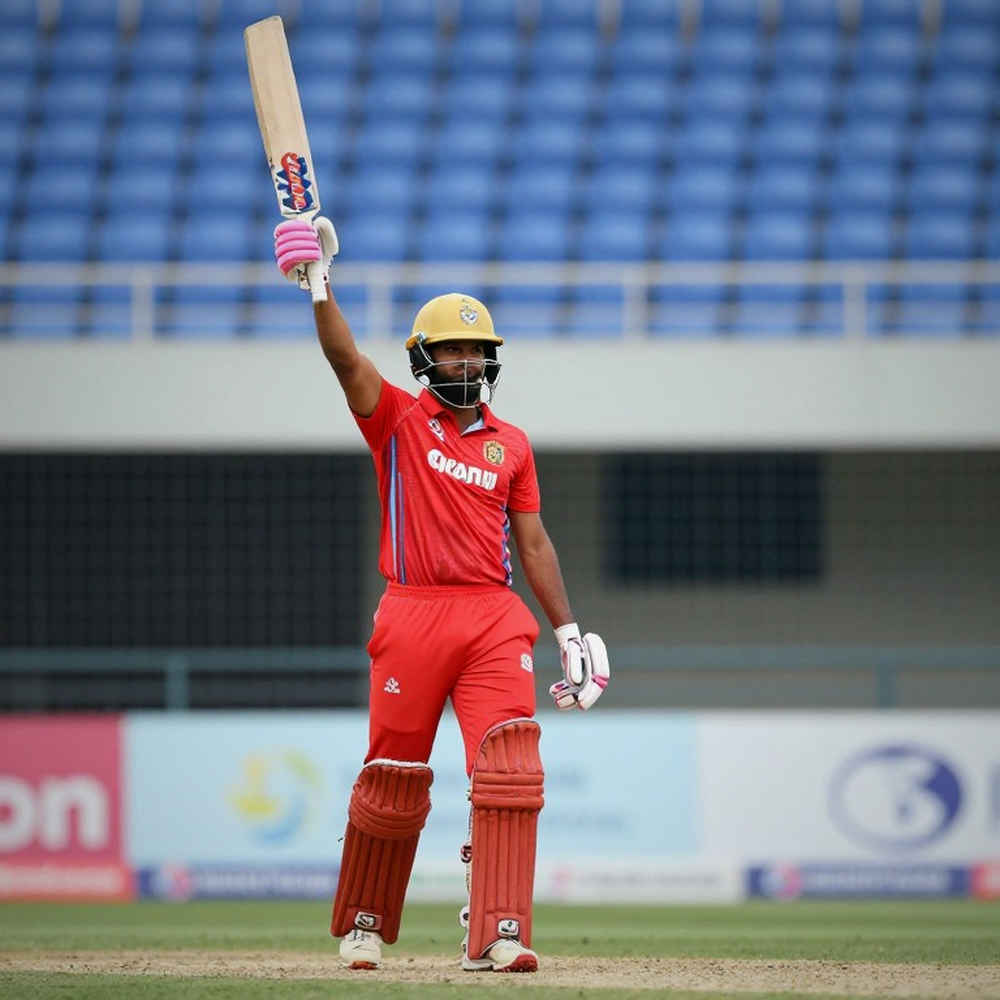
Four — the most important part of 225 for 4 is the wicket that never fell. Four wickets across twenty overs means India succeeded four times in twenty overs. The real test of death bowling is not the wicket column but the accuracy of the yorker and the slower ball, and at a total of 225 that accuracy visibly broke. It could be a one-off, but treating it as a one-off requires series economy rates, which the report does not carry. Until those numbers arrive, the safer reading is structural: on a true surface, no elite attack concedes 225 while taking only four wickets.
Five — the captain's name is the selection clue. Iyer winning the toss means he was captaining this XI, which in turn means several first-choice T20 players were not in it, for reasons of injury, rest, or rotation that the report does not give. It also means this win should not be read as proof of India's ceiling. It is evidence about the pipeline. A runner's pass opens the room; patience keeps me in it, and the same rule applies to reading a squad: bench strength does not mean the incumbent is replaced.
Six — and here the report leaves its most important word undefined: record. Whose record? India's highest successful T20I chase, Hagley Oval's highest, the highest in this fixture, or something else again? As a purse-sheet verifier my rule is simple: figure, rule, year. Without all three, the word record is a headline device rather than reporting. None of the three appears in this match report. When the full card surfaces, the first three numbers to check are balls remaining, India's individual economy rates, and New Zealand's score at the ten-over mark. The third will tell us how much pressure the chase actually carried and how much of it the toss dissolved.
Contrarian read: depth from outside, collapse from inside
The outside reading is clean: India chased 226, forty-two runs came from a lower-order slot, therefore the team has depth. The report says as much. But the same scorecard contains another fact that sentence suppresses: the middle of India's innings collapsed. A chase that collapses first and is then rescued by a fifteen-ball burst is not a demonstration of depth; it is a win produced by the highest-variance mechanism available. Depth looks like four batters making forty each and three bowlers taking three each on a total of 190. What happened here is the opposite: two individual innings, a large total, and a successful chase resting on fifteen balls.
The same caution applies to New Zealand. Making 225 for 4 is a show of strength, but the structure is concentrated. Remove Phillips early and this innings is plausibly 25 to 35 runs lighter. Both batting units carry the same problem: the weight of the innings sits on one or two shoulders. The crowd at Hagley Oval did not watch thirty overs of cricket; it watched fifteen or twenty minutes of it. Thirty-two overnight shifts taught me the sound of a crowd waking, and a crowd wakes when the required rate climbs, not when the total does. Which moment the Hagley Oval terraces woke at, this report does not record — no attendance figure, no chant, no logged reaction. Without a count or a recording, I will not put words in the stands.
One more outside reading needs breaking: this was not a laboratory for India's bowling, it was a laboratory for India's selection. Iyer's captaincy, Samson at the top, the fifteen-ball experiment in the lower middle, and Mayank Yadav's single wicket all point one way — this is a squad-building phase. In that phase the result matters less than who was assessed in which role. Twenty-seven issues later, the same question kept the beat: what gets repeated in the next XI is decided in the dressing room, off a workload sheet, not off a scoreboard.
What to watch next
The next team sheet is the real story of this match. Three things to watch: whether the fifteen-ball slot is repeated or was part of a rotation, who is handed the death overs, and whether Iyer keeps the captaincy. When the full scorecard lands, I will go to the economy rates first, because chasing 226 is one evening's story and conceding 225 can become a series habit. What the Long Room heard before the Hill began to sing was this: India's bowling plan did not turn once in twenty overs.