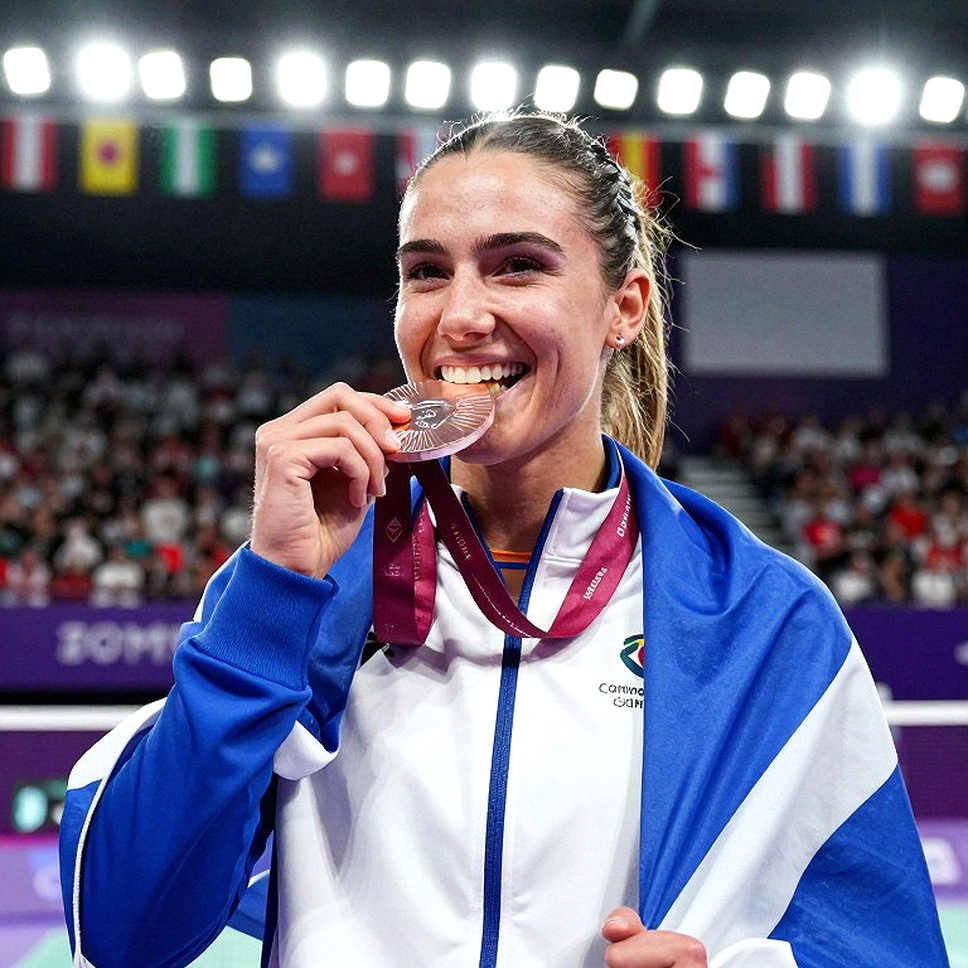
Sindhu's Test, An Se Young's Dominance: 0-10 Record vs. Realistic Upside in the French Open Final
बीडब्ल्यूएफ फ्रेंच ओपन 2026 का महिला एकल फाइनल 25 अक्टूबर 2026 को पेरिस के एरिना ग्रांड पेरिस में पी.वी. सिंधु (भारत) और एन से यंग (दक्षिण कोरिया) के बीच खेला जाएगा। मैच भारतीय समयानुसार दोपहर 3:30 बजे शुरू होगा। दोनों के बीच अब तक 10 मुकाबले हुए हैं और सभी एन से यंग ने जीते हैं; 2026 सीजन की दोनों भिड़ंतों में भी उन्होंने सीधे गेमों में जीत दर्ज की। एन से यंग इस सीजन सात टूर्नामेंट में छह खिताब जीत चुकी हैं और विश्व रैंकिंग में नंबर एक हैं; इस सीजन उन्हें हराने वाली एकमात्र खिलाड़ी चीन की वांग झी यी हैं। सिंधु ने सेमीफाइनल 21-10, 20-22, 21-16 से 73 मिनट में जीता, जिससे फाइनल से पहले उनका थकान-भार अधिक दिखता है। तकनीकी रूप से यह मुकाबला सिंधु के पावर-आक्रमण बनाम एन से यंग के नियंत्रण-रक्षात्मक खेल का है; लंबी रैली सिंधु के लिए नुकसानदेह है और 21-अंक रैली स्कोरिंग प्रारूप गलती की अस्थिरता को अधिक सजा देता है। निष्कर्ष: एन से यंग स्पष्ट पसंद हैं; सिंधु की जीत की संभावना अस्थिरता, थकान के असमान वितरण और अंक-दबाव में मानसिक राहत पर टिकी है। नोट: उपलब्ध आंकड़ों के अधिकांश बिंदुओं का कोई नामित आधिकारिक स्रोत नहीं है और कुछ सीजन-आंकड़े सार्वजनिक टूर परिणामों से मेल नहीं खाते, इसलिए बीडब्ल्यूएफ आधिकारिक स्रोतों से सत्यापन आवश्यक है।
India's PV Sindhu and World No. 1 An Se Young of South Korea will meet in the women's singles final of the BWF French Open (Super 750) at Arena Grand Paris on Sunday, 25 October 2026. The match starts at 3:30 pm IST — 11:00 am local time in Paris, since European daylight saving ends on 25 October itself.
On paper it reads like a clash of two big names. The numbers paint a very different picture. The two have met ten times and An Se Young has won all ten. In both meetings this season, the Korean won in straight games. That is why several analysts describe this final not as 'one-sided' but as 'structurally determined' — the probability leans clearly towards An Se Young, and Sindhu must build a route to victory out of circumstances rather than statistics.
An Se Young's season: the outer limit of consistency
An Se Young has played seven tournaments this season and won six titles. Her only defeat of the year can be read narrowly, but it matters that it came in March against China's Wang Zhiyi — and that she has since won the World Championships, the Asian Championships and the Asian Games. Add World Tour titles in Singapore, Denmark, Indonesia and the China Masters, and she is currently the most stable player in women's singles.
Her style is built on retrieval and control. She extends rallies, covers the shuttle and waits for the opponent to err rather than forcing early points. In recent seasons her attack has also moved further up the court — she is no longer merely a defensive player.
Sindhu's path: peak level present, not sustainable
Sindhu's semi-final is a clear signal that her top level is intact but hard to hold over 60-plus minutes. She took the first game 21-10, lost the second 20-22, and then closed out the decider 21-16. The three-game match lasted 73 minutes. She won the last six points of the decider in a row — evidence that her big-point temperament did not crack.
But the same profile is a warning. A dominant opening game, a mid-match concentration dip and a strong finish is the classic Sindhu pattern, and at 33 it reflects an energy ceiling. The cost curve of an aggressive, power-dependent game rises steeply with age, and her game rests entirely on that style. Her strength — a 179 cm frame and a high contact point — remains an unusual problem for opponents, but monetising it requires short rallies and quick points.
The real contest: cost, not skill
This final is not a skills gap but a cost-transfer problem. Sindhu's condition for victory is clear: keep rallies short and harvest points off aggressive third and fourth shots. An Se Young's retrieval game naturally lengthens rallies. Every extra shot in a rally shifts expected value towards the lower-error player — and a 10-0 record says that player is An Se Young.
The format adds another pressure: 21-point rally scoring, best-of-three, and a two-point margin requirement. This structure punishes error variance more than it rewards peak shot quality, which as a general rule favours An Se Young.
There is also a core data gap. No smash speed, average rally length or net-win-rate figure is available in this body of analysis, so the technical claims are qualitative inference. Sindhu's semi-final data exists, but An Se Young's semi-final cost is unstated — that information gap leaves any fatigue comparison incomplete.
The weight of 73 minutes
The fatigue arithmetic tilts against Sindhu 24 hours before the final. Three games over 73 minutes against a lower-ranked opponent, against an unstated semi-final cost for An Se Young, creates a negative differential. It should not be treated as decisive, however — a long match against an unfamiliar opponent can sometimes tune the body rather than drain it.
The Wang Zhiyi example: narrative, not blueprint
The most popular advice around this final is that Sindhu should draw inspiration from Wang Zhiyi, the only player to beat An Se Young this season. But that is a story, not a strategy. No mechanism is described — no serve pattern, no length control, no defensive shape. Its predictive value is close to zero. The real question is how Sindhu converts her shot-quality edge into a low-error game.
Three practical routes for Sindhu
First, play a high-tempo opening game — use the 'nothing to lose' position to put early scoreboard pressure. Second, repeatedly manufacture short-rally situations that suit her strength. Third, arrest the second-game concentration dip that showed up as 20-22 in the semi-final; that may be a shuttle or hall-speed adjustment problem. If the drift repeats, expect a similar wobble.
Verdict and caveat
Logically, An Se Young is the clear favourite. Sindhu's genuine upside rests on three things — variance, an asymmetric fatigue distribution, and mental relief under points pressure. That does not make an upset impossible; it means the upset will need circumstance to align rather than a documented tactical edge.
Most figures used in this report carry no named official source, and some season data cannot be reconciled with publicly recorded tour results. Title counts, sequence and tournament-specific claims should therefore not be treated as final truth and should be verified against official BWF rankings and draw sheets.